From Acne To Pigmentation: 5 Skincare Myths That Could Be Harming Your Skin
Discover the truth behind common skincare myths about pigmentation, acne and uneven skin tone to protect your skin

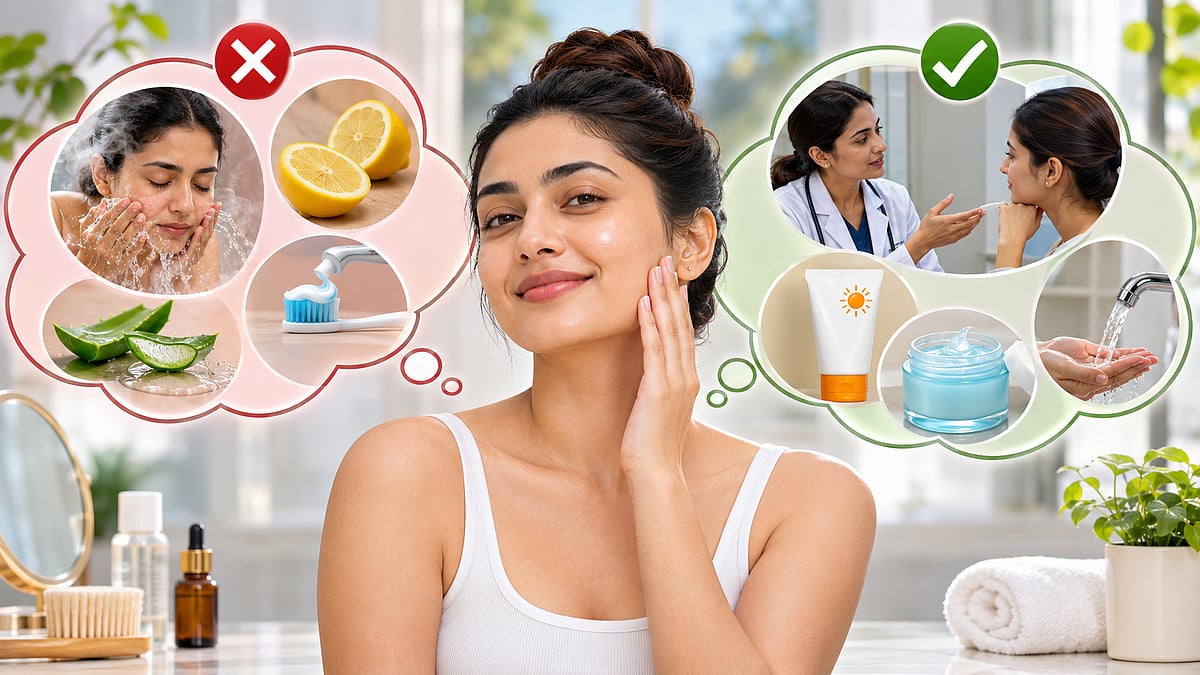
When it comes to skincare, there are quite a few myths, especially about pigmentation, acne and uneven skin tone. One needs to demystify, explain and understand them to ensure we take proper actions and have a great skin.
Clearing the myths
Dr Shallu Kapiil, an aesthetic physician and founder of Skinique, explains that myths about pigmentation, acne, and uneven skin tone are common because of the visibility factor. “Changes in the skin can affect how people see themselves and influence their confidence. When a concern is visible and emotionally distressing, people may be more willing to try quick fixes or products that promise dramatic results.”
She emphaises that myths have many origins. Sometimes, beauty and personal care ads use fear to make people anxious about skin issues. “It encourages the belief that they can be corrected instantly. Traditional home remedies are widely followed, but not every DIY remedy is suitable for every skin type. The promise of an easy, inexpensive solution can make such advice especially persuasive,” she adds.
Because people hope for quick results, misinformation spreads. It’s essential you choose skincare based on your skin’s needs and professional advice, not just trends or promises of instant results.
Dr Soma Sarkar, MBBS, MD – Dermatology, co-founder and lead dermatologist of Skin Beyond Borders (SkinBB), often sees that myths lead people to use the wrong products or follow influencer advice. “This may not improve their skin concerns and can delay appropriate treatment,” says Dr Sarkar. “Many choose quick, ready-made solutions and immediate results, sometimes bypassing a dermatologist and relying on over-the-counter products instead. This prevents them from receiving the right guidance and care for their specific skin concerns.”
Facts uncovered
Myth 1: Hot water opens pores and cold water closes them.
Reality: Dr Shallu mentions that pores do not open and close like doors. “Hot water may soften surface oils and relax the skin, creating the impression that pores have opened, but excessive heat can strip the skin’s protective lipid barrier and cause irritation. Very cold water may temporarily make the skin feel tighter, but repeated ice-cold exposure leaves it dry and flaky and may affect superficial blood vessels.” Instead, use tepid water to cleanse.
Myth 2: Oily skin does not need moisturiser.
Reality: People often confuse oiliness and hydration as being the same thing. “Oily skin produces excess sebum, while hydration refers to the skin’s water content. Skipping moisturiser or using harsh products to remove oil can compromise the skin barrier,” mentions Dr Shallu. Opt for a lightweight, gel- or water-based moisturiser apt for your skin.
Myth 3: If an ingredient is natural, it is always safe.
Reality: ‘Natural’ doesn’t immediately mean an ingredient is safe or suitable for everyone. One such ‘natural’ myth mentioned by Dr Sarkar is applying aloe vera gel directly from the plant. She reveals it can result in skin irritation or allergic reactions. Dr Shallu adds that some natural ingredients, such as certain essential oils, citrus juices and botanical extracts, have similar negative impacts. She adds, “Carefully formulated synthetic ingredients can be purified and standardised to deliver specific concentrations and consistent performance. Assess ingredients on the basis of evidence, formulation, concentration and individual skin compatibility.”
Myth 4: Sunscreen is needed on sunny days only and not on cloudy days or indoors.
Reality: “UVA rays can pass through clouds and window glass, and exposure can contribute to skin ageing and collagen breakdown. Therefore, the need for sun protection is not determined only by whether the sun is visibly out,” mentions Dr Shallu. She suggests making broad-spectrum sunscreen part of the morning skincare routine. Follow the product description for reapplication.
Myth 5: Using any product suggested works for skin issues.
Reality: Many use bleaching agents or rub lemon slices on the skin for pigmentation, to lighten the dark spots or remove tan. Dr Sarkar reveals that they can damage and irritate the skin. “For acne, applying saliva or toothpaste to pimples in the hope of making them disappear overnight is another misconception that should be avoided.” Use products developed to deal with such issues, as suggested by the dermatologist, for better results.
Choosing facts helps in dealing with common skincare issues.
Educate yourselves and take advice of a professional before treating your skin problems.
RECENT STORIES
-
-
-
-
-