Explore The Rise Of Nostalgia As A Modern-Day Escape
Here's why people are revisiting old songs, simpler routines, and forgotten versions of themselves

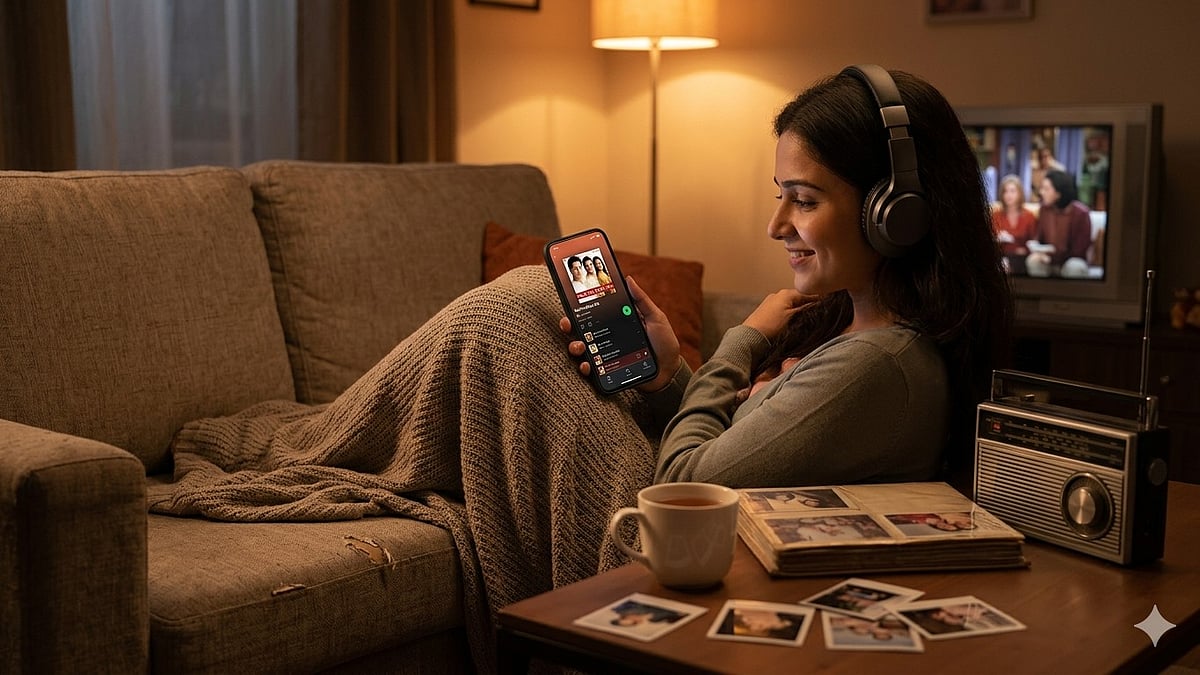
One stressful day is all it takes.
You come home exhausted after work, open a streaming platform, and instead of trying something new, you find yourself rewatching an old sitcom you've already seen countless times. Or maybe you're listening to Bollywood songs from the 2000s, watching childhood cartoons on YouTube, or scrolling through Instagram reels that begin with, 'Only 90s kids will remember this.'
For a few moments, the stress fades. Deadlines, responsibilities, and uncertainty seem a little less overwhelming. That is the power of nostalgia. It doesn't simply remind us of the past, it offers a brief escape from the pressures of the present.
In recent years, nostalgia has become a form of emotional self-care. People are increasingly turning to comfort shows, childhood cartoons, familiar music, favourite foods, old photographs, and even destinations they visited years ago. In a fast-moving world, the familiar has become comforting.
Why the past feels safer
Life today often feels overwhelming. Between social media, work pressures, and constant connectivity, many people are mentally exhausted. During such times, familiar memories can feel reassuring.
According to Prachi Narkar, Consultant Clinical Psychologist at AIMS Hospital, Dombivli, nostalgia provides emotional comfort because it reconnects people with moments of safety and happiness.
“Nostalgia often feels comforting during difficult times because it reminds people of happy memories, meaningful relationships, and moments of safety and stability. Looking back at positive experiences can reduce stress, loneliness, and anxiety by creating a sense of emotional connection and hope,” she explains.
Unlike the future, which feels uncertain, or the present, which often feels demanding, memories are predictable. We know exactly how they begin and end. They carry no surprises. This may explain why people repeatedly return to the same songs, television shows, and routines. It is not necessarily because they are better than today's content, but because they feel emotionally familiar.
Missing who we were?
Interestingly, nostalgia is not always about missing a specific time or place. Sometimes it is about missing a version of ourselves. The child who spent evenings playing outdoors. The teenager who wasn't constantly checking notifications. The college student who had endless conversations with friends and fewer responsibilities.
For PR professional Siddhi Solkar, comfort often comes through old cartoons, Bollywood films, and songs from her childhood.
She says, “Sometimes, to feel better, I watch old cartoons from my childhood, listen to old 9XM songs, and watch Bollywood movies that fascinated me when I was younger. Songs and movies from around 2002 to 2015 still give me the exact same feeling they did back then. There’s a strange sense of comfort and peace attached to them.”
Prachi believes this is one of nostalgia's most important emotional functions. “Nostalgia can help people emotionally reconnect with parts of themselves they feel they have lost over time. Revisiting old memories, music, places, friendships, or hobbies can remind individuals of who they once were, what made them happy, and the dreams or values they once cherished,” she explains.
Sometimes, people are not searching for old memories. They are searching for old feelings.
Social media is selling the past
Nostalgia is no longer a private emotion. It has become a cultural trend. Every day, social media feeds are filled with retro songs, vintage aesthetics, childhood cartoons, old advertisements, and posts asking users if they remember a particular snack, toy, or television show.
From Y2K fashion to film photography, old trends are finding new audiences.“Social media has increased people’s emotional attachment to nostalgia and retro culture,” says Prachi.
Platforms constantly bring back old songs, fashion trends, childhood cartoons, vintage aesthetics, and memories through reels, throwback posts, and ‘remember this?’ content. For many users, these posts trigger an immediate emotional response.
Siddhi explains, “Technically, I’m Gen Z, but at heart I feel more like a millennial because we experienced both eras, the simpler pre-social media days and today’s digital world. When nostalgia-themed reels appear on her feed, they often remind her of a time that felt less complicated.
A place we visit
Not everyone experiences nostalgia in the same way. Ajitabh Srivashtava, an engineer feels, “Personally my past isn't as comforting as my present. Nostalgia is a place which exists only in memory and I have started to focus on the present more.”
Perhaps that is the healthiest way to view nostalgia. It is not about wanting to live in the past. It is about occasionally revisiting moments that shaped us.
The songs, cartoons, friendships, and traditions we remember so fondly become reminders of where we came from and who we once were. And when life feels overwhelming, those memories offer something many people need like a moment of comfort, familiarity, and reassurance that difficult times do not last forever.
RECENT STORIES
-
-
-
-
-