Easter 2026: Why Do People Eat Hot Cross Buns On Good Friday? Know Significance Of This Christian Tradition & It's History
Hot cross buns are eaten on Good Friday to mark the end of Lent. The cross represents the crucifixion of Jesus, and the spices include those used in his burial. Traditionally, these buns are made without dairy, making them suitable to break the Lenten fast on Good Friday.

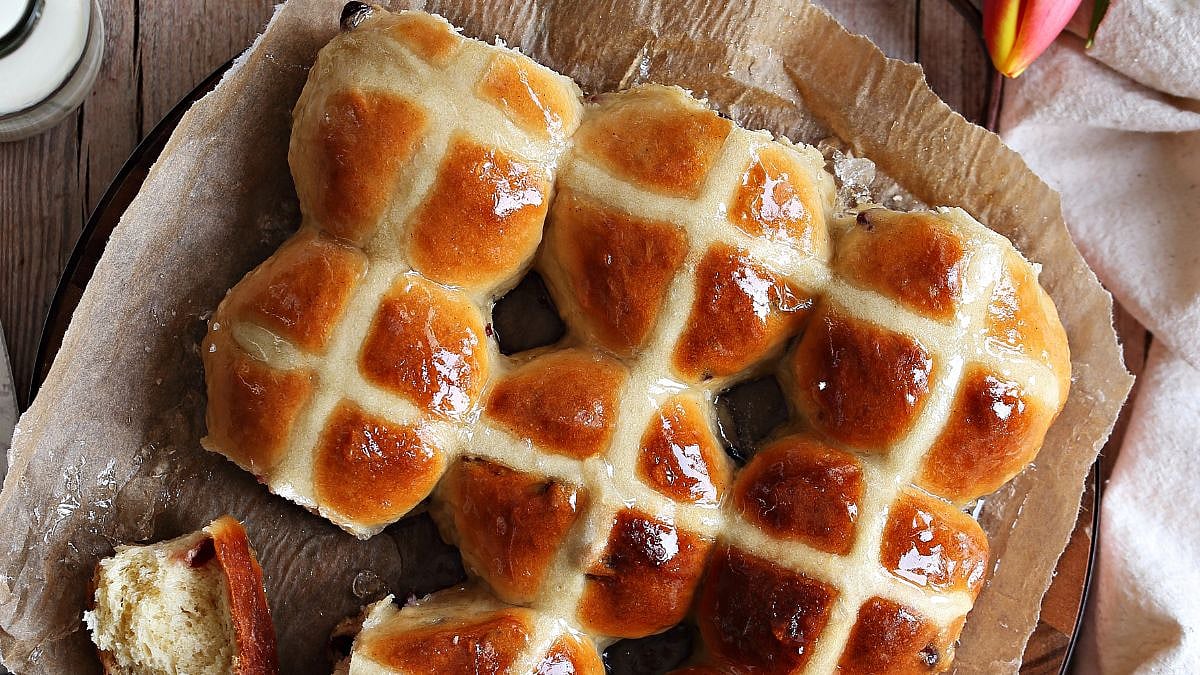
Hot Cross Buns | Photo Credit: Canva
Hot cross buns are a traditional sweet treat which is closely associated with Good Friday and Easter. They are enjoyed by Christians around the world on Good Friday and Easter. These soft, spiced buns are typically made with dried fruits and marked with a distinctive cross on top, which symbolises the crucifixion of Jesus Christ. A hot cross bun is a spiced bun which usually contains small pieces of raisins with a cross on top.
About Hot Cross Bun
Hot cross buns are a traditional treat which is eaten on Good Friday and Easter in the United States, the United Kingdom, Ireland, Australia, Canada, Africa, South Africa, and the Commonwealth Caribbean. In some of these countries, including the UK, these buns are available all year round. Some bakers also add candied fruit or orange zest to the dough, which gives the buns a citrusy flavour.
Why people eat hot cross buns on Good Friday?
Hot cross buns are eaten on Good Friday to mark the end of Lent. The cross represents the crucifixion of Jesus, and the spices include those used in his burial. Traditionally, these buns are made without dairy, making them suitable to break the Lenten fast on Good Friday. Historically, it was believed that buns baked on Good Friday would never go mouldy, which led people to hang them in their homes for good luck and protection against evil.
What is the history behind making of Hot Cross buns
The origins of hot cross buns date back to medieval England, where they were baked and distributed on Good Friday as a symbol of faith and remembrance. It is believed that monks in medieval England (specifically St Albans) first marked them and distributed them to the poor. Over time, they became an integral part of Easter traditions, representing both sorrow and hope. The spices inside the bun are said to signify the spices used to embalm Jesus’ body, while the cross serves as a reminder of his sacrifice.
RECENT STORIES
-
-
-
-
-