Can Chicory Really Boost Your Gut And Metabolism?
From gut-friendly inulin to a caffeine-free coffee substitute, discover how chicory boosts digestion, metabolism, and overall wellness

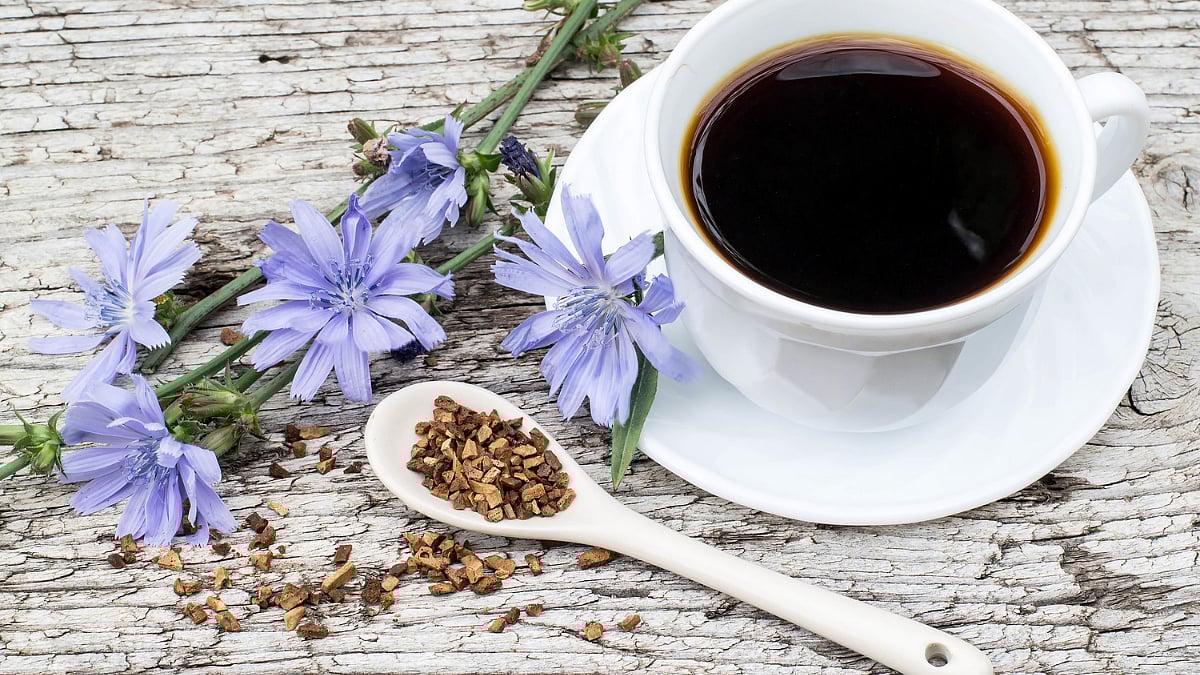
Some herbs bear hard woody stems unlike the usual soft green stalks. Common chicory or the Indian Kasni is one such perennial herbaceous plant hailing from the daisy family of Asteraceae. Its botanical name is Cichorium intybus. Although it is indigenous to the Old World (Europe, Africa, Asia) but over time, chicory got widely exposed to the New World of Americas and Down Under (Australia) blooming its unique bright blue petals that seldom come in white or pink variety.
Believe it or not, chicory is also famously used as a coffee substitute. It is christened with other tags like blue sailors, succory, coffeeweed, wild endive, et al. Plus, the green chicory plant is raised as fodder for livestock.
Multi-tasking herb
A multipurpose herb, chicory unveils many noteworthy utilities via its leaves, buds and roots.
“People often tend to think of chicory purely as a coffee ingredient but the plant has far more to offer,” confirms certified nutrition coach Akshita Singla, who doubles up as the co-founder of Akya Wellness.
“The leaves have been eaten for centuries across the Mediterranean and South Asian kitchens, tossed into salads or cooked down like any bitter green. That bitterness signals compounds which support liver function and stimulate digestion. The buds are edible too, generally prepared the way one would use capers (unriped green buds of a prickly bush known as capparis spinosa). But it is the root that carries the most utility,” stresses Singla.
Roasted and ground, chicory becomes a coffee extender or a standalone brew. In extracted form, it yields inulin, a soluble prebiotic fibre with well-established gut health benefits. “Traditional medicine across cultures has long used chicory root as a liver tonic and anti-inflammatory, well before nutrition science emerged as a field of research and reasoning,” she further reveals.
Fibrous profile
The chicory root is considered a crucial source of dietary fibre. Nutritionists explain that the inulin content is exceptionally high, somewhere between 35 and 48 percent of the root’s dry weight. What makes it worth paying attention to is how it behaves within the body. It passes through the small intestine completely undigested and arrives in the large intestine intact, where it feeds beneficial bacteria like Bifidobacteria and Lactobacillus.
“That fermentation produces short-chain fatty acids to reinforce the gut lining, reduce inflammation and support regular digestion. This is why chicory inulin (a natural, soluble prebiotic fibre and carbohydrate (polysaccharide) present in many plant roots — popularly extracted from chicory root — for use in food products and supplements, plus could be medically applied to test kidney function) has hitherto become the preferred choice for fibre fortification in packaged foods. It dissolves without altering taste and does not cause bloating that puts people off other fibre sources,” opines Singla.
Hale and hearty
Chicory is a nutrient-dense plant whose roots and leaves have been used in food and traditional health practices for many years. One of its key components is inulin that boosts digestive health and metabolism. Because of this fibre and its natural plant compounds, chicory can provide several health benefits when included as part of a balanced diet. So next time, if you seriously want to be in fine fettle and in high spirits, think of inducting chicory as a staple ingredient in your daily menu items.
“Chicory aids in strengthening gut health, helps regulate blood sugar levels and provides antioxidant support,” states reputed nutritionist Dr. Rohini Patil, also the founder and CEO of Nutracy Lifestyle.
“Chicory root is rich in inulin, which nourishes benign gut bacteria and slows down the absorption of glucose in the body to better control blood sugar levels. Last but not the least, chicory contains plant compounds that help reduce oxidative stress and back overall metabolic health. Together, these properties assist in smooth digestion, retain metabolic balance and facilitate nutrient capture, which play a pivotal role in preserving overall health and well-being,” shares Dr. Patil.
Echoing Dr. Patil’s comments on chicory’s salubrious aspects, Anshul Singh, team lead of clinical nutrition and dietics department at Artemis Hospitals, claims: “The chicory plant carries medicinal value. It has been used in traditional cure for a long time and is known to have many health benefits. It may help manage or redress certain conditions.”
“Inulin helps keep blood sugar levels stable, favouring patients with diabetes. Chicory also has anti-inflammatory and antioxidant traits that can boost liver function and lower inflammation. Chicory root tea is sometimes used to help with digestion and naturally ease mild constipation or bloating,” she enumerates.
Disadvantages
Like every other health ingredient, chicory too has its fair share of side effects. It is generally safe for most people when consumed in moderate amounts, especially as a food ingredient or beverage. However, its high inulin content — a fermentable fibre — can sometimes cause digestive discomfort, such as distension, gas or abdominal cramps in individuals who are sensitive to high-fibre foods.
In peril
People who are susceptible to plants descending from the Asteraceae clan, including daisy, ragweed, marigold or chrysanthemum, may experience allergic reactions and should avoid consuming chicory. Pregnant or breastfeeding women and individuals with gallstones or severe digestive disorders should also consult a healthcare professional before regularly ingesting chicory.
Guards renal health
“Chicory has traditionally been used for its mild diuretic properties (help the body eliminate excess sodium and water through increased urination), which can support the body’s natural detoxification process. The root contains insulin, which improves gut health and glucose metabolism, reducing metabolic stress that can affect kidney function over time,” intimates Dr. Patil.
“Furthermore, by acting as a diuretic, chicory can stimulate the excretion of urine from the body and this will assist with the removal of excess fluid and toxins from the body. Chicory also contains antioxidants that can protect against oxidative stress and chronic inflammation, both of which are associated with long-term kidney function,” she elaborates.
Diabetes in Check
“Chicory is frequently prescribed as part of a meal plan for individuals with diabetes due to its inulin content and its positive impact on insulin sensitivity. The plant is low in both sugar and calories, which makes it a safe addition to the daily intake of those looking to keep their blood sugar level within limits,” dispenses Dr. Patil.
For the unversed, chicory is also “effective in weight loss or weight management programmes”. “When drank as a beverage or used in preparing dishes, the herb has the potential to replace high-sugar products, thus resulting in a relatively healthy choice,” she vouches for.
Leafy Cousins
Does chicory have any resemblance to spinach and celery in terms of its looks and properties?
“Appearance-wise, certain varieties of chicory have leafy greens that may look somewhat similar to spinach or celery leaves. However, nutritionally and functionally, these two food groups are quite different from each other in comparison. Chicory is primarily used as a prebiotic fibre owing to the generous dose of inulin deposited inside the plant’s root. Although both spinach and celery provide many vitamins and minerals, chicory stands out more for its digestive and metabolic benefits,” distinguishes Dr. Patil.
Chicory Sip
How about a drink blended with chicory this spring, which is already simmering with a summery heat!
“One of the most popular and straightforward methods to consume chicory is in the form of a drink made from roasted chicory root, which serves as a caffeine-free, all-natural alternative to coffee. To prepare it, about one teaspoon of roasted chicory root powder can be added to a cup of hot water or warm milk and brewed for a few minutes. The finished concoction has a nutty, earthy flavour similar in taste to mild coffee,” narrates Dr. Patil.
“This drink is also an excellent option for individuals trying to reduce their caffeine intake while still enjoying a warm beverage. Adding spices, such as cardamom or cinnamon can enhance the flavour and further assist with digestion,” she chips in.
Rustle up Chicory Recipe
Chicory leaves can be used to whip up a light and nutritious green salad. The leaves’ slightly bitter taste works perfectly with fresh ingredients, such as cucumbers, cherry tomatoes and roasted nuts. To finish your salad, simply drizzle olive oil and lemon juice.
“The natural bitterness of chicory is thought to stimulate the production of digestive enzymes, which can help promote healthy digestion and provide a refreshing zest to a balanced meal,” concludes Dr. Patil.
Coffee Corner
Views on Brew
A part of chicory is baked, ground and used as a coffee substitute or a food additive. “The taproot, precisely. It is cleaned, sliced and roasted at high temperatures until deep brown, which is what creates that rich, slightly woody and faintly caramel flavour. Once ground, it can be brewed on its own as a caffeine-free option or blended into regular coffee to add depth,” informs Singla.
Experts denote practicality behind chicory’s wide adoption in blends. “It is an inexpensive, locally available crop and that makes it cost-effective enough as an ingredient to expand coffee volume without significantly compromising on its taste. A well-made chicory-coffee blend can deliver comparable body and flavour at a fraction of the cost of 100 percent coffee beans,” reports Singla.
On the food manufacturing front, chicory root extract — most commonly inulin — shows up across a vast range of products as a texture enhancer, fat replacer and fibre-fortifying agent. “Affordable, functional and versatile, chicory does a lot of quiet work in formulations that consumers hardly contemplate,” she laments.
Dieticians cite valid reasons behind chicory’s addition to a mug of coffee. One wonders if it enhances the beverage’s quality and texture.
“The primary reason was simple economics. Chicory is a hardy, locally-grown crop that is way cheaper than coffee beans. During the Napoleonic blockades in France and later the American Civil War, it became the most feasible medium to compensate the slump in coffee supplies without making the cup undrinkable. That cost advantage has never faded with the passing years and is largely responsible for chicory blends to remain a common component in commercial coffee production to this day,” enlightens Singla.
“What nobody had anticipated back then was that the deadly combination would develop a loyal following on its own merit. Chicory adds an earthy depth that rounds off the sharper, more acidic edges of a dark roast and its inulin constituent creates a natural thickening effect, giving the brew a fuller mouthfeel without any cream involved. The flavour profile is different from the ubiquitous coffee texture in daily use but for many drinkers, that is noticeably far better balanced,” she corroborates.
Singh seconds that “people often add chicory to coffee to make it taste better, feel better and have a better body. The roasted root of the chicory plant has a smack that is a little nutty and woody. When you add it to coffee, it makes the drink smoother and less acidic. It also makes coffee feel thicker and richer in the mouth. For instance, a lot of people add 10-30% chicory to coffee to make it taste stronger without adding spoonsful of coffee powder. This practice became popular when there was a shortage of coffee and people still liked it because it makes the drink have a deeper and bolder tang.”
Cues on Filter Coffee
Chicory is applied to one of the most familiar milk-based beverages like the South Indian filter coffee. A typical cup of drink runs 70 to 80 percent dark-roasted coffee and 20 to 30 percent chicory.
“Chicory is added to filter coffee, particularly in South Indian blends, to elevate flavour, body mass and aroma, thus providing a woody, caramel-like taste that evens out bitterness. It reduces acidity, is caffeine-free and acts as an economical, thickening agent that makes the brew smoother and richer when mixed with milk. The mixture slowly absorbs hot water, making a strong decoction,” summarises Singla.
“Chicory is mixed with ground coffee before brewing in milk-based drinks like the South Indian filter coffee. When you mix this decoction with hot milk and sugar, you get a concentrated, fragrant drink that is dark in colour and has a creamy texture. The chicory improves the coffee foam and gives it a slightly earthy taste that many people think of as the real flavour of traditional filter coffee,” volunteers Singh.
Creamy Chicory Smoothie Recipe
Ingredients: 1 cup chilled chicory coffee (or 1 tbsp roasted chicory root brewed in 1 cup hot water and cooled) l 1 large frozen banana pieces l 1/2 cup almond milk or oat milk l 1 tbsp almond butter or cashew butter (optional)
1 tsp cinnamon or cardamom
1 scoop protein powder (optional)
1/2 cup ice cubes
Method: Brew your chicory coffee and allow it to cool completely. Add the frozen banana, chilled chicory coffee, milk, and any extras (almond butter, spices, protein powder) into a high-speed blender. Blend until creamy and smooth. You can add ice cubes if a thicker consistency is desired and blend again.
Tips: Use pitted dates to add extra natural sweetness. l For a deeper flavor, use a mixture of chicory and dandelion root. l Add cocoa powder to make a chicory mocha smoothie
Quickfix Chicory Recipes
Recipe Courtesy: Dietician Pranjal Kumat
Chicory Masala Omelette
Ingredients: Eggs (2-3), Finely chopped chicory, 1 chopped onion, 1-2 chopped green chillies, Salt to taste, a pinch of black pepper
Method: Beat eggs and mix everything else. Cook like an omelette. This dish serves a deadly combo of high protein and fibre content
Chicory Stuffed Roti Wrap
Ingredients: Leftover roti, Chicory sautéed in oil, Paneer or tofu (50-80 gm. Mashing the same is optional), Mint chutney.
Method: Spread chutney on roti, Add chicory and paneer as a filling, Roll the roti and serve.
Quick Chicory Pasta Toss
Ingredients: Boiled pasta, Chicory (15-20 gm), Garlic pods (4-5), Olive oil, Chilli flakes, 1 cube of shredded cheese
Method: Sauté garlic and chicory in olive oil, Add pasta and seasoning, Toss and top with cheese.
RECENT STORIES
-
-
-
-
-