Archer Aviation’s Srinivasriao Balaga Is Building The Manufacturing Foundation That Makes Flying Taxis Possible
Archer Aviation is advancing its Midnight eVTOL through FAA certification while tackling safe, large-scale production for urban air mobility. Senior engineer Srinivasrao Balaga leads dimensional engineering to ensure precision and consistency in manufacturing. His cross-industry expertise helps manage variability in composite aircraft for future air taxi operations in India.

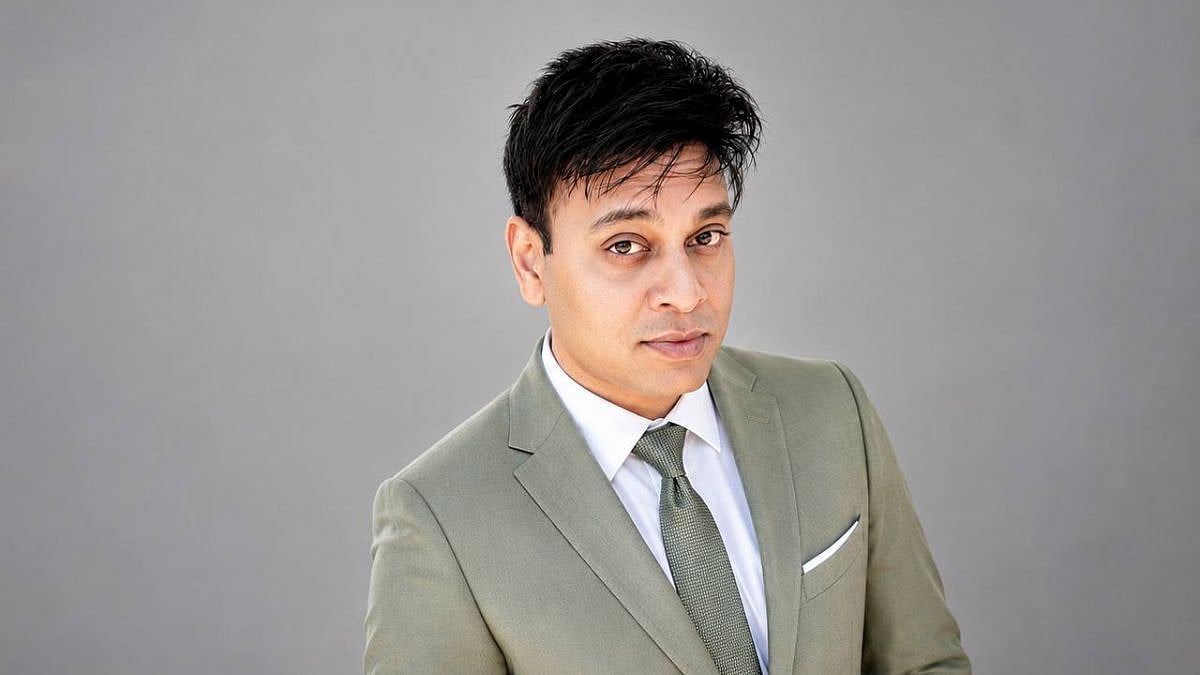
Archer Aviation’s Srinivasriao Balaga Is Building The Manufacturing Foundation That Makes Flying Taxis Possible | file photo
Archer Aviation is among the leading developers bringing the electric air taxi closer to reality, steadily advancing through the Federal Aviation Administration’s certification process for its Midnight aircraft. India is among the markets where the arrival of urban air mobility is most anticipated — urban congestion in cities like Delhi, Mumbai, and Bengaluru has made alternative transport solutions increasingly urgent, and regulators have already begun laying the groundwork for the sector. But before air taxis become part of daily urban transport, manufacturers must solve a major challenge — producing these aircraft at large scale while meeting the extremely high safety and precision standards required in aviation.
Srinivasrao Balaga works at exactly that intersection. As Senior Manager of Dimensional Engineering at Archer Aviation, he leads the team responsible for ensuring that Midnight's components fit together correctly and consistently, to the strict demands of aviation safety. It was his team that established the dimensional standards and quality data Management system that the Midnight program runs on. An ASME-certified dimensional engineer with 18 years of experience, his career spans multiple applications of precision manufacturing: from Lucid Motors, where he built and led the Dimensional Engineering and Metrology team from the ground up, to Apple, where he established the company's Dimensional and Craftsmanship Engineering team and led dimensional quality for the iPhone 16 series. Before that, at Mahindra & Mahindra in Chennai, he developed a patented chassis innovation and received the company’s Excellence Award for vehicle dimensional engineering. He has served as a judge at the 2026 Hitachi Science and Engineering Fair in Alameda County and as a peer reviewer for the SAE Automotive Dynamics and Measurement Symposium in 2020, has been engaged by ISRO to train its design team in 3D variation analysis. A Senior Member of IEEE and a member of the Institution of Engineering and Technology, he was also recognised in the Cases & Faces 2026 award for his innovative work. Balaga brings that breadth of experience to one of the hardest manufacturing problems the aviation industry has faced.
The difficulty is structural: traditional manufacturers build aircraft in small numbers, so they can catch and correct any dimensional imperfection before the aircraft enters service. By contrast, consumer products are produced at volume, but a dimensional failure is more of a cosmetic flaw than a safety event. eVTOL sits at neither extreme: it demands large-volume production under aerospace safety requirements while using composite materials, which introduce more sources of variation than metallic assemblies do. In composites, the most consequential decisions are which reference points to use when positioning and measuring parts. Balaga has found that these decisions are frequently made on habit rather than engineering logic, and this is where precision failures occur.
"In composite assemblies, the choice of datum is one of the most consequential decisions an engineer makes, and at the same time it is the one where engineers tend to default to what was done before rather than what the structure actually requires," says Srinivasrao Balaga.
To replace habit-driven decision-making with a consistent, repeatable process, he developed a structured evaluation framework for these reference-point decisions, built around three criteria: how parts are held in place during assembly, how reliably they can be positioned, and how the gaps between components are kept within acceptable limits. The framework gives engineering teams a defensible basis for decisions instead of making them based on individual judgment, allowing them to achieve the level of precision necessary when building a vehicle that will carry passengers at altitude.
Balaga has also taken his approach into the academic domain. His research, published in the International Journal of Advanced Engineering, Management and Science, examines how aviation manufacturers can build systems that catch and correct dimensional problems at every stage of production from the initial design through to the factory floor.These are the same principles he applies in his current role, where he has built a company-wide system for tracking quality data and established standards for how precision is measured and maintained across the complete aircraft.
What makes his approach distinctive is the cross-industry perspective he brings. Most dimensional engineers move within a single sector, but Balaga has operated across three that rarely overlap.
"Each industry taught me something different about what variation actually costs. In automotive, it costs rework. In consumer electronics, it costs perception — what a customer feels and how they perceive a product. In aviation, variation in the wrong place is a safety question," notes Srinivasrao Balaga. "When you have worked across all three, you stop seeing dimensional engineering as a technical specialism and start seeing it as a risk management discipline."
This reframing becomes especially significant as the eVTOL sector approaches the manufacturing phase in earnest. Certification is the visible milestone — but the harder, less-reported challenge is whether the manufacturer can produce the aircraft with sufficient consistency to operate at the frequency that urban air mobility requires.
The scale of the challenge becomes clear, when you consider what urban deployment in India actually requires. A service operating air taxis across cities like Delhi or Bengaluru with their own climate conditions, air traffic complexity and operational pressures, requires not just certification, but the ability to produce aircraft that behave identically from the first unit to the last. Every deviation that must be corrected on the line is a delay; every late-stage adjustment is a cost that undermines the service's economics.
Balaga has responded to that challenge by building the dimensional infrastructure necessary to tackle it: the company-wide data-system, the precision standards that apply across the complete aircraft, and the assembly frameworks that make consistent production at larger scales possible.
"The question I am focused on is not whether we can build one aircraft that meets the specification. It is whether we can build the five-hundredth the same way as the first. That is what aviation at scale actually demands, and dimensional engineering is a large part of how you get there," concludes Srinivasrao Balaga.
The steady progress toward certification suggests that the timeline for air taxis in Indian cities is more credible than it might appear. But the engineering work required to honour that commitment remains largely invisible to the public. What separates a signed memorandum of understanding from a functioning air taxi network above Bengaluru goes beyond regulatory approval — it is the disciplined, unglamorous work of ensuring that every aircraft built is as precise as the last. That is what engineers like Balaga are building now, in the years before the service exists, so that when it does, it works.
Published on: Monday, June 15, 2026, 02:41 PM ISTRECENT STORIES
-
-
-
-
-