Pitru Paksha Begins In Ujjain As Devotees Gather At Gayakotha, Siddhavat For Tarpan
Devotees gathered at Gayakotha and Siddhavat in Ujjain on Saturday to perform tarpan and other rites for their ancestors as Pitru Paksha began. Rituals at Gayakotha continued from early morning until afternoon. Families offered water, milk and black sesame, while priests explained the significance of the ancestral observances.

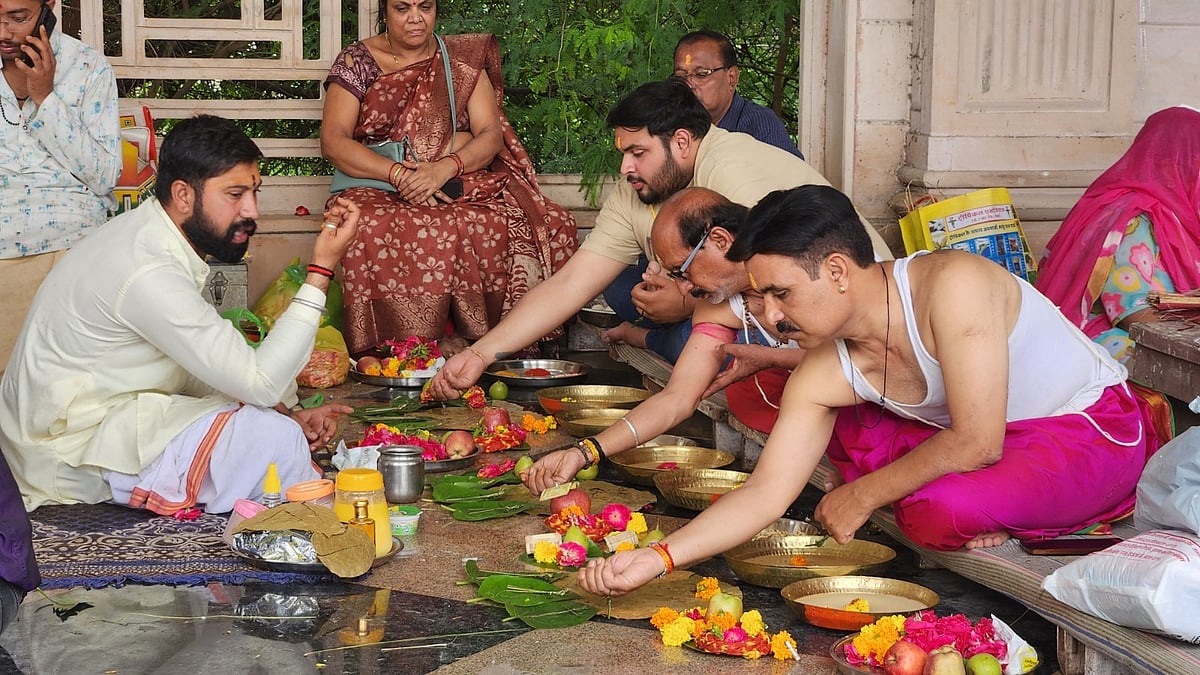
Pitru Paksha Begins In Ujjain As Devotees Gather At Gayakotha, Siddhavat For Tarpan | FP photo
Ujjain (Madhya Pradesh): Pitru Paksha began on Saturday, with large numbers of devotees visiting Gayakotha and Siddhavat on the full-moon day to perform 'tarpan' for their ancestors. At Gayakotha, rituals began early in the morning and continued until afternoon.
Devotees stood in long queues to offer prayers, milk, water and black sesame, seeking forgiveness for their shortcomings and blessings from their ancestors.
The Pratipada of Mahalaya Mahashraddha is observed for ancestors who passed away on this lunar date. Families traditionally offer incense, food and water to their departed ancestors.
According to the Pitru Sukta of the Rig Veda, Pratipada holds special significance during 'Shraddha', with devotees encouraged to perform 'tarpan' for the peace and salvation of their ancestors.
A distinctive ritual on the day is the worship of the household threshold, known as 'Dwar Puja'.
Through the ritual, devotees symbolically invite their ancestors to remain in their homes throughout the 16-day 'Shraddha' period. Ghee and jaggery are offered at the designated place for water, followed by an offering of water.
According to the Garuda Purana, souls that do not receive proper last rites are believed to wander after death. Pratipada 'Shraddha' is therefore considered significant for performing rituals and 'tarpan' for such ancestors.
Families can also invoke ancestors belonging to three generations together.
'Pitru Yajna' is accorded great importance in Vedic tradition and is regarded as one of the five great sacrifices. Practising Brahmins of Siddhavat highlighted the significance of these ancestral rituals and their place in Hindu tradition.
RECENT STORIES
-
-
-
-
-