US-Iran Tensions And The Energy Fallout: Narendra Taneja Explains India’s Next Moves
Global energy expert Narendra Taneja speaks about the implications for global energy post the ongoing US blockade of Iranian ports and the Strait of Hormuz. In an interview with FPJ, he outlines what India will need to do to secure its energy future post the US-Iran conflict.

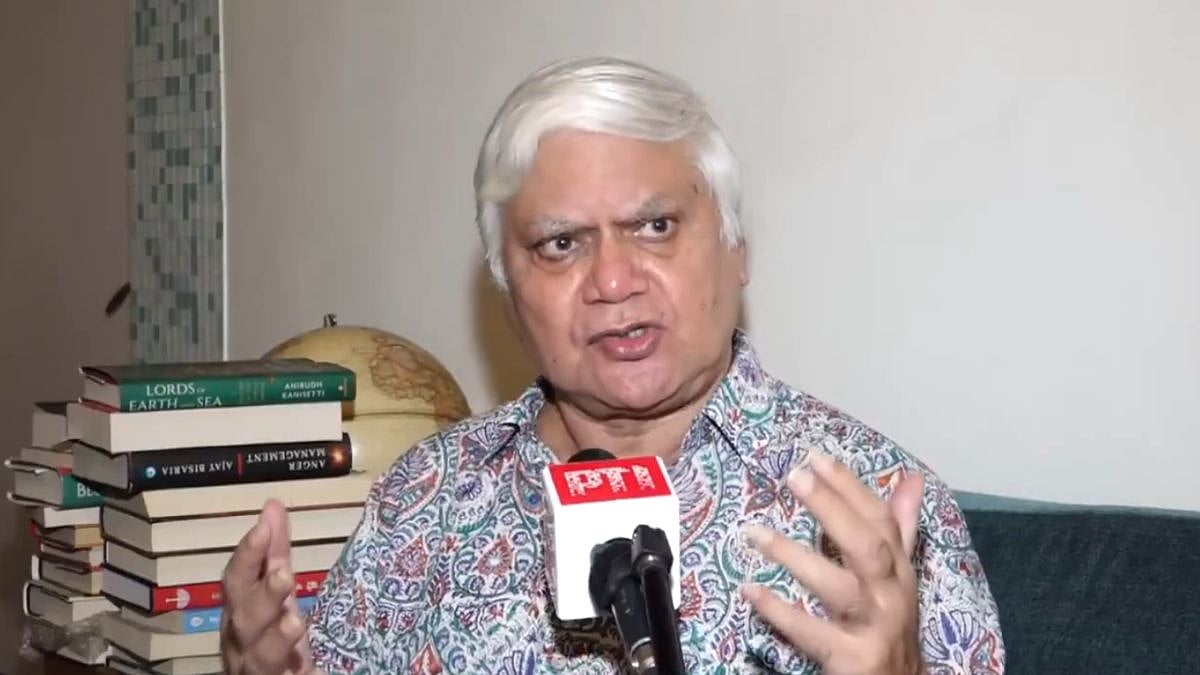
US-Iran Tensions And The Energy Fallout: Narendra Taneja Explains India’s Next Moves | X
The Strait of Hormuz is blocked by the US, and recently an Iranian-flagged ship has been seized by its Navy. Is there any way for Iran to bypass the US blockade?
No. If it’s blocked, it’s blocked, whether you are a new ship or an old ship. This is because the strait is very easy to monitor through satellites, and they are just monitoring everything. So there is no way that you can really cross it. If they really want to stop you, they can stop you.
The US blockade has raised tensions between Washington and Tehran? How difficult will it be to find an off-ramp?
I think that the blockade coming from the US makes things more complicated. If the sanctions were coming from the United Nations, then it's a totally different thing because of the International Maritime Organization, which is part of the UN system.
The US blockade is a function of hard power, where ships are being forced to turn back. The IMO has recently proposed a safe maritime corridor to evacuate stranded ships. This would ensure that there is no blockade in the US sense.
Coming to the question of pipelines, there is talk of the Goreh-Jask pipeline, which bypasses the Strait of Hormuz. Will this make a difference to Iran?
If you look at Iran, there are two parts. First is oil and the second is gas. Iran actually has more gas than oil. It currently has the world's second-largest gas reserves. So right now, their hydrocarbon exports are mainly to Turkey and Iraq.
The problem for Iran is it doesn’t have the LNG infrastructure to ship gas. So right now most of the gas that they produce is consumed by them. They use it for electricity and heating. They produce 90,000 megawatts of electricity.
Second, the Goreh-Jask pipeline is not a factor because of the limited number of barrels that it produces. In any case, the US would be keeping an eye on it. This is just part of a lot of talk coming out about alternatives, but there aren’t any.
Coming to the Gulf nations, only Saudi Arabia has a pipeline, which is called the East-West pipeline, which opens out to Yanbu in the Red Sea. From there, ships can go to the Suez Canal to export. They have not been able to use it 100% because there are issues, but I think they still use it quite substantially.
Is the Saudi pipeline the only option right now as far as the region is concerned?
Had there been any alternative, then oil wouldn’t have reached the prices it did. At one time prices touched $110. But that's only the price on the screen.
The reality is that major importers of oil have been buying oil at much higher prices, including India. So the Indian basket price has been higher, the Chinese basket price is much higher, and the Japanese basket price has been the highest. This is because Japanese dependence on oil imports is 90 percent, the highest in Asia.
Coming to India, there has been some talk of the need to increase oil storage. What are the problems here? Why haven’t we been able to do this?
What we have got to understand is that when we say that you want to build storage, it’s not easy. First of all, it’s very capital intensive. You can't build storage just like that. It’s very expensive to build, and it’s very expensive to maintain.
So for the sake of discussion, if you build storage, let's say you need to put oil in that. That means you also have to have pockets deep enough to first buy that oil at whatever price, and then keep it there.
This means you are getting no return on the money you have invested when you bought that oil. If you build, let’s say, 1 billion dollars, you put that in storage, and the oil is just sitting there.
But you have already paid, and you are not getting any returns. So that means that your economy has to be strong enough to take such economic pressures
What about China?
China has got oil pipelines coming from Russia, which is a big comfort for them. China has also invested heavily in strategic petroleum reserves (SPRs) and they’ve also gone in for commercial storage.
Commercial storage means you do it for trading and profit, while strategic petroleum reserves are something that you look upon more in terms of energy security. So China over the past one year had stored both in SPRs and also in commercial storages, 1.3 billion barrels of oil.
This means that they are quite comfortable for almost seven months to a year. They also have been very smart. They buy crude oil at low prices, refine it, and sell at high prices. India is different.
We have very good relations with the majority of oil-exporting countries, and that has been part of our calculus. Saudi Arabia, for instance, is always conveying to India that you don’t worry about oil.
How does India secure its energy future? Do we diversify to other nations in Africa?
These decisions are not taken like that. If you go to buy more from Nigeria and Angola, they will charge you Asian premium. You have to pay two dollars per barrel extra. You also have to see the quality and the shipping cost.
You have to see the insurance. The question we should ask ourselves is, are there new opportunities to explore in the Gulf? The answer is yes. A new opportunity in terms of security architecture.
A new opportunity in terms of probably going there and building more energy bridges. We can ask them to give us a stake in their oil wells and their producing assets.
We can discuss building a new pipeline that completely bypasses the Strait of Hormuz. Or maintaining dialogue with the Iranians post-negotiations because it is quite possible the US could lift sanctions. Once that happens, then it’s an entirely new world.
Published on: Wednesday, April 22, 2026, 02:56 PM ISTRECENT STORIES
-
-
-
-
-