SC May Defer Ruling On Free Speech Vs Legislative Privilege As 2003 Dispute Turns Academic
The Supreme Court may end proceedings over the Tamil Nadu Assembly's 2003 action against The Hindu journalists without deciding larger questions on legislative privilege and free speech. CJI Surya Kant said the seven-judge Bench could dispose of the case on Tuesday after being told the Assembly withdrew the resolution in 2004, while leaving broader issues open.

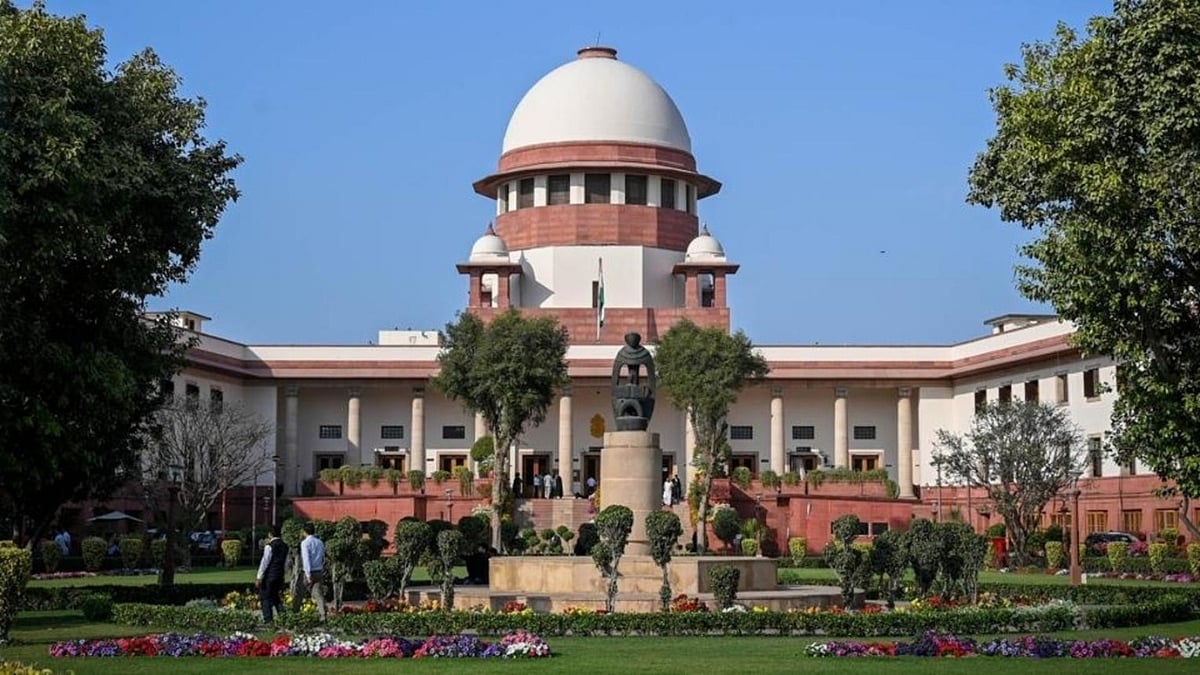
Supreme Court. | File Photo
The Supreme Court on Monday indicated that it may defer examining the larger constitutional questions surrounding legislative privilege and its conflict with the fundamental right to freedom of speech and expression after being told that the Tamil Nadu Assembly resolution that triggered the case was withdrawn in 2004.
Chief Justice of India Surya Kant said the seven-judge Constitution Bench could briefly hear the matter on Tuesday and dispose of the present proceedings while leaving the larger questions open for consideration when a live controversy comes before the court.
Why the case may end here
Senior advocate Raju Ramachandran, appearing for the Tamil Nadu Assembly, told the Chief Justice that the resolution at the centre of the original challenge had been withdrawn in 2004. He said this fact was not reflected in the referral order and indicated that the Assembly would raise a preliminary objection that the controversy had become academic and no longer survived.
Attorney General R Venkataramani and Solicitor General Tushar Mehta, who were also present, agreed that the issue may now have become academic.
CJI suggests waiting for a live dispute
“I have not seen this in the case file yet. The referral order also does not reflect this,” the Chief Justice said.
The Chief Justice suggested that if the dispute had indeed become academic, the court could wait for a live case before examining the broader constitutional questions.
“Our suggestion will also be in this that if the issue is merely academic, it can be disposed of for the present. We will rather wait for an occasion to come and this very time, we can utilise in adjudicating some other live issues,” Chief Justice Kant observed.
Sibal says larger questions remain alive
Senior advocate Kapil Sibal, however, argued that although the original controversy may have become academic, the wider constitutional questions remained significant.
“This particular issue is dead while the larger issues could still be alive. The issue is of great significance,” Sibal said.
The Chief Justice indicated that the Bench would hear the matter briefly at 10.30 am on Tuesday. “We will sit at 10.30 am tomorrow briefly and dispose it of while keeping the larger issues open for adjudication in some other matter,” he said, Hindustan Times reports.
The development could postpone a much-awaited examination of the boundaries of legislative privilege, particularly the circumstances in which state legislatures can exercise their privileges against people outside the House and how those powers should operate when they come into conflict with the fundamental right to free speech.
Case dates back to action against The Hindu journalists
The seven-judge Bench was constituted in the long-running case of N Ravi and others Vs Speaker, Legislative Assembly, Chennai and others, which arose from action taken by the Tamil Nadu Assembly against journalists of The Hindu in 2003.
The Assembly sentenced then The Hindu editor N Ravi, executive editor Malini Parthasarathy, bureau chief V Jayant, special correspondent Radha Venkatesan and publisher S Rangarajan to 15 days’ simple imprisonment for breach of privilege over reports and an editorial critical of the then Tamil Nadu government and Chief Minister J Jayalalithaa. The Supreme Court stayed the execution of the warrants issued against them.
Dispute grew into a constitutional question
The case later acquired wider constitutional significance, with the Supreme Court being asked to examine the relationship between legislative privileges under Articles 105 and 194 of the Constitution and fundamental freedoms, particularly the freedom of speech and expression guaranteed under Article 19(1)(a).
The matter was initially referred to a Constitution Bench in December 2003. In 2004, a five-judge Bench recommended that the questions be considered by a larger seven-judge Bench after earlier Constitution Bench decisions threw up conflicting positions.
1964 UP Assembly standoff also in focus
The reference also brought into focus a constitutional confrontation involving the Uttar Pradesh Assembly in 1964, when it summoned two Allahabad High Court judges and an advocate over the grant of bail to Keshav Singh, who had been imprisoned by the Assembly for alleged breach of privilege. The Supreme Court subsequently set aside the summons.
ALSO READ
The present reference consequently raised questions extending well beyond the dispute involving The Hindu journalists. These included the scope of privileges available to legislatures under Article 194(3), whether those privileges can be exercised against non-members for speech or conduct outside the House, and how such powers should be reconciled with freedom of speech and expression and other fundamental rights.
Journalists, public figures sought to intervene
The proceedings acquired fresh relevance in recent weeks after journalists Ajit Anjum and Seema Chishti, former parliamentarian V Subhashini Ali and comedian Kunal Kamra sought to intervene in the matter.
Their applications highlighted the implications of the constitutional questions for journalists, citizens and public figures facing legislative privilege proceedings over criticism, reportage or other forms of expression outside the House.
The seven-judge Bench was scheduled to begin hearing the reference on October 6 and was expected to sit for nearly six days.
The Chief Justice’s remarks on Monday, however, suggest that the court may now use Tuesday’s brief hearing to bring the existing proceedings to an end without ruling on the wider constitutional questions. That would leave unresolved an important issue at the intersection of legislative authority and free speech until a future case presents the court with a live dispute.
RECENT STORIES
-
-
-
-
-