Russia Backs India’s Permanent UNSC Bid, Opposes Germany And Japan At UNGA
Russian Foreign Minister Sergey Lavrov backed India and Brazil for permanent seats on the UN Security Council during the 81st UN General Assembly. He opposed adding Germany and Japan as permanent members, calling for greater representation of Asia, Africa and Latin America. The remarks reaffirm Russia’s longstanding support for India’s UNSC bid and highlight G4 divisions.

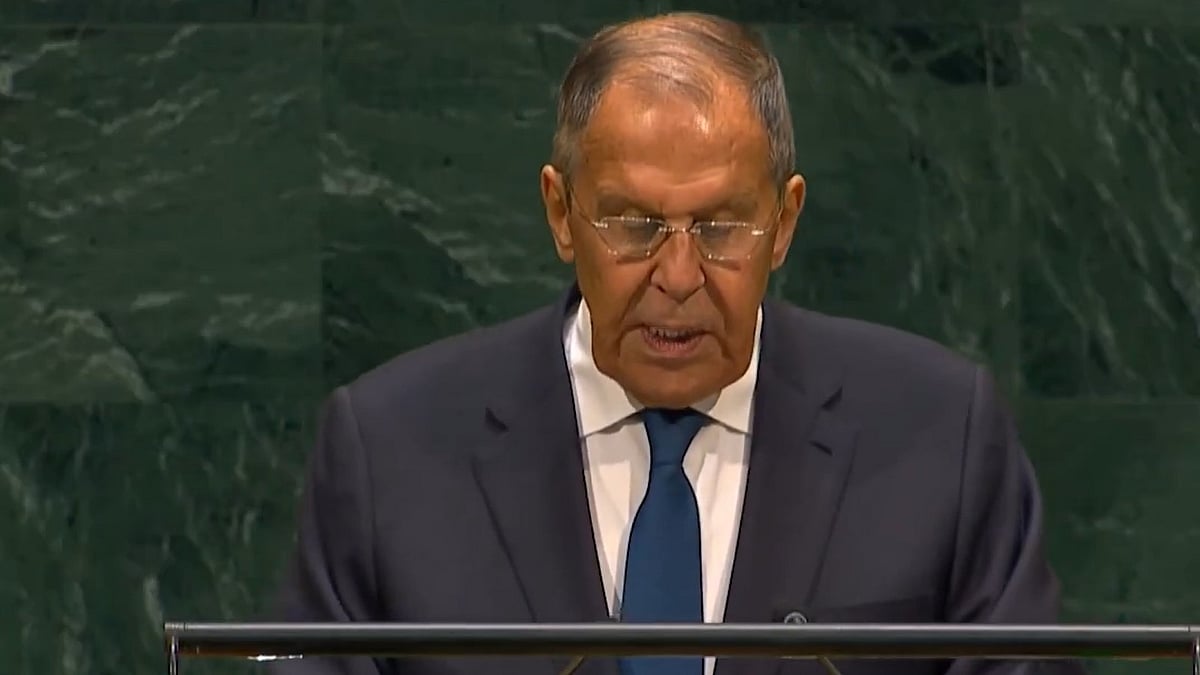
Russian Foreign Minister Sergey Lavrov has reiterated Moscow’s support for India’s bid for a permanent seat on the United Nations Security Council, while opposing the addition of Western countries, particularly Germany and Japan, to the Council’s permanent membership.
Speaking during the 81st United Nations General Assembly in New York on September 26, Lavrov said UNSC reform should focus on giving greater representation to Asia, Africa and Latin America.
Lavrov Backs India, Brazil For Permanent Seats
Lavrov explicitly backed the candidatures of India and Brazil for permanent membership of the Security Council.
He said any expansion of permanent membership should not involve allocating additional seats to Western countries, specifically naming Germany and Japan. Lavrov argued that greater representation should instead be given to regions that he said remain underrepresented in the Council, including Asia, Africa and Latin America.
Russia has consistently supported India’s demand for a permanent UNSC seat, presenting it as part of a broader push for greater representation of the Global South. The latest remarks therefore reaffirm Moscow’s established position rather than marking a new policy shift.
Russia’s Position Puts G4 Differences In Focus
Lavrov’s remarks also highlight a key difference within the G4 grouping, which comprises India, Brazil, Germany and Japan.
The four countries jointly campaign for reform of the Security Council and support expanding both permanent and non-permanent membership. The G4 foreign ministers met in New York on September 22 and reiterated that UNSC reform was increasingly necessary amid changing geopolitical realities.
However, Russia’s support for India and Brazil while opposing permanent seats for Germany and Japan underlines the differing positions among major powers on how an expanded Council should look.
Portugal, Mauritius Also Back India’s Bid
India’s push for permanent membership has received support from several other countries during the ongoing UN General Assembly.
Portugal backed permanent membership for India, while Mauritius also explicitly reiterated its support for New Delhi’s candidature. Portugal additionally called for permanent representation for Africa and Brazil as part of a broader reform of the Security Council.
The fresh endorsements came amid renewed calls for the Council to reflect contemporary geopolitical and regional realities.
Why UNSC Reform Remains Difficult
The Security Council currently has 15 members — five permanent members and 10 non-permanent members elected for two-year terms. The permanent members are China, France, Russia, the United Kingdom and the United States, all of which have veto powers.
Any change to the Council’s composition requires a two-thirds majority in the General Assembly as well as ratification by two-thirds of UN member states, including all five permanent members.
Disagreements over the number of new permanent and non-permanent seats, regional representation and whether new permanent members should receive veto powers have continued to slow the reform process.
India’s Longstanding Push For Permanent Membership
India has been seeking a permanent seat on the Security Council for decades and has served eight times as an elected, non-permanent member.
ALSO READ
New Delhi is part of the G4 alongside Brazil, Germany and Japan, with the group calling for an expansion of both categories of Council membership. The G4 argues that the current structure does not adequately reflect contemporary global realities.
Russia’s latest endorsement adds to the international support for India’s candidature, even as Moscow’s opposition to Germany and Japan demonstrates the broader disagreement over the shape of any eventual UNSC expansion.
RECENT STORIES
-
-
-
-
-