India–US Trade Deal Draft To Be Ready Soon, Signing Expected In March: Piyush Goyal
Commerce Minister Piyush Goyal said the India–US interim trade agreement is likely to be implemented in April, with legal discussions set to begin February 23. The pact reduces tariffs on over $40 billion worth of Indian exports, boosting sectors like textiles, leather, pharma and machinery, while safeguarding farmers and MSMEs.

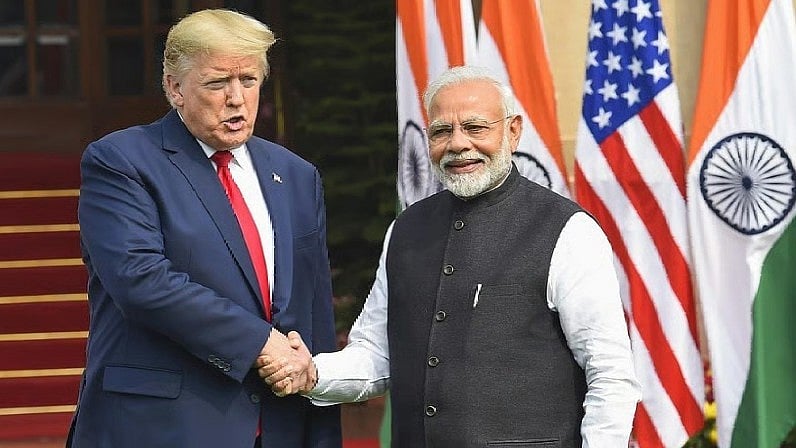
PM Modi with US President Donald Trump (File Image) | PTI
Commerce and Industry Minister Piyush Goyal on Friday said the interim trade agreement between India and the United States is expected to come into force in April. He added that Indian and American officials will meet in the US from February 23 for three days to finalise the legal framework of the pact.
Goyal further stated that India’s free trade agreements with the United Kingdom and Oman are also likely to be implemented in April, while the proposed agreement with New Zealand is expected to take effect in September.
Earlier, on February 7, both nations had announced a framework for an interim reciprocal trade agreement. According to an official statement, the pact represents a significant step in India’s global trade outreach, ensuring sustained preferential access for Indian goods in the vast US market.
The agreement provides for extensive tariff rationalisation, including zero-duty access for several product categories, and strengthens digital and technology collaboration. It also incorporates safeguards for farmers, MSMEs and domestic industries.
ALSO READ
With India’s exports to the US reaching $86.35 billion in 2024, the deal enhances competitiveness in sectors such as textiles, leather, gems and jewellery, agriculture, machinery, pharmaceuticals and technology. Tariffs on $30.94 billion worth of exports have been reduced from 50% to 18%, while duties on goods worth $10.03 billion have been cut to zero.
Labour-intensive sectors, particularly textiles, apparel, leather and footwear, are expected to witness major gains, boosting manufacturing and employment across MSME clusters.
RECENT STORIES
-
-
-
-
-