India Deepens Nuclear Science Cooperation With Global South As 'Vishwa Bandhu': India At UN
India is deepening nuclear science cooperation with Global South countries, Sangeeta Kumari Singh Deo told the UN General Assembly. Highlighting India's chairmanship of the Regional Cooperative Agreement, she cited cancer care training for neighbouring countries, the Kalpakkam fast breeder reactor achieving criticality and its heat-based hydrogen production demonstration.

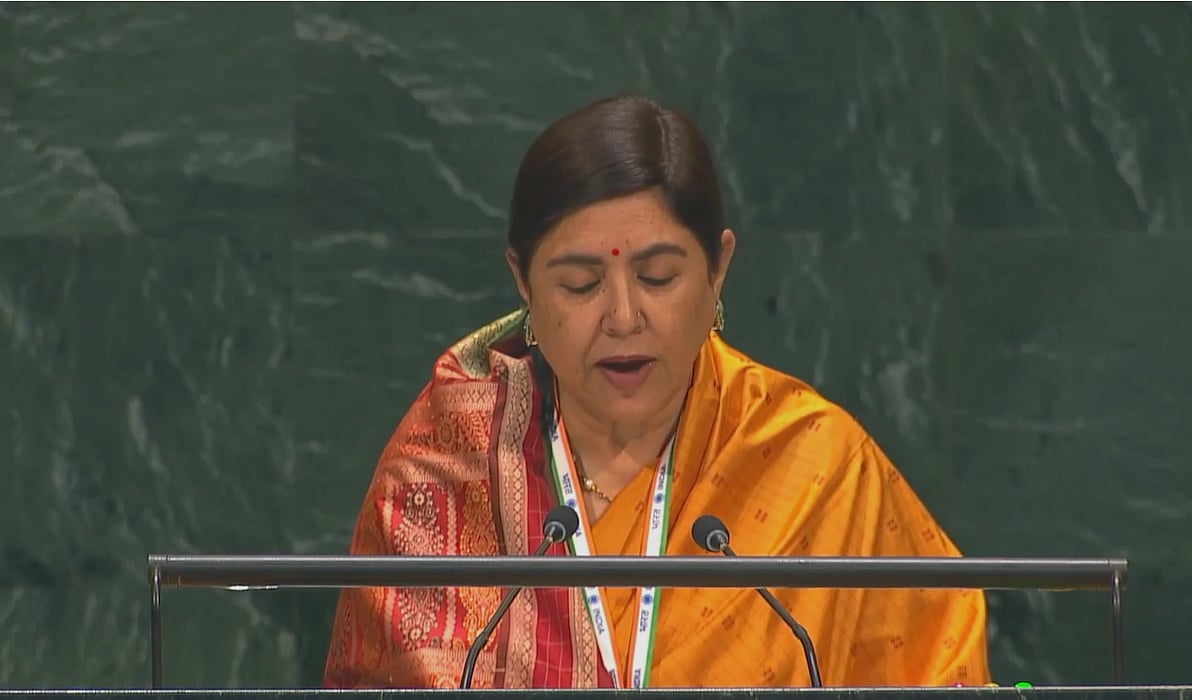
United Nations, Oct 24 (IANS) As the "Vishwa Bandhu" -- Friend to the World -- India is deepening its cooperation with the countries of the Global South to ensure the benefits of nuclear science reach any country needs them, according to Sangeeta Kumari Singh Deo, who is leading the parliamentary delegation to the UN.
India Reaffirms Commitment To South-South Cooperation
"A long association with the IAEA (International Atomic Energy Agency) finds a special expression this year through the Regional Cooperative Agreement for Research, Development and Training (RCA) related to Nuclear Science and Technology", the BJP member of the Lok Sabha told the General Assembly on Friday.
"India's chairmanship of RCA is a reaffirmation of our strong commitment to South-South cooperation and to ensuring that the benefits of nuclear science reach every nation that seeks them", she said.
"India's chairmanship of RCA is a reaffirmation of our strong commitment to South-South cooperation and to ensuring that the benefits of nuclear science reach every nation that seeks them", she said.
India became the chair of the 22-member RCA in May this year with a pledge "to further strengthen collaborative pathways among member states through science, innovation, and shared progress".
India Extends Cancer Care Training To Neighbouring Countries
Singh Deo said "a shining example of India's neighbourhood first policy" is the Mumbai Tata Memorial Centre's (TMC) programme under the Bengal Initiative for Multi-Sectoral Technical and Economic Cooperation (BIMSTEC) Cooperation Framework for a specialised training programme in cancer care for health care professionals.
Specialists from Bangladesh, Bhutan, Nepal and Myanmar participated in the programme run by TMC, which operates under the Department of Atomic Energy, she said.
India Highlights Nuclear Power And Research Achievements
Singh Deo said that "as a country with advanced nuclear technology, India has made significant achievements in the area of nuclear power and research applications".
In April, India became only the second country to have a prototype fast breeder reactor go "critical", she said.
The indigenously designed and developed 500-megawatt reactor using fast breeder technology at Kalpakkam went critical, meaning it achieved stable, sustainable operation.
And in June, for the first time in the world, the reactor demonstrated heat-based hydrogen production, Singh Deo said.
Last year, the Nuclear Power Corporation of India Limited achieved total electricity generation of 55,190 million units, with an overall plant load factor of 80 per cent with an impeccable safety record, she said.
(Except for the headline, this article has not been edited by FPJ's editorial team and is auto-generated from an agency feed.)
RECENT STORIES
-
-
-
-
-