Dirty Words vs Filthy Minds: Supreme Court Draws A Line In The Dirt, Says 'Bastard' Isn't Legally Obscene
The Supreme Court ruled that using the word "bastard" during a heated argument does not constitute obscenity under Section 294 of the IPC, as the term lacks the sexual or prurient element required to legally qualify as an obscene act

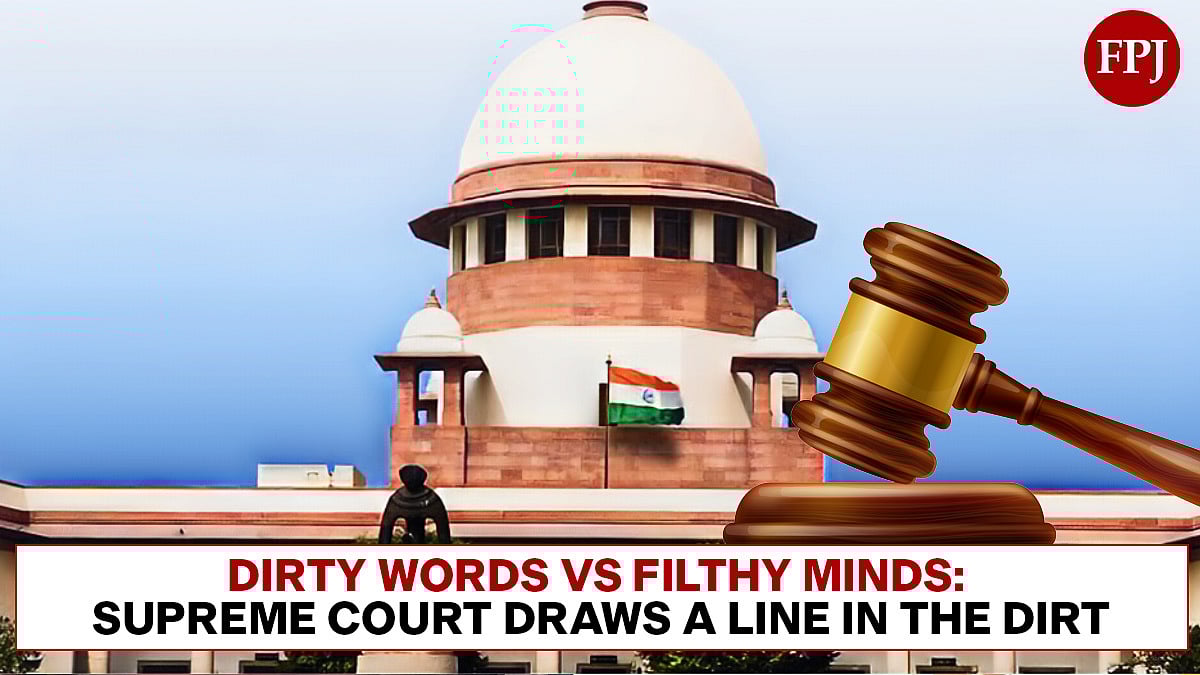
Imagine you’re in a heated row and in a moment of peak frustration, you let a "bastard" fly. While your grandmother might reach for the soap, the Supreme Court of India on Tuesday decided that the law shouldn't necessarily reach for the handcuffs.
In a judgment reported by Bar and Bench, the highest court in the land cleared up a long-standing confusion about what actually counts as "obscene" in the eyes of the law. It turns out, there is a very specific legal line between being a jerk and being a criminal, and the court just drew it in permanent marker.
Who was involved in this legal showdown?
The drama started not in a courtroom, but on a patch of disputed family property. The main characters were two individuals—the appellants—and a family member who was attempting to fence off some land. When the fence went up, tempers flared, and the "B-word" was directed at the person building it.
This led to a legal battle in the case of Sivakumar v. State rep by Inspector of Police, which travelled all the way from a local dispute to the Madras High Court, and finally to the desks of Justice PS Narasimha and Justice Manoj Misra at the Supreme Court of India.
What exactly was the legal fuss about?
The core of the issue was Section 294(b) of the Indian Penal Code (IPC). This specific law punishes anyone who utters "obscene words" in or near a public place to the annoyance of others. The lower courts had previously convicted the two men, agreeing with the State’s argument that calling someone a "bastard" was an act of obscenity.
The appellants, however, challenged this, arguing that while the word might be insulting or rude, it didn’t fit the legal definition of "obscene" required to justify a criminal conviction.
Where do we draw the line on 'obscenity'?
The Supreme Court had to play linguistic detective to solve this. Since the IPC doesn’t give a strict dictionary definition for "obscene," the justices looked at Section 292 of the IPC and previous rulings like Apoorva Arora v. State. They determined that for something to be legally obscene, it must have a "sexual or prurient element."
In plain English, the words must be designed to spark lustful or sexual thoughts. The court pointed out that "obscenity" isn't just anything that causes disgust, shock, or a "yuck" factor, it has to have a specifically sexual undertone to trigger a criminal charge.
When did the court decide to step in?
The ruling was delivered on a Monday, putting an end to a case that had seen the accused convicted by the Madras High Court. The Supreme Court stepped in to correct what it saw as a misapplication of the law. They noted that in the "modern era," words like "bastard" are commonly used during heated conversations.
By setting aside the conviction, the court signalled that the legal system shouldn't be used to police every instance of bad manners or common insults used during an argument.
Why does this ruling matter for you?
This decision is a major win for clarity in free speech. It clarifies that the State cannot slap a criminal record on someone just for using "abusive words" that don't have a sexual context. The court essentially said that while calling someone names is definitely not nice, it doesn't automatically mean you are corrupting public morals.
It protects citizens from being over-prosecuted for "mere abuse" that happens in the heat of the moment, ensuring that the heavy hammer of Section 294 is reserved for actual obscenity rather than just garden-variety rudeness.
How did the apex court reach its final conclusion?
The Bench concluded that the word "bastard," while an insult regarding someone’s parentage, does not "arouse prurient interest." Because the altercation was about a property boundary and not something sexual, the use of the word didn't meet the high bar required for a conviction.
Consequently, the Supreme Court set aside the previous judgment and acquitted the individuals. They made it clear that the law is there to stop public indecency, not to act as a referee for every neighbourhood shouting match.
Published on: Tuesday, April 07, 2026, 01:52 PM ISTRECENT STORIES
-
-
-
-
-