Centre Asks Gram Panchayats To Pass ‘Child Marriage-Free Village’ Resolution On October 2
The Centre has asked gram panchayats across India to pass “Child Marriage-Free Village” resolutions during gram sabha meetings on October 2. The resolutions will undergo verification by Child Marriage Prohibition Officers before villages can receive certification, with local monitoring and protection systems expected to support the process.

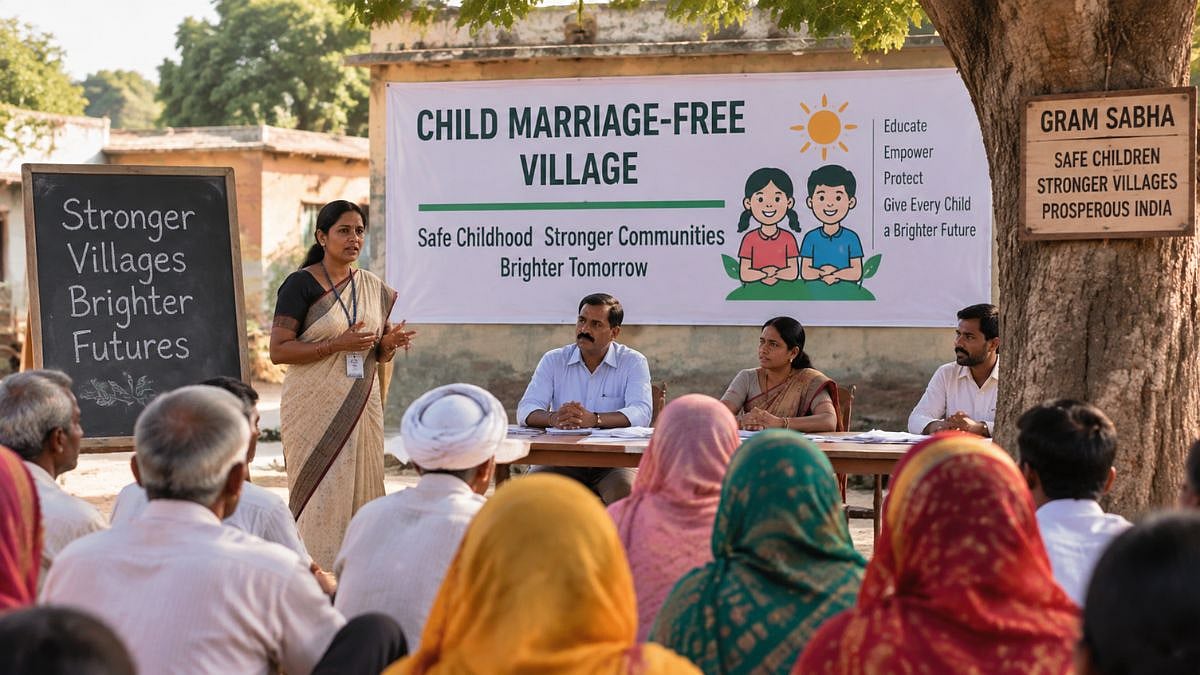
Gram sabhas across India will take up resolutions aimed at strengthening local efforts to prevent child marriage on October 2 | AI Generated Representational Image
New Delhi, September 23, 2026: In a nationwide push to eliminate child marriage, the Union Government has directed gram panchayats to pass resolutions declaring their villages “Child Marriage-Free” during gram sabha meetings on October 2.
The move seeks to strengthen accountability at the grassroots level and create local monitoring systems for child protection. Importantly, passing a resolution alone will not be enough to secure the status, with a verification process built into the certification system.
Resolution Is Only The First Step
The Union Ministry of Women and Child Development wrote to all states and Union Territories on September 16, outlining the process. Once a gram sabha passes the resolution, the designated Child Marriage Prohibition Officer will verify the village’s status.
After the prescribed process is completed, the village will receive a “Child Marriage-Free Village Certificate”. It must be signed by the Block Development Officer (BDO), sarpanch, panchayat secretary and Child Marriage Prohibition Officer.
Vineet Joshi, Secretary, Ministry of Panchayati Raj, told Additional Chief Secretaries or Principal Secretaries in charge of women and child development in states and Union Territories that passing the resolution was a compulsory criterion for certification.
The letter said the Ministry of Women and Child Development was implementing the Bal Vivah Mukt Bharat Abhiyan to accelerate efforts to eliminate child marriage. It also referred to an earlier letter dated June 23 seeking the Ministry of Panchayati Raj’s support in ensuring the participation of Panchayati Raj Institutions in the certification process.
The resolutions must be properly recorded and shared with the Child Marriage Prohibition Officer concerned and the Department of Women and Child Development for verification and further action.
Haryana Numbers Show Challenge Remains
According to the National Family Health Survey-5 (NFHS-5), around 12.5% of women in Haryana were married before turning 18. In Sirsa district, the figure is around 9%, while nationally, 23.3% of women aged 20-24 reported being married before the age of 18.
Although Haryana’s figure is below the national average, the data shows that child marriage has not been completely eradicated, particularly in rural and marginalised communities.
Haryana registered 402 complaints under the Prohibition of Child Marriage Act between April 2025 and March 2026.
A ground report prepared by child and women’s rights activist Sunil Jaglan, founder of the Selfie With Daughter Foundation, and submitted to the Deputy Commissioner of Sirsa found that none of the panchayats surveyed had active Child Protection Committees, The New Indian Express reports.
The report recommended the immediate constitution of functional Child Protection Committees in every gram panchayat. It also called for a marriage register in every village and an October 2 gram sabha resolution to create “Child-Safe Villages”.
Local Systems Key To Making Pledge Work
As part of the Bal Azaadi Abhiyan, jointly run by the Selfie With Daughter Foundation and Just Rights for Children, Team Laado units have been formed from panchayats to colleges under Jaglan’s leadership. The teams identify cases of child marriage, raise awareness and intervene when required.
The focus on local mechanisms is significant because certification can have meaning only when villages have functioning systems to identify and prevent child marriages. The mandatory verification process is intended to ensure that the “Child Marriage-Free Village” declaration does not remain merely a paper exercise.
UNICEF estimates that more than 1.5 million girls under the age of 18 are married every year in India. The country accounts for nearly one-third of child marriages worldwide, while approximately 22.24 crore living women in India were married before turning 18.
Jaglan said the initiative that began in Sirsa was now developing into a nationwide campaign.
“On October 2, villages must go beyond taking a pledge. They need to put in place active systems that genuinely protect children,” he said.
Global Push Against Child Marriage
Jaglan also said the United Nations General Assembly adopted a resolution on September 4 establishing November 27 as the International Day for the Elimination of Child, Early and Forced Marriage. He described it as an important global commitment to accelerate collective action against child marriage.
He said his organisation could support local administrations in helping gram panchayats pass the resolutions, constitute Child Welfare and Protection Committees (CWPCs), strengthen marriage and migration records, raise community awareness, prevent child marriage and improve district-level coordination.
Also Watch:
The October 2 exercise, therefore, puts the responsibility at the village level, but its effectiveness will depend on whether resolutions are followed by functioning protection committees, reliable records, verification and sustained intervention.
To get details on exclusive and budget-friendly property deals in Mumbai & surrounding regions, do visit: https://budgetproperties.in/
RECENT STORIES
-
-
-
-
-