‘Can You Do Anything Just Because Of Your Uniform?’: Karnataka HC Tears Into Police Over Illegal Arrests
The Karnataka High Court has criticised police for alleged misuse of arrest powers, saying custody cannot be routine. Justice M Nagaprasanna, in two cases, questioned illegal arrests in forgery and false promise to marry matters, and pulled up magistrates for mechanical remand approvals. The Court ordered departmental inquiries and directed release of one petitioner immediately.

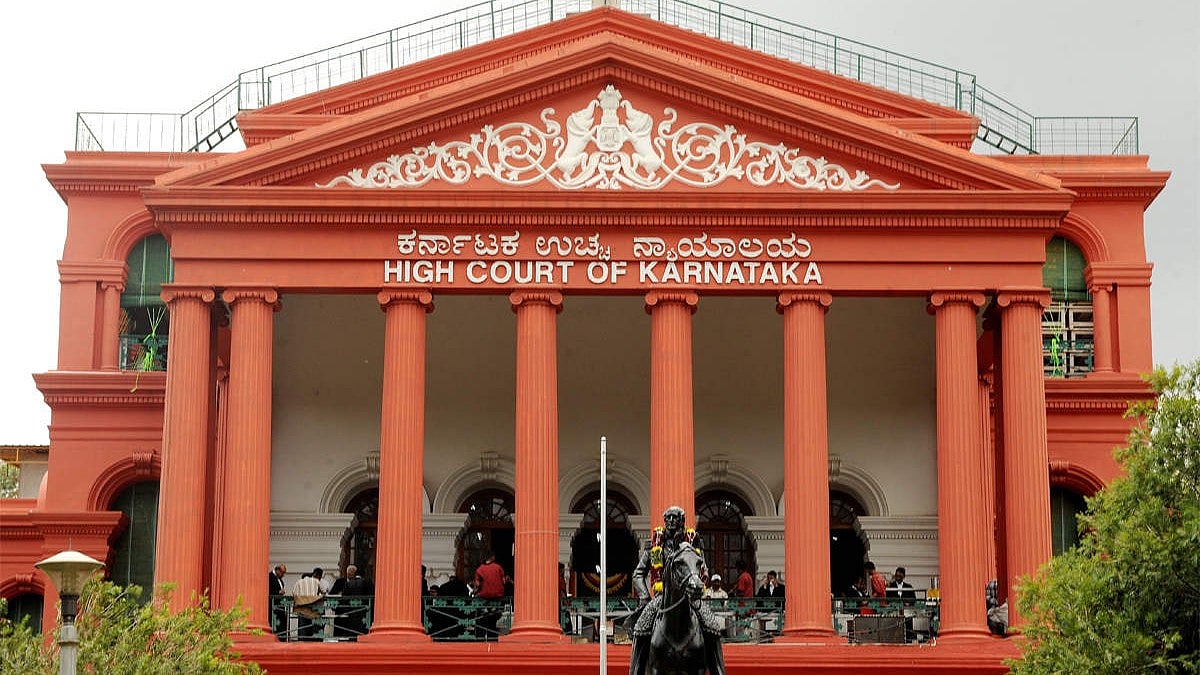
Karnataka HC | Photo: PTI
The Karnataka High Court on Thursday came down heavily on police officers over what it described as a growing misuse of arrest powers, warning that sending people to jail cannot become a routine exercise. In two separate cases, the Court questioned illegal arrests, criticised investigating officers for ignoring settled legal principles and even pulled up magistrates for mechanically approving police remand requests.
Justice M Nagaprasanna made it clear that the power to arrest must be exercised strictly in accordance with the law and not as a tool of convenience. “You have uniform, can you do anything? Is sending a person to jail a play? Do you think it is play, sending someone to prison? If a crime is committed, definitely send him to jail, but in a manner known to law,” the judge observed during the hearing, Bar & Bench reports.
Uniform is not a licence
The first case involved a forgery complaint filed by a woman against her husband. According to the case records, an FIR was registered on Dec 19, 2025, alleging that the husband forged his wife’s signature, created a partnership deed and opened a current account without her knowledge.
The petitioner’s counsel, Advocate Trivikram S, argued that although the FIR had been registered in December, the police carried out virtually no meaningful investigation for more than three months. The husband was then suddenly arrested over four months after the FIR was registered. The Court questioned why he had been taken into custody in a forgery case, asking whether the mere filing of a complaint by a wife justified sending her husband to jail.
Justice Nagaprasanna noted that the first investigating officer had conducted “no investigation worth the name” before a new station house officer, Ramesh, took charge. The new officer allegedly issued a notice asking the petitioner to appear before the police and later claimed he had not cooperated with the investigation before arresting him.
The Court reiterated that the Supreme Court has consistently held that arrest should be the last resort, particularly in offences punishable with imprisonment of seven years or less. It found no valid reason for the arrest except the officer’s claim that the petitioner had failed to cooperate with the investigation.
Departmental action ordered
Holding that such conduct could not go unchecked, the High Court directed the competent authority to initiate a departmental inquiry against the investigating officer attached to Bagalur Police Station and submit a report within 12 weeks. It also ordered an inquiry against the previous investigating officer for failing to conduct a proper investigation during the initial months after the FIR.
The Court further directed the Registry to immediately communicate its order through email to jail authorities to ensure the petitioner’s release without delay.
In another case heard the same day, the High Court criticised the Inspector of Chitradurga Women Police Station for arresting the brother of a probationary police sub-inspector who was facing allegations in a false-promise-to-marry case. The brother, however, was not directly linked to the alleged offence.
Justice Nagaprasanna questioned the basis of the arrest and remarked that the police were “playing with the law”. “Are you policemen or what? Did second accused make the promise? Why did you put him in jail? What is his mistake?” the judge asked the investigating officer during the hearing.
Strong warning for police and magistrates
Calling the arrest a misuse of law, the Court observed that arrests had become a “playful thing” for some police officers despite the lifelong consequences they carry. The Bench initially indicated that it was inclined to impose costs of ₹1 lakh on the officer, to be paid personally, but later decided to let him off with a warning after submissions by Special Public Prosecutor B N Jagadeesh.
ALSO READ
The Court also warned that similar conduct in future could lead to suspension of erring officers. “Every officer would violate the law like this, to arrest persons without any rhyme or reasons. Definitely, the power of arrest is misused,” the Bench observed.
The judge also questioned the police’s justification for arresting the second accused, noting that the allegation against him was only of harbouring an offender, which is a bailable offence. The Court observed that this alone could not justify taking him into custody.
The High Court also turned its attention to magistrates, criticising them for routinely granting remand without independently examining whether police custody was justified. Justice Nagaprasanna said magistrates serve as the first filter against illegal arrests and should apply their minds before approving remand requests.
The Bench observed that departmental proceedings should also be initiated against the officers responsible for the illegal arrest in the Chitradurga case. However, it adjourned the matter for further hearing until July 2.
RECENT STORIES
-
-
-
-
-