AI-171 Crash: The Inside Story Of The Lone Survivor & The Medical Heroes At Ahmedabad Civil Hospital
Ahmedabad Civil Hospital recalls the AI-171 crash that killed 260 people a year ago. A lone survivor briefly raised hopes of multiple survivors, but soon only severely charred bodies arrived. The hospital handled 71 injured ground victims and later shifted to DNA-based identification of victims over 18 days, marking one of its most traumatic mass casualty responses.

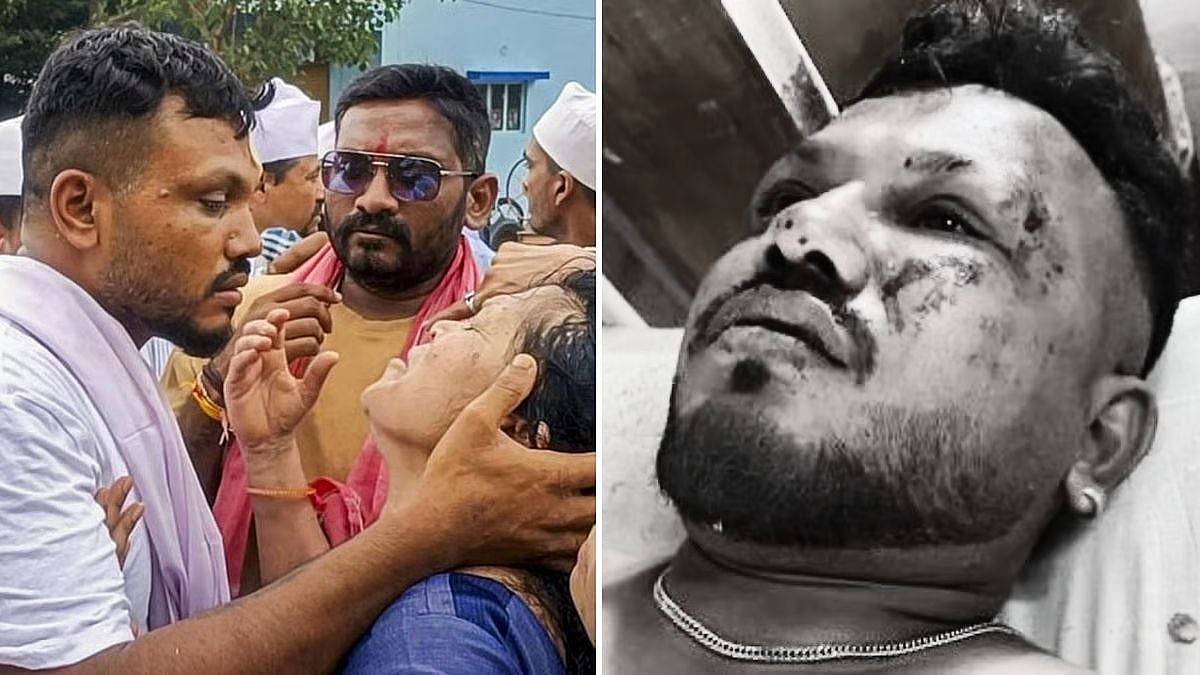
AI-171 Crash: The Inside Story Of The Lone Survivor & The Medical Heroes At Ahmedabad Civil Hospital | file pic
Ahmedabad: For a fleeting, deceptive moment inside the trauma center of Ahmedabad Civil Hospital exactly one year ago, there was hope. It walked in on its own two feet, sparking a ray of hope among the hospital's medical personnel that there might be many survivors. However, the hope soon faded as what followed was a series of unrecognisable, charred bodies, which could not make it to the hospital.
Escorted by the 108 emergency ambulance staff, AI-171’s lone survivor Vishwas Kumar walked through the glass doors of the trauma ward, shaken but breathing. For the scrambled medical teams, his arrival was a shot of adrenaline. If one man could walk away from the international flight that had just plummeted into the adjacent residential and medical college campus, surely a wave of injured survivors would follow.
ALSO READ
Talking to The Free Press Journal, Ahmedabad Civil Hospital’s medical superintendent Dr. Rakesh Joshi recalled the horror he witnessed on the day of the crash. “We saw him enter the hospital on his legs and we thought that a lot of people would come. We mobilised every health worker and set up an immediate triage system. We were ready to save lives but the rush of survivors never came,” he said, his voice dropping as he sat in the very office where, a year ago, the grim reality of the disaster unfolded.
Instead, within an hour, the green and yellow zones grew agonizingly quiet. The hope sparked by Kumar vanished, replaced by a slow, horrifying procession of the dead. For the next 50 to 60 minutes, the hospital received roughly 71 injured individuals – primarily ground casualties, including a campus gardener and medical students caught in the mess hall where the plane impacted. After that, the arrivals changed.
"After an hour, it was horrifying. We were receiving only completely burned-out, charred bodies from the crash site. No one else arrived injured. It was then we realised that Kumar was the lone survivor,” he said.
ALSO READ
The numbers from June 12 last year remain etched in the hospital’s history – 260 dead. Among them were 241 passengers and crew, and 19 ground casualties, including four of the hospital's own medical students who were eating lunch when the widebody aircraft crashed on them.
Dr. Joshi highlighted that the crash site was a mere 300 to 400 meters from the hospital campus and the emergency response was instantaneous but the sheer violence of the impact and the subsequent fire left nothing for the doctors to heal.
"In my whole career, I have never seen such a disaster. To see so many bodies, completely charred, where you cannot recognise a single body as a human being, it is deeply difficult to process. An entire generation of doctors here had never witnessed anything of this scale,” he said, adding that what was expected to be a battle of surgeries turned out to be an 18-day mission of identifying the unidentifiable.
The hospital turned to the only infallible science available -- DNA matching. The superintendent explained that the hospital’s microbiology department took blood samples from the relatives, the forensic team worked on the bodies, and the forensic science laboratory ran the profiles, resulting in the first matching of DNA samples within 48 hours.
The hospital transformed its medical college into a grief and administrative center. They set up a single-window system to spare grieving families the agony of bureaucratic red tape. Over 17 days, 254 victims were identified via DNA profiling while the remaining six were identified through facial recognition.
Dr. Joshi recalled that the shift was about to change when the tragedy struck at around 1.38pm but none of the healthcare workers left. "The forensic teams, the pathologists and even the ward boys remained on duty till they were required. Doctors did non-stop post-mortems and sampling day and night. Just like during COVID, nobody thought about their own exhaustion or psychological trauma. They just worked,” he said.
Yet, the emotional scars on the medical staff remain raw a year later. As Ahmedabad marks the first anniversary of the AI-171 disaster, the visible scars on the residential campus have begun to heal, but the memories inside the Civil Hospital walls remain vivid.
"As human beings, we think about how happy these families were just hours before the crash. Some were going abroad, some were going on vacation, some were sending off loved ones. In a single second, it turned into a tremendous shock. You cannot prepare your mind for that,” the superintendent concluded.
RECENT STORIES
-
-
-
-
-