Ahead Of Parliament Session, PM Modi Pushes Women’s Reservation, Blends Development Pitch With Political Messaging
Prime Minister Narendra Modi on Tuesday urged all parties to support 33% reservation for women in legislatures, calling it a test of collective will ahead of a Parliament session from April 16. Speaking in Dehradun, he said the demand reflects “every sister and daughter”. He also highlighted infrastructure growth while inaugurating the Delhi–Dehradun Economic Corridor.

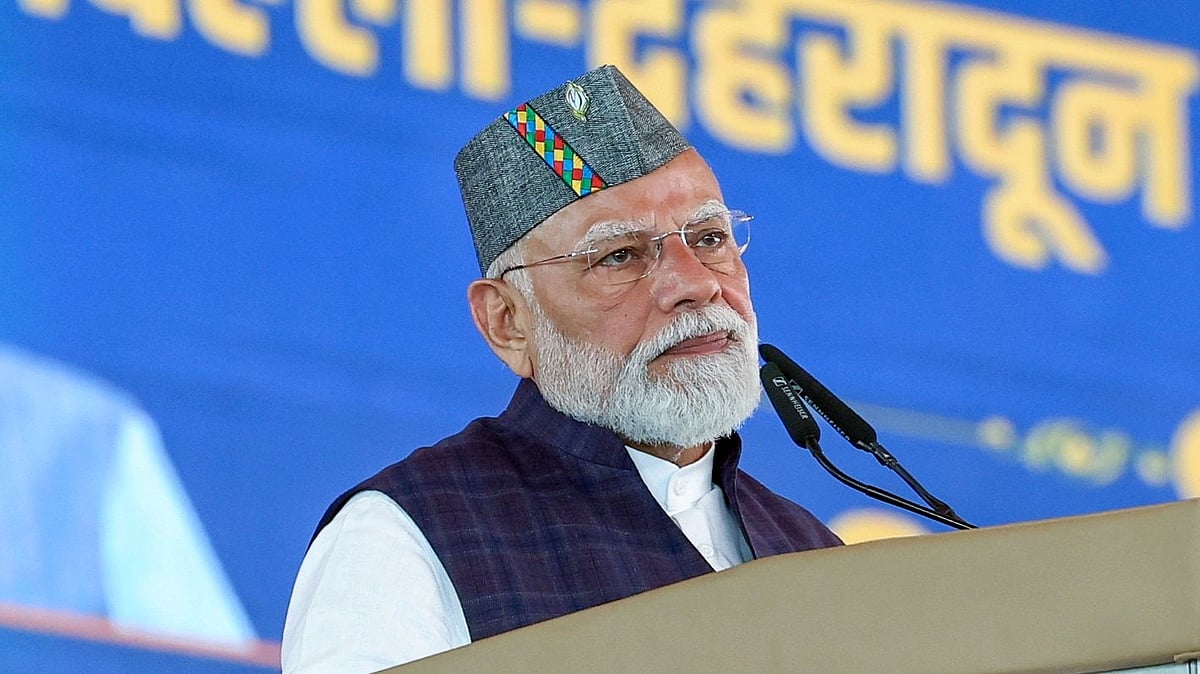
PM Modi | ANI
Dehradun: Two days before a crucial session of Parliament, Prime Minister Narendra Modi on Tuesday sharpened his government’s political pitch on women’s empowerment, urging all parties to back the implementation of 33 per cent reservation for women in legislatures and framing it as a test of collective political will.
Speaking in Dehradun, the Prime Minister said a special discussion has been scheduled in Parliament from April 16 to move forward on the Nari Shakti Vandan Adhiniyam, signalling the government’s intent to push the issue to the centre of the political agenda ahead of the session.
In what is being seen as a calibrated political message, Modi appealed for unanimity across party lines, stating that the demand for greater representation is “the wish of every sister and daughter of the country” and should not be delayed any further.
The remarks come at a time when the government is looking to consolidate its outreach among women voters, a constituency that has played a decisive role in recent elections and remains central to the Bharatiya Janata Party’s broader electoral strategy.
Modi made these remarks while inaugurating the Delhi–Dehradun Economic Corridor, using the platform not only to highlight infrastructure achievements but also to foreground key political priorities of his government.
Projecting development as the cornerstone of governance, he described the expressway as a transformative initiative that would reshape connectivity and economic prospects in Uttarakhand and western Uttar Pradesh.
He said the corridor would reduce travel time, lower fuel consumption and cut logistics costs, while opening up new avenues for trade, tourism and employment across the region.
At the same time, the Prime Minister linked infrastructure growth with broader political messaging, underscoring the scale of public investment under his government and contrasting it with previous regimes.
He said annual infrastructure spending has increased significantly over the past decade, presenting it as evidence of a governance model focused on delivery and long-term growth.
The speech also carried undertones of ideological positioning, with Modi invoking constitutional values and recalling the legacy of Dr B R Ambedkar, while highlighting decisions such as the abrogation of Article 370 and efforts to curb extremism.
In doing so, the Prime Minister sought to weave together development, nationalism and social justice into a unified political narrative ahead of the Parliament session.
He also highlighted Uttarakhand’s adoption of a Uniform Civil Code, projecting it as a model for the rest of the country and reinforcing the government’s reform agenda.
Tourism and regional development were positioned as key beneficiaries of the expressway, with improved connectivity expected to boost access to religious and hill destinations such as Haridwar, Rishikesh and Mussoorie.
ALSO READ
Also Watch:
The Prime Minister, however, coupled the development pitch with a call for environmental responsibility, urging citizens to keep the ecologically sensitive Devbhoomi clean and free of plastic waste.
He also flagged upcoming events such as the Kumbh in Haridwar, using them to stress the need for coordinated governance and public participation.
Significantly, Modi’s outreach extended to the armed forces community, as he reiterated welfare measures for ex-servicemen and invoked Uttarakhand’s strong military tradition.
Political observers see the speech as part of a broader effort by the ruling party to align governance achievements with electoral messaging, particularly in states that are strategically important in the run-up to future polls.
By combining a development narrative with a renewed push on women’s reservation, the Prime Minister has sought to frame the upcoming Parliament session not just as a legislative exercise, but as a referendum on key social and political priorities.
RECENT STORIES
-
-
-
-
-