After Missile, Drone Buys, Army Shifts Focus To Air Defence Training
Indian Army has issued Requests for Information for three new aerial target systems to enhance training against drones, swarm threats and missile-like target, The Indian Express reports. The systems include rocket-based, swarm drone and multirotor platforms designed to simulate evolving air threats. The move follows recent emergency procurements aimed at strengthening air defence readiness forces.

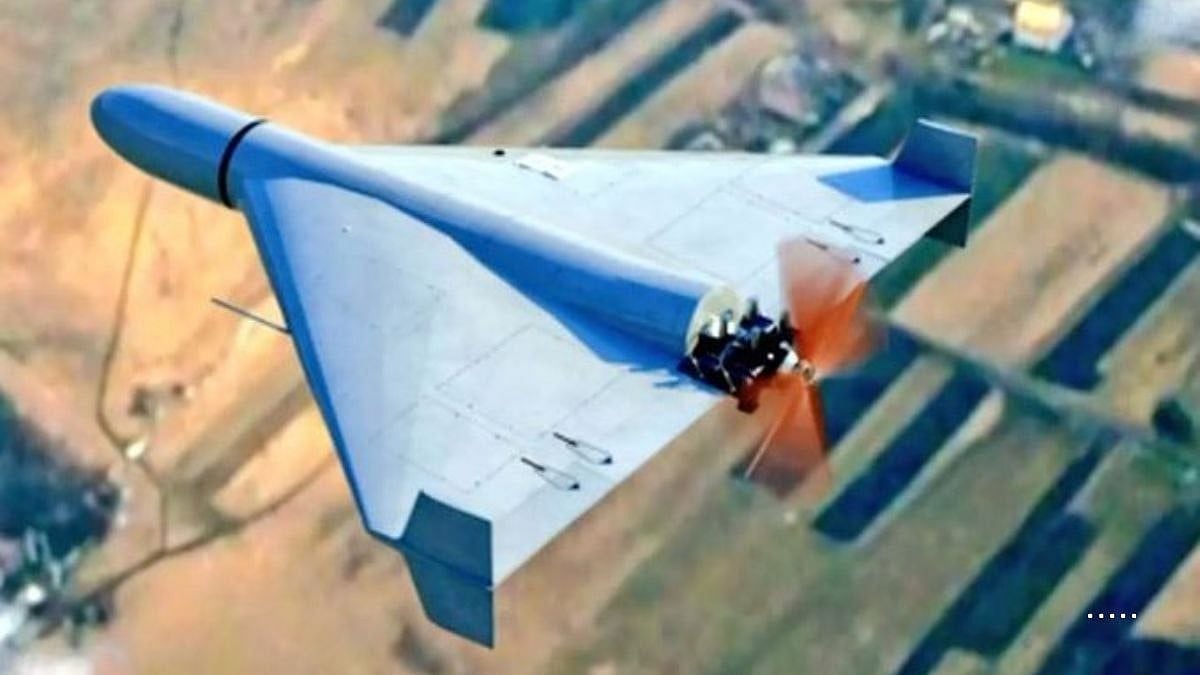
After Missile, Drone Buys, Army Shifts Focus To Air Defence Training | Representational Image
Months after strengthening its combat capabilities with the procurement of drones, air defence missiles and other modern platforms, the Indian Army has begun the process of acquiring three new target systems to improve training against emerging aerial threats.
The move signals a growing emphasis on preparing troops for modern warfare, where threats are no longer limited to conventional fighter aircraft and bombs but increasingly include drone swarms, cruise missiles and other unmanned systems. Over the last year, the Army made several purchases through the emergency procurement route to address identified capability gaps, Indian Express reports.
Training for the next battlefield
Earlier this month, the Army issued three separate Requests for Information (RFIs) for the procurement of the Intermediate Target System (Rocket), the Basic Target System (Swarm Drones) and the Basic Target System (Multirotor Copter). The systems are intended to help train personnel to detect, track and engage a range of aerial threats.
In the RFIs, the Army noted that the air threat environment is evolving rapidly beyond manned fourth- and fifth-generation aircraft and smart bombs. It said air defence units and students undergoing training courses need suitable target systems to prepare for these changing threats.
The Intermediate Target System (Rocket) will serve as an intermediate-level target for firing infrared-based air defence missiles. The Basic Target System (Multirotor Copter) will provide a unit-level target that simulates a slow-moving helicopter for the firing of air defence weapons. Meanwhile, the Basic Target System (Swarm Drones) will be used for training with air defence weapons and directed energy weapons deployed with Army Air Defence units.
Three systems, one objective
According to the RFI, the Intermediate Target System (Rocket) should be capable of safe firing with minimal ground requirements and should be modular, easy to assemble and simple to launch. It will include a rocket capable of generating an infrared signature that can serve as a viable target for infrared-seeking air defence missiles throughout its operation. The system will also include a metal mesh box or another mechanism to prevent the dropping of flares, along with a launcher that can be adjusted in bearing and elevation.
For the Basic Target System (Swarm Drones), the Army has specified that the drone swarm should be capable of being engaged by directed energy weapons and other air defence weapons from a range of 2 km to 5 km. The Army said the individual drones should be recoverable and reusable if they survive an engagement.
The system should be remotely controlled through a radio link or pre-fed waypoint navigation, modular in design and easy to assemble and launch. It will consist of a set of 12 drones capable of operating in an autonomously controlled swarm and equipped with Vertical Take-Off and Landing (VTOL) capability. It will also include a Ground Control Station (GCS) capable of programming the swarm and providing telemetry support.
The Basic Target System (Multirotor Copter), which is an unmanned aerial vehicle (UAV), will simulate a slow-moving helicopter target. It is intended to be engaged by air defence weapons from ranges between 1.5 km and 15 km. Like the swarm drones, it should be recoverable and reusable if it survives after engagement.
The Army has specified that the system should support remote control through a radio link or pre-fed waypoint navigation, be modular in nature and be easy to assemble and launch. The aerial target system will comprise a VTOL-capable multi-rotor platform, a Ground Control Station and a radio data link-based communication system capable of controlling at least two aerial targets simultaneously from a single GCS.
The target system will also include provisions for fitting different payloads based on training objectives, including Radar Cross Section (RCS) and infrared signature augmentation.
The latest procurement effort highlights how the Army is not only acquiring new weapons and platforms but is also investing in realistic training tools. As aerial threats become more diverse and technologically advanced, the ability to train against drone swarms, missile-like targets and helicopter simulations is increasingly becoming a critical part of operational preparedness.
RECENT STORIES
-
-
-
-
-