18 India-Flagged Ships Carrying LPG, Crude Oil Stranded Near Strait Of Hormuz Amid West Asia War
At least 28 ships linked to India, including 18 Indian-flagged vessels, are stranded near the Strait of Hormuz due to escalating Middle East tensions. The disruption has affected crude, LNG and LPG shipments, with 485 Indian seafarers onboard. The government said ensuring safe passage remains its priority as the key energy route faces restrictions.

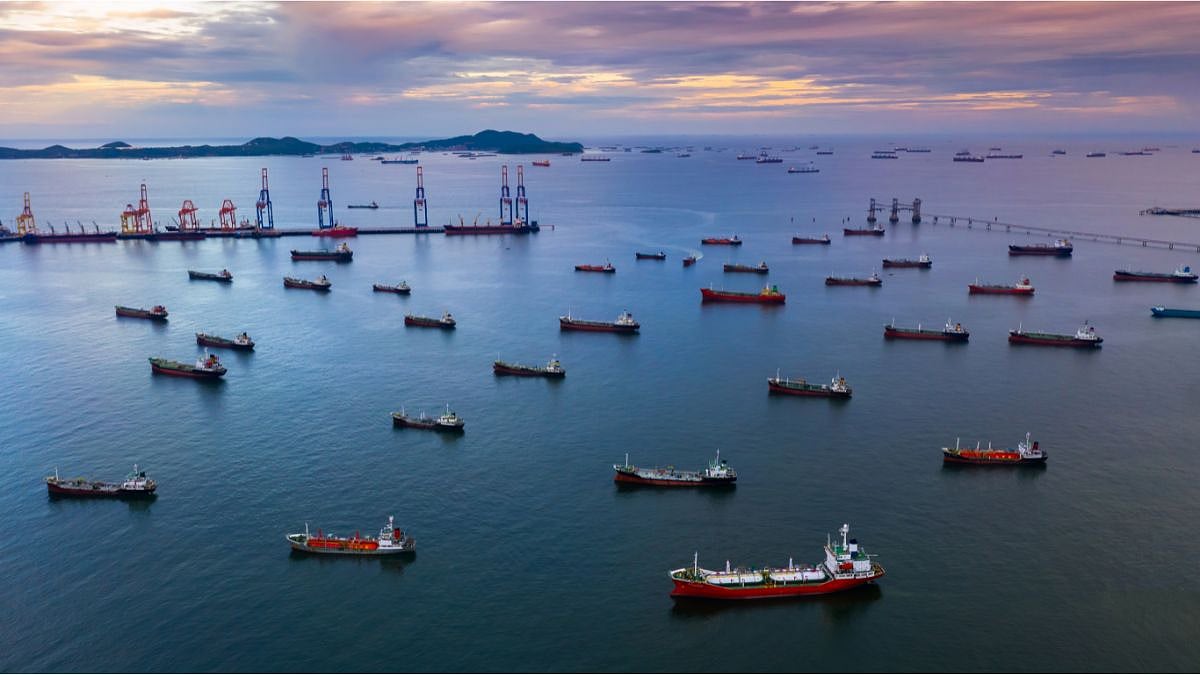
Representational image | Canva
New Delhi: Amid escalating tensions in the Middle East, at least 10 foreign-flagged ships carrying energy supplies for India remain stranded in the Persian Gulf, while 18 Indian-flagged vessels are anchored near the strategically vital Strait of Hormuz, the government confirmed.
The disruption follows intensified hostilities involving Iran, which has majorly restricted access to the narrow shipping corridor, through which nearly a fifth of global crude oil and liquefied natural gas typically passes.
Addressing a media briefing, Rajesh Kumar Sinha, Special Secretary in the Ministry of Ports, Shipping and Waterways, said the stranded foreign vessels include three carrying liquefied petroleum gas (LPG), four crude oil tankers and three liquefied natural gas (LNG) carriers.
Among the 18 Indian-flagged vessels in the region, three are LPG carriers, one is transporting LNG, and four are crude oil tankers. One additional tanker is currently being loaded with LPG. In total, 485 Indian seafarers are onboard these vessels, officials confirmed.
“These ships were among nearly 500 vessels impacted in the region as tensions escalated,” Sinha said, stressing that the government’s top priority is to ensure the safe passage of Indian-flagged vessels carrying critical cargo.
ALSO READ
While the Strait itself remains a high-risk zone, surrounding waters have also been classified as high-risk areas (HRA), leading to a sharp spike in insurance premiums. “Premiums that were earlier around 0.04 per cent of the insured value have now surged to as high as 0.7 per cent in some cases,” Sinha noted.
The conflict, which began on February 28 after military strikes by the United States and Israel on Iran, has triggered retaliatory actions by Tehran, further complicating maritime movement in the region. However, Iran has recently indicated that 'non-hostile vessels' may be allowed passage, subject to prior coordination.
Despite the crisis, there has been some progress. Eight Indian-flagged vessels have successfully navigated the strait in recent days. Among them are LPG carriers BW TYR and BW ELM, which together are transporting around 94,000 tonnes of LPG. BW TYR is expected to reach Mumbai by March 31, while BW ELM is headed to Mangaluru, likely arriving on April 1.
Officials said the government is closely monitoring vessel movements, seafarer safety, and port operations. “All Indian seafarers in the region are safe, and no incidents involving Indian-flagged vessels have been reported in the past 24 hours,” Sinha added.
The situation poses a major challenge to India’s energy security, as nearly 40 per cent of its crude oil, over 50 per cent of LNG, and about 90 per cent of LPG imports pass through the Strait of Hormuz. Diplomatic efforts are underway to ensure uninterrupted supply and safe transit through the volatile region.
RECENT STORIES
-
-
-
-
-