Bombay High Court Dismisses Centre's Claim Over 220 Acres Salt Pan Land In Mira-Bhayander, Upholds 2018 Verdict
The Bombay High Court dismissed the Centre’s appeal claiming ownership of over 220 acres of salt pan land in Mira-Bhayander, upholding a 2018 trial court ruling. The court said the Union failed to prove title and denied its plea for possession and stay, allowing private parties’ rights over the land to continue.

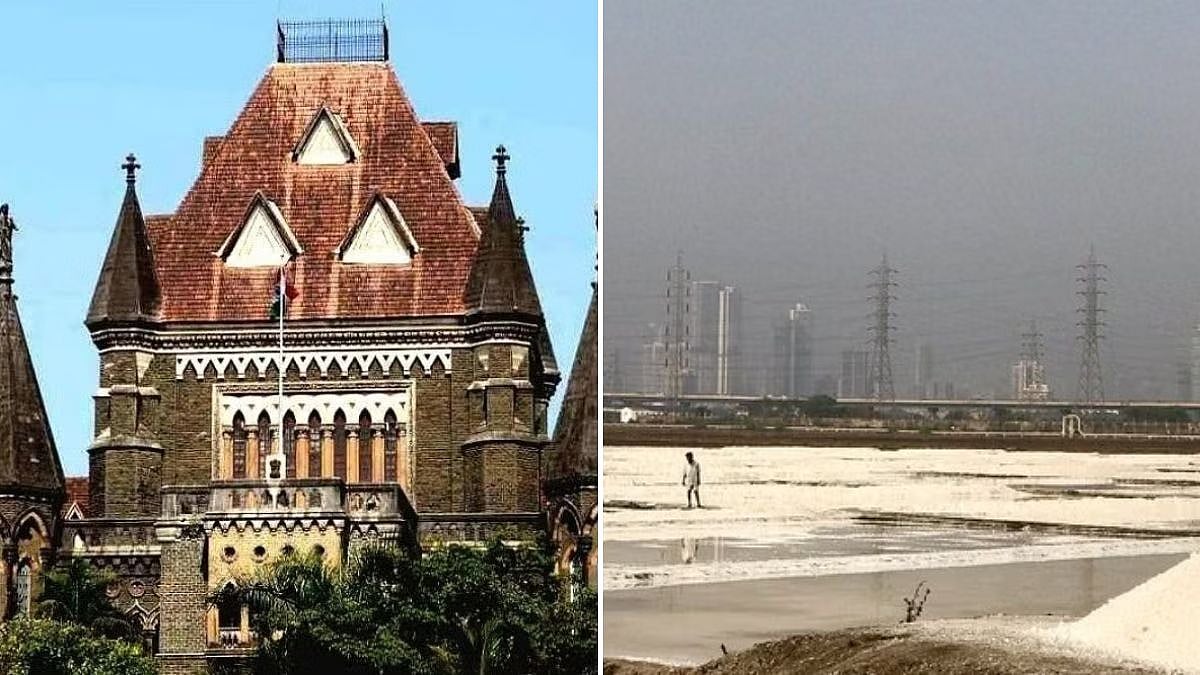
Bombay High Court Dismisses Centre's Claim Over 220 Acres Salt Pan Land In Mira-Bhayander, Upholds 2018 Verdict | File Pic
Mumbai: The Bombay High Court has dismissed an appeal filed by the Union of India claiming ownership over salt pan lands in Mira-Bhayander and refused to grant any interim stay on the operation of the judgment.
Verdict Summary
A bench of Chief Justice Shree Chandrashekhar and Justice Gautam Ankhad upheld a 2018 decision of a Thane civil court, which had rejected the Centre’s claim of title over land measuring over 220 acres, forming part of the Mira, Manek and Shapur salt works.
The Union government had sought a declaration that it was the owner of the land and that private parties had “no right, title or interest” in it. It had also sought possession and an injunction to restrain any development or creation of third-party rights.
Trial Court Finding
The trial court noted that the Centre failed to establish ownership. Hence, the Centre challenged this before the HC.
Dismissing the appeal, the High Court agreed with the trial court’s conclusion that “the plaintiff (Union of India) has failed to prove its ownership over the suit property” and therefore was not entitled to claim possession or other reliefs.
Historical Dispute Origin
The dispute dates back to an 1870 indenture under which large tracts of land, measuring 3,688 acres, in Bhayander, Mira and nearby villages were granted for 999 years. The present case relates to about 220 acres of Eksali land, later used for salt manufacturing.
The Centre argued that the indenture was only a limited grant and did not transfer ownership. It claimed that since the land was used for salt production – a Union subject – the ownership continued to vest with it.
Burden of Proof Argument
It was also contended that “the burden lies on the respondents” to show how the government lost title, and that the trial court had failed to properly examine key revenue orders.
The respondents, however, argued that the indenture amounted to a complete grant creating proprietary rights. They relied on a long history of litigation and revenue records recognising private ownership and tenancy rights.
ALSO READ
High Court's Key Observation
The High Court noted that the Centre had not produced any document to show that the land was ever held for a federal purpose. It also took into account earlier findings that the land was privately owned, with one entity recognised as the landholder and another as tenant for salt manufacture.
Significantly, the trial court had observed that even the Centre’s own witness admitted that the lands were private and that no objection had been raised to earlier transactions.
Refusing to interfere, the High Court found no merit in the appeal and upheld the dismissal of the suit.
The bench also declined the Centre’s request for a stay on the judgment, effectively clearing the way for the private parties’ rights over the land to continue without restriction.
To get details on exclusive and budget-friendly property deals in Mumbai & surrounding regions, do visit: https://budgetproperties.in/
RECENT STORIES
-
-
-
-
-