Which Water Is Best For Drinking In Indian Households?
Choosing the right water purifier depends on water quality, not just appearance or taste. TDS levels, contamination sources, and BIS standards play a key role in selecting purification methods. RO is ideal for high TDS water, while UV suits low-TDS municipal supplies. Technologies like copper, zinc, and alkaline purification offer additional benefits for safer drinking water.

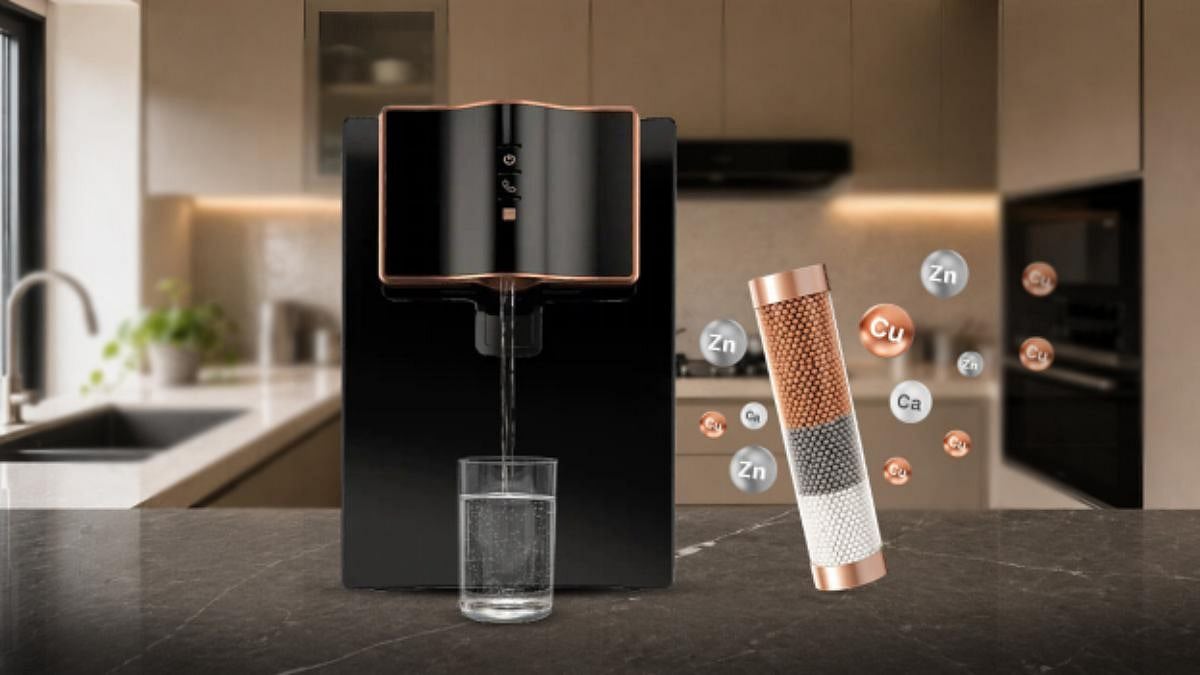
Which Water Is Best For Drinking In Indian Households? | File photo
Water quality is determined by more than just how water looks or tastes. It also depends on the substances dissolved or present in it. In India, drinking water comes from multiple sources such as municipal supply, borewells, tankers, and packaged water, each with a different contamination profile. Since each source has a different contamination profile, choosing the right water purifier for home should depend on the quality of the source water rather than assumptions.
What Is TDS and Why Clear Water Isn't Always Safe
Total Dissolved Solids (TDS) is one of the most important indicators of water quality. It measures the amount of dissolved substances in water, including minerals like calcium and magnesium, as well as contaminants such as fluoride, nitrates, and heavy metals.
Water with a high TDS level may look perfectly clear, while water that appears cloudy may have acceptable TDS but may have microbial contamination.
It is worth noting that a very low TDS level can also be a concern. Water that has been over-purified may contain less than 50 ppm of dissolved solids. Such water lacks essential minerals and often tastes flat.
Most experts consider a TDS range of 150–300 ppm ideal for daily consumption because it provides a good balance of purity and minerals.
BIS Standards Every Indian Household Should Know
Drinking water quality in India is guided by standards set by the Bureau of Indian Standards (BIS). These benchmarks can help households assess whether their water is suitable for regular consumption or they require a water purifier.
Under BIS IS 10500:2012, the acceptable TDS limit for drinking water is 500 mg/L. In areas where no alternative source is available, levels up to 2,000 mg/L are permitted.
For most households, a TDS range of 150–300 mg/L offers the right balance of minerals, taste, and safety. In cases where your source water exceeds 500 mg/L, installing an RO water purifier can be a practical choice.
How Different Purification Methods Affect Water Quality?
There are several water purification technologies available today, each designed to address different types of contaminants. While water purifier price is an important factor, understanding how these technologies work can help you choose the most suitable water purifier for your home.
● Boiling
Boiling water is one of the simplest ways to make water microbiologically safe. It effectively kills bacteria, viruses, and other disease-causing organisms.
However, boiling cannot reduce TDS or remove dissolved contaminants such as heavy metals, fluoride, or nitrates. In fact, prolonged boiling may slightly increase the concentration of dissolved solids as water evaporates.
● UV Purification
UV purification uses ultraviolet light to deactivate bacteria, viruses, and other microorganisms. Since it does not alter the mineral content of water, it is well suited for municipal or piped water supplies with a TDS below 300 ppm.
A UV-based water filter for home is ideal when the source water is already low in dissolved impurities.
● RO (Reverse Osmosis)
An RO water purifier uses a semi-permeable membrane to remove dissolved salts, heavy metals, fluoride, nitrates, and other chemical contaminants. It is particularly effective for water with TDS above 500 ppm and is often recommended for households that rely on borewell or tanker water.
● Active Copper and Zinc Technology
Some advanced water purifiers come with activated copper and zinc technology that infuses the right amounts of copper and zinc in the water. These minerals play an important role in immune function and cellular metabolism. Inspired by the traditional practice of storing water in copper vessels, this technology combines purification with mineral enrichment.
For people looking beyond basic purification, such features can add nutritional value without compromising safety.
● Alkaline Technology
Alkaline water purifiers increase the pH of water through mineral cartridges or electrolysis. These systems typically produce water with a pH between 8 and 9.5.
Conclusion
Clean drinking water is essential for maintaining good health, but there is no one-size-fits-all solution. The best water for your home depends on source water quality. Testing your water before choosing a purification system can help you select the best water purifier for home and ensure a consistent supply of clean drinking water.
RECENT STORIES
-
-
-
-
-