Two Famous Bays, Two Growth Hubs For Vietnam’s Future
Over 730 companies managing $22.4 trillion in assets are committing to nature-related risk disclosures. Vietnam’s Vinhomes is advancing sustainable urban development through its ESG++ strategy, with projects in Can Gio and Ha Long balancing ecological preservation with economic growth.

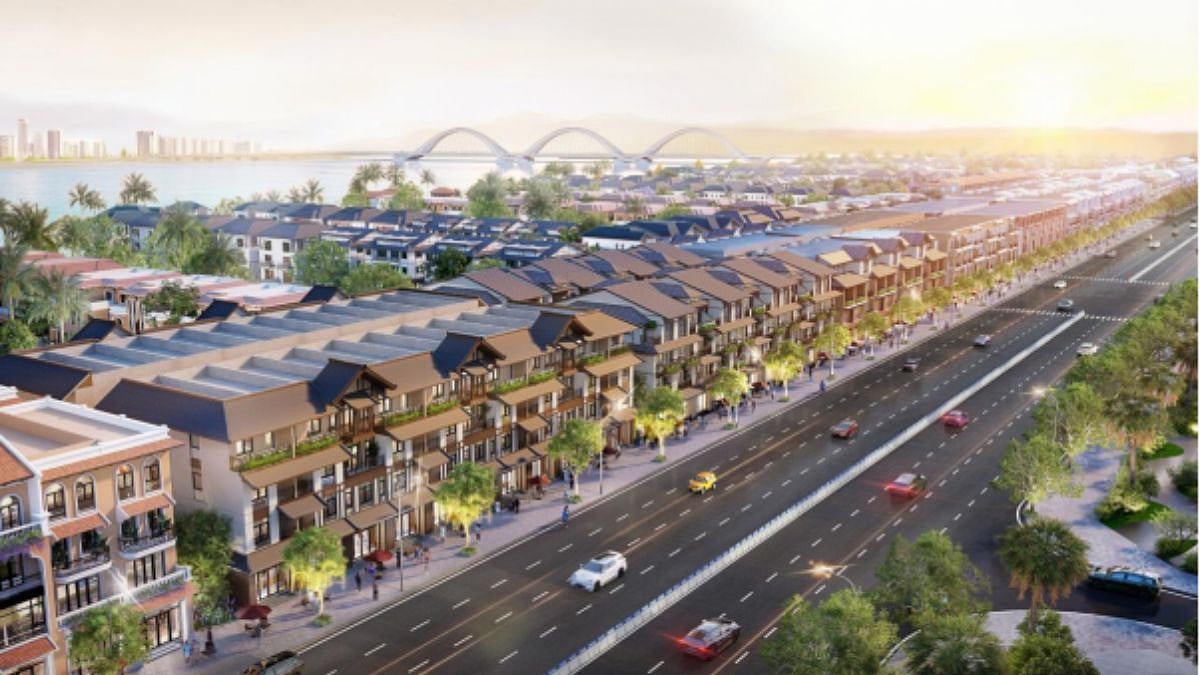
Two Famous Bays, Two Growth Hubs For Vietnam’s Future | File photo
Over 730 companies that hold assets worth US$22.4 trillion have promised to disclose nature-related risk assessments. While the international financial community is revaluing natural capital, an innovative development approach for Vietnam has foreseen this shift in perspective.
Nature has over the last two years moved from being part of conversations about conserving it to having its own line item on financial statements. The number of companies using the Taskforce on Nature Related Financial Disclosures framework by November 2025 was 733 from 56 different countries and territories. The total amount of assets under management for these companies is in excess of $22.4 trillion.
This tendency was legitimized in the regulatory field in April 2026 when the International Sustainability Standards Board declared that it will create nature disclosure standards on the basis of the TNFD framework, and more than 40 states have adopted the standards of the ISSB in their national legislation. As follows from the results of the TNFD survey, 63 percent of participants found nature risk to be equally or even more financially important than climate risk.
In regard to ecosystems, they have moved from cost of compliance to an economic asset. In view of the Organization for Economic Co-operation and Development (OECD), if the ocean economy of the world were to be treated as an economy on its own, then it would be the fifth largest economy in the world. Approximately two-thirds of this economic output is derived from tourism and marine activities.
Such types of economic analyses are vital for Vietnam since, according to the Resolution 36 NQ TW, marine economy should comprise 10% of GDP in 2030 whereas 28 coastal provinces are 65% to 70% of Vietnam's GDP. Coastal tourism and services are the two spheres of development which presuppose resources mining in terms of the recovery capacity of the ecosystem. This was the basis for Vinhomes' strategy of development. Having understood that the city is full of urbanites who are always switching from one ruined district to another, the corporation has formed an ecosystem that consists of housing, educational, medical institutions, shopping malls, entertainment sites. Having regard to the new trends of the market concerning asset preservation, the buildings were designed as cycle-proof assets. Prior to the re-pricing of the natural assets in the financial markets, Vinhomes introduced its ESG++ concept that included Ecosystem regeneration and Climate Adaptation.
Mr. Jean Paul de la Fuente, Director of New7Wonders and Chairman of the "7 Wonders of Future Cities" project, made such reflections regarding this implementation after performing a thorough field test in Vietnam: "To be totally frank with you, my on-site experience in Vietnam impressed me much more than what I had read before. After seeing how Vingroup and Vinhomes run their system, I concluded that this is a creator of an integrated living system." This opinion provides the reason for why ESG++ can be implemented twice in different ecological systems within eight months.
The Vinhomes Green Paradise project began in April 2025 in the Can Gio region on the landmass of 2,870 hectares that had been allocated an investment of $10 billion, adjacent to the 75,740-hectare UNESCO Mangrove Biosphere Reserve that had been established in the year 2000 for being the first biosphere reserve of Vietnam. The engineering problem lay in developing a megacity next to Southern Vietnam's natural ecological buffer zone without affecting its capacity to act as such. The holistic approach involved the development of a forest regeneration fund, soft mud reinforcement technology that was much more expensive than conventional technologies, zero emission energy and ISO 37122 smart city certification.
Vinhomes Global Gate Ha Long was constructed in December 2025 on 6,206 hectares of land worth a total investment of $18 billion. This was in close proximity to the UNESCO World Natural Heritage Site, which was declared in 1994 and then later expanded to the Ha Long Cat Ba archipelago in 2023. The project's focus changed from how to handle the carrying capacity at a heritage site to the preservation of the karst terrain.
Two different ecological systems are united within the same system of thinking, which represents the dividing line between a separate project and a methodology capable of scaling up. This system of thinking eliminates a drawback characteristic of most global projects connected with coastal areas, where development is usually linked to individual spots and state funding. In case both bays prove their viability in operation, their potential use will be much more significant than the 9,000 hectares and $28 billion worth of capital investment made in them. They are tangible proof of $22.4 trillion worth of global assets looking for, showing that nature preservation and engines of growth go hand-in-hand in the same equation.
RECENT STORIES
-
-
-
-
-