Music Composer Shashwat Sachdev Opens Up About His 2nd National Award Win For Article 370, What Inspires Him And More
Music composer Shashwat Sachdev opens up about his second National Award win, what inspires him and more

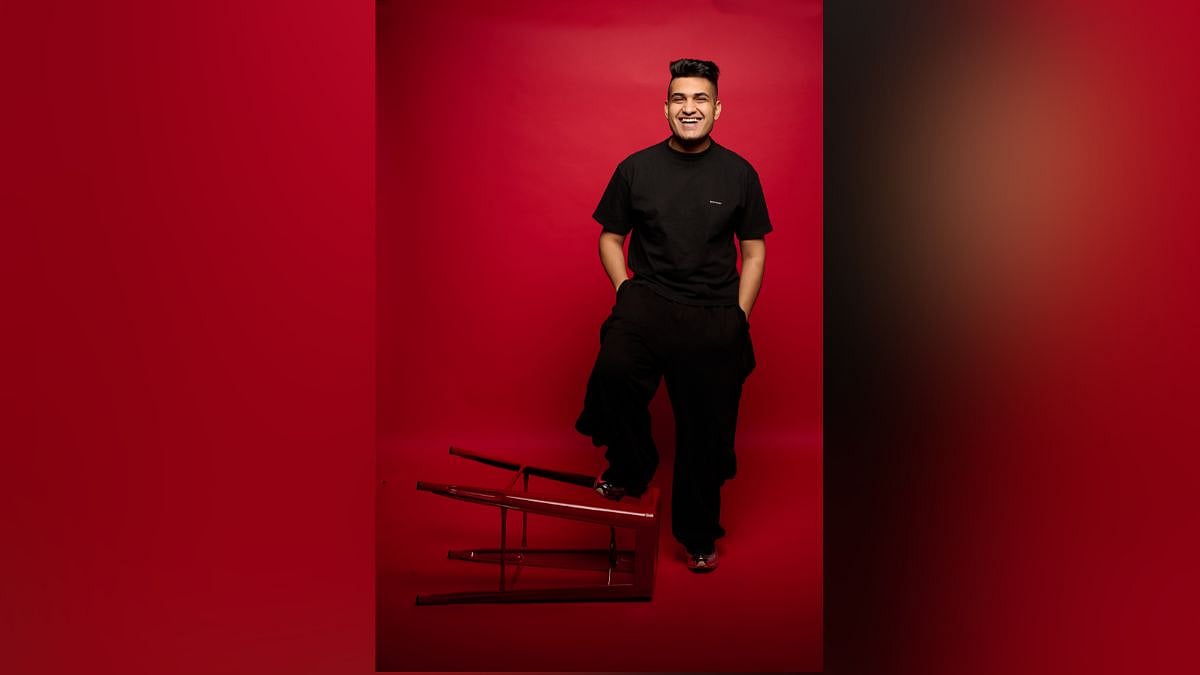
Music Composer Shashwat Sachdev Opens Up About His 2nd National Award Win For Article 370, What Inspires Him And More | File Pic
Shashwat Sachdev has composed music for films like Phillauri (2017), Veere Di Wedding (2018), Article 370 (2024), Kesari Chapter 2 (2025) and many more films. He shot to fame for the background score of Uri: The Surgical Strike (2019), for which he won his first National Award. Ever since then, he has quietly been carving a nich for him self. He has now won his second National Award for Article 370. The Free Press Journal caught up with him for an exclusive chat. Excerpts:
Could you share the exact moment when you got to know of your second Nation Award win?
It came as a complete surprise. My wife told me, and for a few moments I could not quite place the news inside my mind. The first National Award was overwhelming. This one arrived with more stillness, perhaps because I understand a little better how many lives stand behind one person's name. At this stage, the recognition means that work made from an honest, uncompromising place was heard. One award came for the background score of Uri: The Surgical Strike. This one has come for the songs of Article 370. That means a great deal to me because I have always wanted to move freely between score and song, between Indian classical roots and a larger cinematic language. I feel proud, of course, but the pride is quiet. Years later, I think I will remember less about the announcement and more about the calls with my family, the joy in my parents' voices, and the feeling that all those uncertain years had briefly formed a beautiful circle.
You’ve won your second National Award in such a short span of your career. How does being appreciated for your talent after all the hardwork feel?
It is deeply moving, but I hesitate to see it as an appreciation of my talent alone. What people call talent is often years of discipline made invisible. It is also the patience of a family, the faith of collaborators, the labour of musicians, singers, engineers and assistants, and the sacrifices of people who allowed you to keep going when the outcome was uncertain. The second award does not make the hard work feel finished. It gives the work a moment of meaning. It tells you that something created in a private room reached beyond that room and entered public memory. I am grateful that this has happened relatively early in my career, but I also know that a career is not built by collecting moments of arrival. It is built by returning to work after them. The award is a blessing. The responsibility is to remain worthy of the faith it represents.
What inspired you to become a music director? What inspires you to create the kind of music that you do?
My mother was my first doorway into music. She loved Salil Chowdhury, S.D. Burman and Naushad, and music was not treated in our home as background sound. It was listened to, discussed and felt. My father loved my mother deeply, and in loving her he also learned to love what she loved. Somewhere inside that exchange, I understood that music is one of the ways human beings care for one another. My parents were the centre of my early inspiration. My guru, Ustad Ramzan Khan Sahab, gave that emotion discipline and form. Later, my sister, my wife and my family became equally important. They keep me connected to life outside the studio, which is essential because music cannot come only from music. It has to come from relationships, loss, tenderness, conflict, silence and everything a person lives through. What inspires the kind of music I make is usually the desire to communicate something I cannot say plainly. Composition begins where ordinary language becomes insufficient.
When you first heard that you were selected to compose the music for Article 370, what was that experience like?
The first emotion was gratitude. Whenever someone invites me into a film, I do not experience it only as a professional assignment. I see it as an act of trust and the beginning of a relationship. A script brings you into the inner world of writers, directors, characters and an entire team, and asks you to help shape what the audience will feel but may never be able to name. Article 370 carried scale, history, tension and intimate human stakes. I was grateful that Aditya Dhar, director Aditya Suhas Jambhale and the entire team trusted me with its musical life. It also meant another opportunity to learn, because every film rearranges your instincts. You enter with a certain vocabulary and, if you are attentive, the film teaches you a new one. For me, collaboration is one of the great reasons to make art. It gives you friendship, disagreement, discovery and the chance to create something none of you could have made alone. So when Article 370 came to me, gratitude was the first feeling. The work began from there.
RECENT STORIES
-
-
-
-
-