The Teachers Of Today Should Adapt To New-Generation Students Rather Than Dictate To Them: Adopting Appropriate Teaching-Learning Methods Is Inevitable
Teachers must adapt to Generation Z and Alpha by embracing technology, active learning, inclusivity and emotional support. With NEP 2020 promoting competency-based education, educators need to move beyond traditional teaching and become facilitators who inspire critical thinking, creativity and lifelong learning.

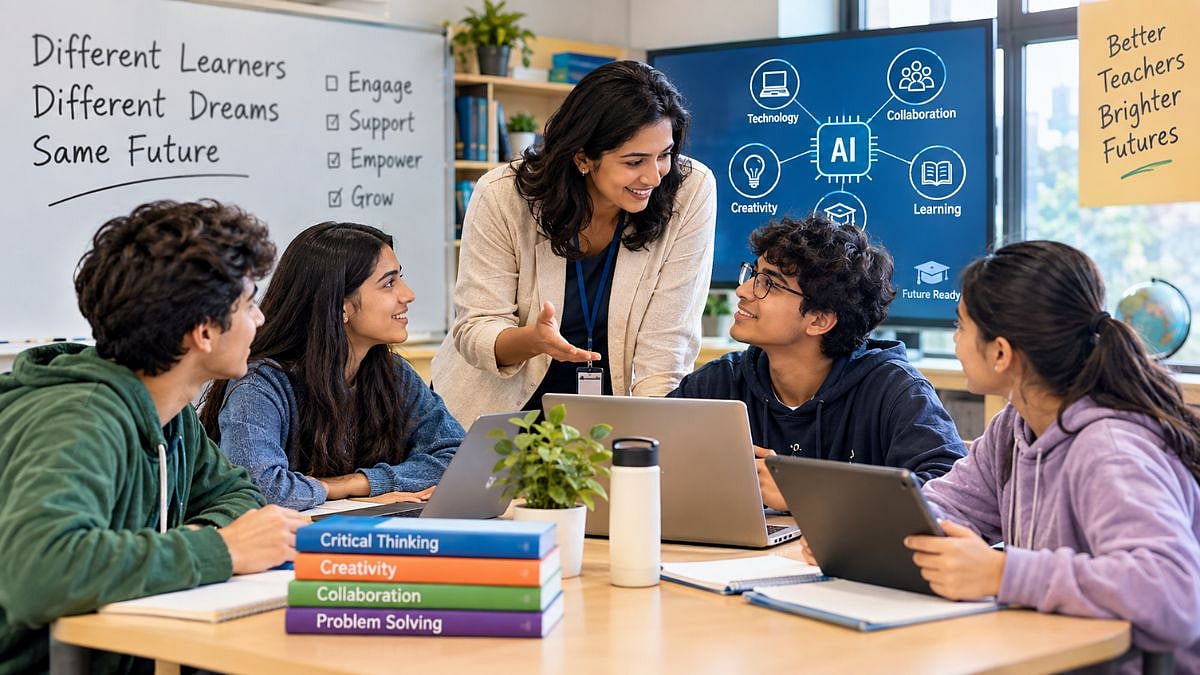
The Teachers Of Today Should Adapt To New-Generation Students Rather Than Dictate To Them: Adopting Appropriate Teaching-Learning Methods Is Inevitable | Chatgpt
Backdrop:
Education has always been a dynamic process that evolves with society. Each generation of students brings new aspirations, learning styles, values, technological exposure, and expectations. While the fundamental purpose of education remains unchanged- to develop knowledgeable, empowered, employable, ethical, and responsible citizens- the methods of achieving this objective must continuously evolve. In today's rapidly changing world, teachers can no longer rely solely on traditional authoritarian approaches. Instead, they must understand, adapt to, and adopt the characteristics of the new generation of learners while employing appropriate teaching-learning methods that make education meaningful, engaging, and relevant.
New Generation Students and Their Characteristics:
The students entering higher educational institutions today belong primarily to Generation Z and Generation Alpha. They have grown up in an environment surrounded by smartphones, social media, artificial intelligence, and instant access to information. Unlike previous generations, they do not depend exclusively on teachers as the primary source of knowledge. Information is available at their fingertips within seconds. Consequently, the role of the teacher has undergone a fundamental transformation, from being the sole dispenser of knowledge to becoming a facilitator, mentor, coach, and guide.
Many teachers often complain that today's students lack patience, possess shorter attention spans, question authority, and appear less disciplined than earlier generations. While some of these observations may have merit, it is equally important to recognise that these students also possess remarkable strengths. They are technologically proficient, highly creative, quick learners, capable of multitasking, and willing to challenge conventional thinking. Rather than viewing these characteristics as obstacles, teachers should harness them as opportunities to enrich the learning process.
One of the greatest mistakes educators often make is expecting today's students to learn exactly as previous generations did. The famous educational philosopher John Dewey observed that if we teach today's students as we taught yesterday's, we rob them of tomorrow. This statement is even more relevant today. Students need learning experiences that encourage inquiry, exploration, collaboration, creativity, and problem-solving instead of passive listening.
How Teachers Should Change:
The traditional lecture method certainly has its place, especially for introducing concepts or providing expert insights. However, prolonged one-way lectures often fail to sustain students' attention. Modern classrooms require active learning strategies that involve students in discussions, case studies, simulations, projects, debates, brainstorming, role plays, flipped classrooms, peer learning, and experiential learning. Such methods transform students from passive recipients into active participants in knowledge creation.
Teachers must also appreciate that the new generation values meaningful relationships with their educators. They respond positively to teachers who are approachable, empathetic, respectful, and supportive. Authority earned through competence, fairness, and genuine concern is far more effective than authority imposed through fear or rigid discipline. Students are more likely to respect teachers who listen to them, understand their concerns, and encourage open dialogue.
Advent of Technology:
Technology has become an indispensable component of education. Rather than perceiving mobile phones, artificial intelligence, or digital platforms as distractions, teachers should integrate them appropriately into the teaching-learning process. Learning Management Systems, online quizzes, virtual laboratories, AI-assisted learning tools, educational videos, collaborative platforms, and digital simulations can significantly enhance student engagement. The objective should not be to replace teachers with technology but to empower teachers through technology.
Acknowledging Diversity:
Another important dimension is recognising the diversity among learners. Today's classrooms include students with varying abilities, backgrounds, learning preferences, languages, and emotional needs. A single teaching approach cannot effectively serve every learner. Therefore, teachers should adopt learner-centred pedagogies that accommodate different learning styles. The principles of Universal Design for Learning (UDL), differentiated instruction, and inclusive education offer valuable frameworks for addressing this diversity.
Emotional Wellbeing of Students:
The emotional well-being of students has emerged as an equally significant concern. Academic pressures, career uncertainty, social media influence, family expectations, and mental health challenges affect many young learners. Teachers must therefore develop emotional intelligence alongside subject expertise. Simple practices such as encouraging classroom participation, appreciating student efforts, providing constructive feedback, creating psychologically safe learning environments, and identifying students who require support can make a profound difference in their academic success and personal development.
Assessment Practices:
Assessment practices also require transformation. Traditional examinations primarily measure memory and recall. However, modern education emphasises critical thinking, creativity, communication, collaboration, and problem-solving. Continuous assessment, project-based evaluation, portfolios, reflective journals, presentations, and well-designed rubrics provide a more comprehensive picture of student learning. Assessments should promote learning rather than merely judge performance.
Fundamental Changes:
The adoption of NEP 2020 further reinforces the need for pedagogical transformation in India. The policy advocates competency-based education, multidisciplinary learning, flexibility, experiential learning, skill development, and holistic student growth. These objectives cannot be achieved through teacher-centred instruction alone. Teachers must therefore continuously upgrade their pedagogical competencies through professional development programmes, workshops, research, peer learning, and reflective practice.
Adaptation, however, should not be misunderstood as compromising educational standards or discipline. Teachers need not surrender their academic expectations or moral values. Instead, they should communicate expectations in ways that students understand and appreciate. Discipline should arise from mutual respect, shared responsibility, and intrinsic motivation rather than fear of punishment. A balanced approach combines academic rigour with empathy, flexibility with accountability, and innovation with educational values.
Professional development has become an essential responsibility for every educator. Lifelong learning is no longer applicable only to students; teachers too must remain lifelong learners. Familiarity with emerging technologies, artificial intelligence, digital pedagogy, educational psychology, assessment innovations, and contemporary teaching strategies is essential for remaining effective in today's educational landscape.
Ultimately, education is not about controlling students; it is about inspiring them. Teachers who adapt to the changing needs of learners are better positioned to influence their intellectual growth, character development, and future success. Students may forget what teachers taught them, but they seldom forget how their teachers made them feel and how they inspired them to learn.
Moving Ahead:
In conclusion, the teachers of today must move beyond the traditional mindset of dictating information and expecting unquestioned obedience. Instead, they should understand the aspirations, capabilities, and challenges of the new generation and employ learner-centred, technology-enabled, inclusive, and engaging teaching-learning methods. The future belongs not to teachers who resist change but to those who embrace it with wisdom, compassion, and professional competence. By adapting to the changing educational landscape, teachers will not only remain relevant but also become powerful catalysts in shaping responsible citizens.
Authored by Dr A K Sen Gupta, Founder, Higher Education Forum (HEF).
RECENT STORIES
-
-
-
-
-