Mumbai Literature Festival: Ranjit Hoskote Raises Concerns Over Himalayan Dams, Forest Exploitation And Climate Crisis
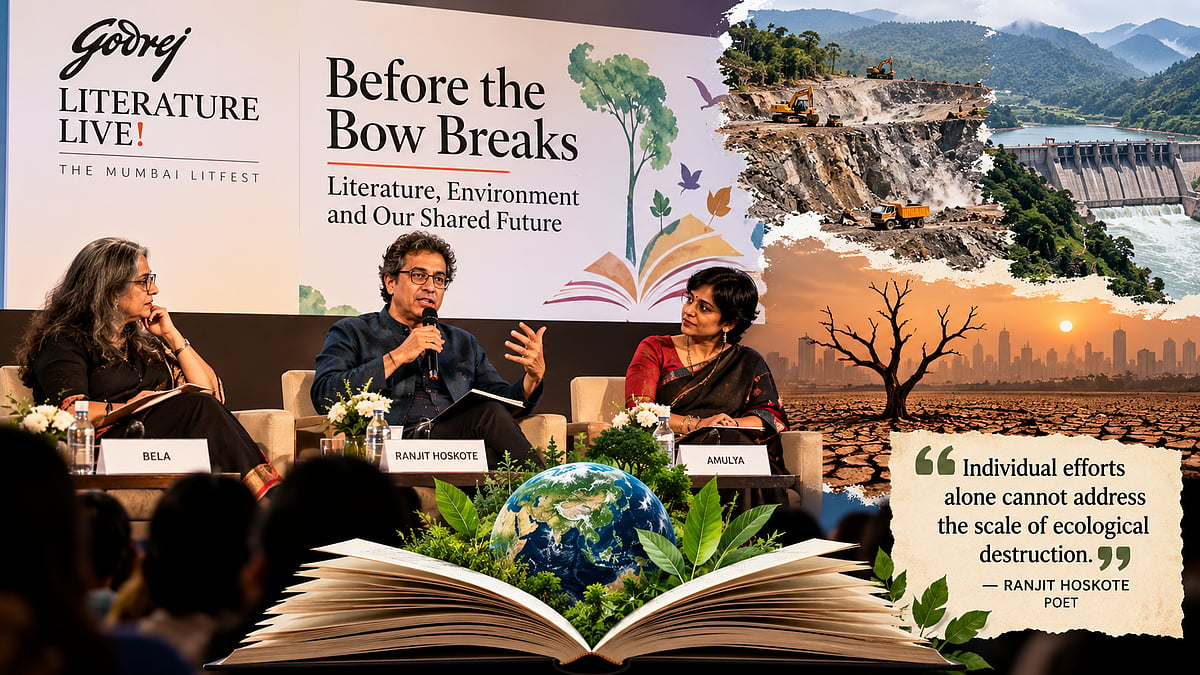
Poet Ranjit Hoskote called for collective climate action and participatory politics at Godrej Literature Live! in Mumbai. Speaking during Before the Bow Breaks, he questioned development policies, forest exploitation and proposed Himalayan dams. Fellow writers Bela and Amulya explored ecological destruction through literature.

Mumbai Literature Festival: Ranjit Hoskote Raises Concerns Over Himalayan Dams, Forest Exploitation And Climate Crisis | AI
Mumbai: Writers and environmental voices called for urgent climate action and greater public participation in environmental decision-making at a discussion titled Before the Bow Breaks at Godrej Literature Live!, with poet Ranjit Hoskote warning that individual efforts alone cannot address the scale of ecological destruction.
Hoskote Questions Development Policies
Hoskote, who was part of a panel featuring writer Bela and playwright Amulya, stressed the need to question development policies and systems that prioritise commercial exploitation over ecological sustainability.
“What we needed really, and what we should never have given up, is a participatory politics,” he said, arguing that citizens must be able to question decisions affecting the environment.
Forests Are Not Plantations
Criticising an approach to forest policy that treats forests as plantations for exploitation and revenue, Hoskote said wetlands and deserts were also vital habitats that could not be dismissed as wastelands. He raised concerns over the proposed dams in Arunachal Pradesh, warning that the Himalayas, often described as the world's “third pole”, face significant threats.
The Mumbai-based poet read excerpts from Catapult and Departures, exploring human vulnerability, disappearing habitats and environmental degradation. He also cited Kannada writer Shivaram Karanth's opposition to a proposed nuclear power station at Kaiga to underline the role writers can play in environmental movements.
Bela drew parallels between a limestone quarry and a gangrenous wound in her story Gyangirin, while Amulya discussed her play Remember, Remember, inspired by an island of butterflies submerged following dam construction.
The panellists emphasised that literature can turn environmental concerns into lived experiences and spark curiosity. They called for collective action, systemic reform and greater civic engagement before ecological damage becomes irreversible.
To get details on exclusive and budget-friendly property deals in Mumbai & surrounding regions, do visit: https://budgetproperties.in/
RECENT STORIES
-
-
-
-
-