IIT Jodhpur researchers formulate deep learning-based cataract detection method
Researchers at the Indian Institute of Technology (IIT) in Jodhpur have developed a deep learning-based cataract detection method which is inexpensive and offers very high levels of accuracy.

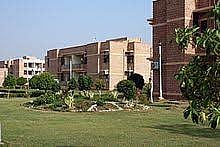
Photo- Wikipedia |
Researchers at the Indian Institute of Technology (IIT) in Jodhpur have developed a deep learning-based cataract detection method which is inexpensive and offers very high levels of accuracy.
According to the research team, eye images acquired by low-cost near-infrared (NIR) cameras can aid in low-cost, easy-to-use and practical solutions for cataract detection.
"The proposed multitask deep learning algorithm is inexpensive and results in very high levels of accuracy. This research presents a deep learning-based cataract detection method that involves iris segmentation and multitask network classification. The proposed segmentation algorithm efficiently and effectively detects non-ideal eye boundaries," said Richa Singh, Professor, Department of Computer Science and Engineering, IIT-Jodhpur.
"The proposed method can be used in rural settings where the availability of doctors is limited. It is also cost-effective as low-cost NIR cameras are used in place of costly ophthalmoscopes," a senior institute official said.
In traditional methods, cataracts are mainly detected through fundus images, where image acquisition is costlier and needs experts to handle the fundus cameras. The AI-based solution with low-cost imaging devices can make it more accessible and inexpensive, the researchers claimed.
"Currently, a large number of patients with cataracts have to visit secondary and tertiary care centres. The availability of such a solution can assist doctors at the primary health care centres in helping such patients," Singh explained.
Mayank Vatsa, another professor at the department, said, "We are extending this research to include both cataract and diabetic retinopathy in the solution and have collaborated with multiple hospitals in the country for domain expertise, data collection, and validation of the solution." The researchers plan to undertake an extensive data collection exercise for building an ophthalmology databank with different kinds of devices. The second part improves the approach and creates an explainable and robust AI algorithm for cataract detection. IIT-Jodhpur has collaborated with the Postgraduate Institute of Medical Education and Research.
RECENT STORIES
-
-
-
-
-