Class 9 Students To Learn Income Tax As NCERT Brings Personal Finance Into Curriculum
NCERT has introduced income-tax calculations under the new tax regime into the Class 9 curriculum for the first time. Its personal-finance chapter covers tax slabs, budgeting, saving, investing, borrowing and risk management, giving students practical lessons on managing money.

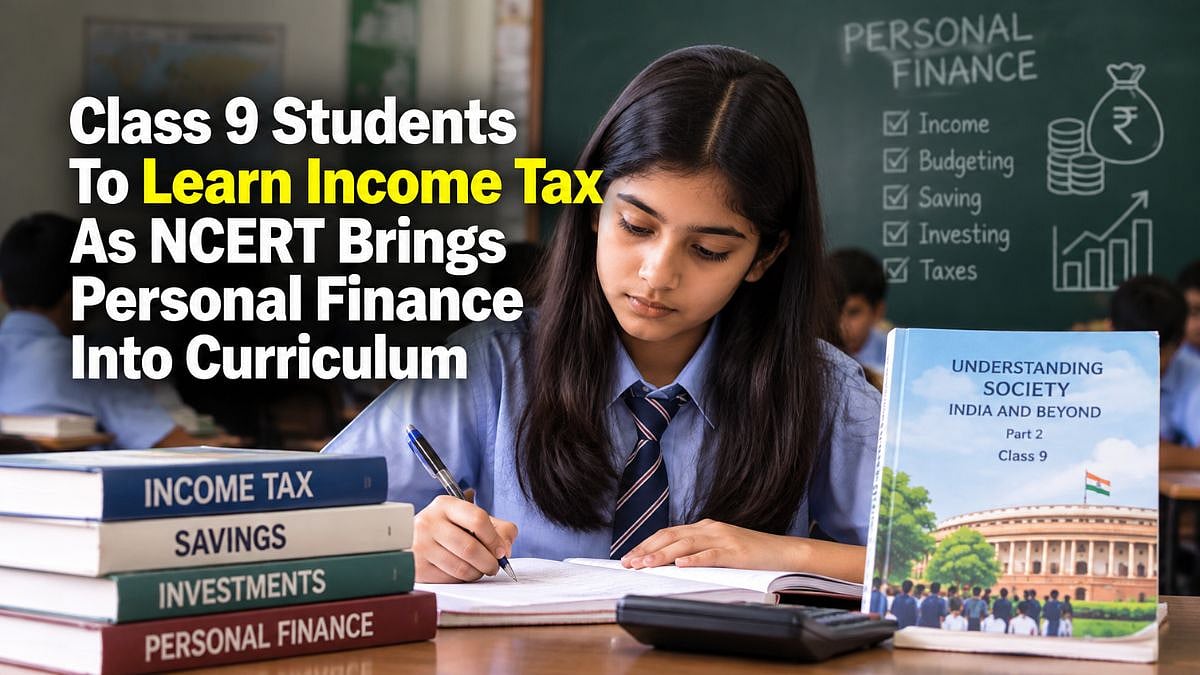
NCERT’s Class 9 textbook now introduces students to income-tax calculations alongside lessons on saving, investing and money management | AI Generated Image
New Delhi, October 1, 2026: Personal income tax has entered the Class 9 curriculum for the first time, with the National Council of Educational Research and Training (NCERT) introducing students to tax calculations under the new income tax regime as part of lessons on managing personal finances.
The subject features in the textbook Understanding Society India and Beyond-Part 2, which was released on Tuesday, six months after the new academic session began. The first part of the textbook was released in June. Along with explaining taxation, the book carries a civic message that paying taxes “honestly and on time” is an “important responsibility of every citizen” and helps fund the country’s development.
Tax Lessons Enter The Classroom
According to NCERT Chief Dinesh Prasad Saklani, students can work through actual slab-wise tax calculations under the new regime, a first for Class 9 students. The chapter contains a table showing tax slabs and explains the steps required to calculate tax liability using those slabs.
The chapter, however, does not mention the old tax regime. Its focus solely on the new regime makes the lesson more straightforward for young students, though it also means they are not introduced to the alternative system that taxpayers can opt for.
“India follows a slab system for calculating income tax as shown in table,” the textbook says before presenting a chart of tax slabs under the new regime.
Why The New Regime Matters
The new tax regime was introduced in India in the Union Budget in February 2020 and became effective from the financial year 2020-21. It offers lower tax rates in exchange for taxpayers giving up most exemptions and deductions.
From April 1, 2023, it became the default tax regime, meaning taxpayers are automatically placed under it unless they specifically choose the old regime. Teaching students how this system works gives the personal finance chapter a practical dimension rather than limiting it to broad concepts about money.
Money Management Starts Young
The chapter, titled Managing Your Personal Finances, says the journey towards managing money begins in childhood. It presents financial management as a combination of everyday choices involving income, expenditure, savings, investments, borrowing, risk protection and taxes, PTI reports.
“Managing money wisely is not just about earning more, it is about making careful financial decisions at every stage, whether it involves spending, saving, investing, protecting against risks, borrowing responsibly or paying taxes. The choices individuals make today shape their financial future and determine their ability to achieve financial stability while managing financial opportunities and challenges,” the textbook says.
From Saving To Investing
Another section explains the “pillars of personal finance”, covering income or earnings, budgeting or planning expenses, saving, investing to grow wealth, and protection and risk management.
The chapter also introduces students to the “power of early investments”. It lists fixed deposits, bonds, stocks, including equity or shares, and mutual funds as investment options.
Also Watch:
ALSO READ
By bringing taxation, budgeting, saving and investing together in a Class 9 textbook, the curriculum moves personal finance closer to the practical financial decisions students will encounter as adults. The inclusion of actual tax calculations is particularly significant because it takes the lesson beyond financial theory and introduces students to how a basic civic and financial obligation works in practice.
To get details on exclusive and budget-friendly property deals in Mumbai & surrounding regions, do visit: https://budgetproperties.in/
RECENT STORIES
-
-
-
-
-