Wealth Management Is No Longer Just for the Rich: JM Financial’s Anuj Kapoor On AI, Family Offices and India’s New Investor
Anuj Kapoor MD & CEO, Private Wealth, JM Financial Services says Indian investors are increasingly adopting a long-term approach, focusing on diversification, wealth preservation and succession planning. He noted the rising influence of family offices, AI-led advisory services and strong growth opportunities in emerging cities as wealth management expands.

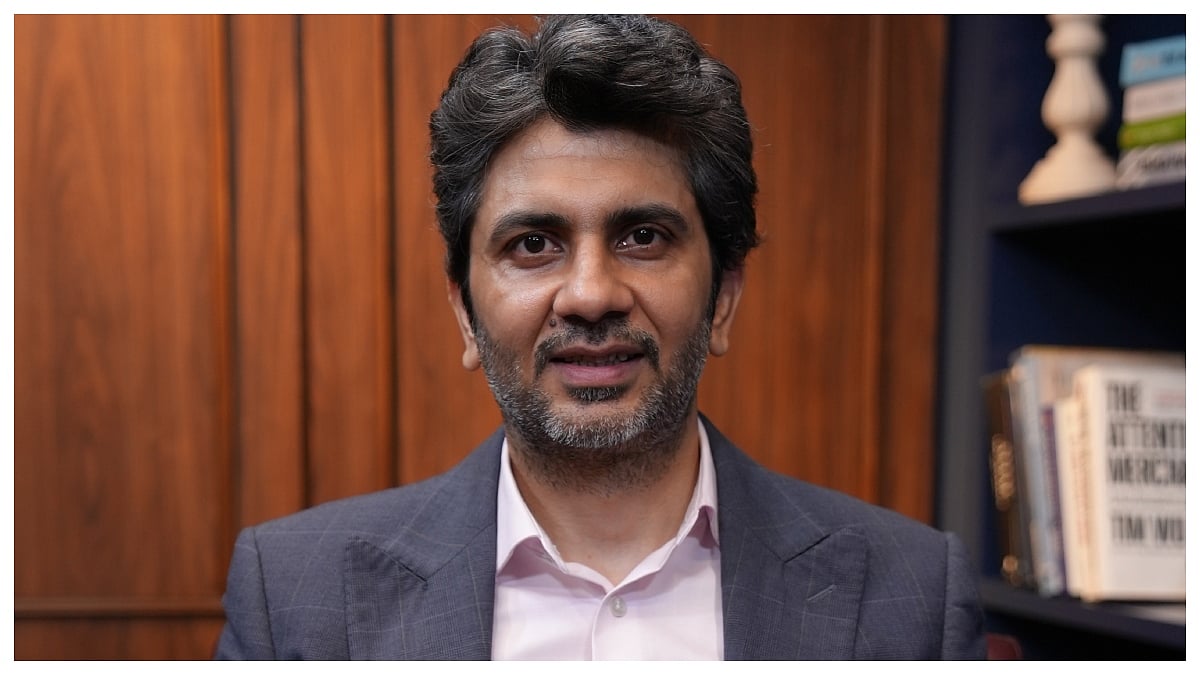
Anuj Kapoor MD & CEO, Private Wealth, JM Financial Services Ltd. |
India’s wealth management industry is undergoing a major transformation as investors become more aware, financially disciplined and focused on long-term wealth creation. In this exclusive conversation with Sheryll D’Souza, Consulting Editor, Business, The Free Press Journal, Anuj Kapoor, MD and CEO, Private Wealth, JM Financial Services Ltd., discusses the evolution of wealth management, changing investor behaviour, the rise of family offices, the impact of artificial intelligence and why wealth planning is becoming important for every investor, not just the wealthy.
Wealth management is one of the fastest-growing segments in financial services. How would you explain it to an ordinary investor?
At its core, wealth management is about taking care of your wealth. It involves preserving what you have earned, helping it grow and ensuring it is passed on efficiently to future generations. Just as people focus on maintaining their health, they should also focus on maintaining and growing their wealth. It is no longer enough to simply earn and spend. Investors today are increasingly realising the importance of saving, investing and building long-term financial security.
Is wealth management only meant for high-net-worth individuals?
Not at all. We cater to multiple segments. We work with ultra-high-net-worth individuals and family offices, but we also serve affluent and retail investors. Wealth management today goes far beyond stocks. Investors are looking at mutual funds, fixed-income products, real estate, commodities, alternative investments and even international opportunities. The objective is to create a well-rounded portfolio based on individual needs and goals.
Investor participation has surged since the pandemic. How has investor behaviour changed?
The biggest change is maturity. Indian investors are far more informed today. Earlier, the primary question was, “Which stock should I buy?” Today, investors ask more meaningful questions. They want to know how long they should stay invested, what returns they can expect, what risks they are taking and whether their investments align with their goals.
Investors are also paying more attention to asset allocation and diversification. Decisions are increasingly driven by long-term objectives rather than short-term market trends.
ALSO READ
Global uncertainty remains high. How has that influenced investment decisions?
Volatility has become the new reality. We have experienced events such as Covid-19, the NBFC crisis, demonetisation, geopolitical conflicts and trade tensions. Investors are learning to navigate this environment.
Rather than chasing quick gains, informed investors are focusing on strong businesses with solid fundamentals. They understand that quality businesses can withstand market cycles and create value over time. Diversification has also become more important. Investors are increasingly exploring alternatives, private credit, real assets and international investments to manage risk more effectively.
What role does asset allocation play in wealth creation?
Asset allocation is determined largely by an investor’s risk profile. Conservative investors may prefer fixed income and alternatives, while aggressive investors may allocate more towards equities.
There is no universal formula. A wealth manager’s role is to understand a client’s goals, risk appetite and liquidity needs, and then recommend the right mix of products. Ultimately, successful wealth creation depends on aligning investments with individual objectives.
Family offices have become increasingly popular. What is driving this trend?
It is a natural progression. Families are now applying the same discipline to managing wealth that they apply to managing businesses. Family offices provide a structured framework for overseeing investments, governance, taxation and succession planning.
What was once handled informally by trusted advisers has evolved into professional organisations with dedicated teams managing different asset classes. Today, many family offices operate like institutional investors and play an important role in capital markets, IPOs and private investments.
Is succession planning a major reason behind the growth of family offices?
Absolutely. Wealth transfer across generations can become complicated without proper planning. Issues such as the absence of a will, inadequate governance structures or inefficient tax planning can create challenges.
Family offices help establish trusts, governance frameworks and family charters that ensure a smooth transition of wealth. Many families are now carefully defining rules and responsibilities for future generations to preserve both wealth and family harmony.
Artificial intelligence is changing every industry. What impact will it have on wealth management?
AI is here to stay. Unlike previous technology cycles, AI will fundamentally change how we live and work. In wealth management, it will act as a powerful enabler.
AI can improve analysis, reporting, portfolio monitoring and client servicing. It can automate routine tasks, enhance decision-making and improve efficiency. However, in the high-net-worth segment, I believe human relationships will continue to play a crucial role. AI will support wealth managers, not replace them.
How has JM Financial evolved alongside the industry?
JM Financial is in its 53rd year, which itself reflects the trust we have built over decades. Wealth management is fundamentally a trust-driven business. Our focus remains on carrying forward that legacy while adapting to changing client needs.
The industry is growing rapidly, and we are expanding alongside it. We have a presence in 21 cities across India and continue to deepen our reach. Internationally, we are strengthening our footprint in Singapore, Dubai, Abu Dhabi and the United States. Technology and AI remain key investment areas for us as we prepare for the future.
Finally, are you seeing significant growth beyond the metro cities?
Definitely. Wealth creation is no longer confined to metropolitan centres. Through our retail network and franchise partnerships, we reach dozens of cities and towns across India.
Investor behaviour varies across regions and demographics. Younger investors are comfortable using digital platforms and managing investments independently, while older investors often prefer personal guidance. Our objective is to serve every segment effectively and ensure that wealth management reaches a much broader audience across India and globally.
Disclaimer Link: Click Here
RECENT STORIES
-
-
-
-
-