UPI Vs Debit Vs Credit Card, Which Payment Method Costs Merchants The Most And Why?
UPI’s new 0.4 percent MDR adds a merchant cost above Rs 2,000, but debit-card ceilings and commercial credit-card rates may still make cards costlier.

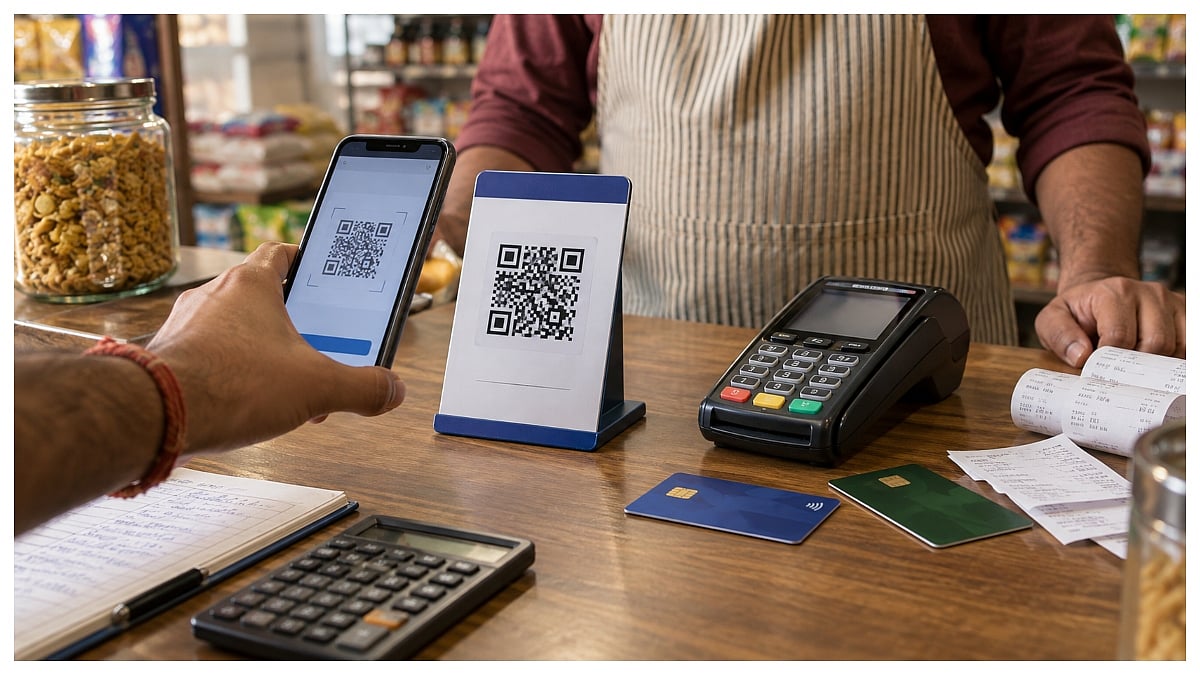
UPI’s new 0.4 percent MDR adds a merchant cost above Rs 2,000. |
Mumbai: Merchants accepting certain UPI payments will face a new cost from October 15, but UPI is likely to remain cheaper than many card-based options.
Under the National Payments Corporation of India framework, a Merchant Discount Rate of 0.4 percent will apply to eligible Person-to-Merchant UPI transactions above Rs 2,000. The charge will be capped at Rs 300 per transaction and paid by merchants.
Customers will not pay any transaction fee. Person-to-person transfers will also remain outside the framework.
A merchant receiving Rs 5,000 through an eligible UPI payment will pay Rs 20. The charge rises to Rs 200 for a Rs 50,000 payment. The Rs 300 ceiling takes effect when the transaction reaches Rs 75,000.
Debit Cards Follow RBI Ceilings
Debit-card transactions operate under a separate Reserve Bank of India framework.
Under the RBI’s December 2017 rules, small merchants with annual turnover of up to Rs 20 lakh faced a maximum MDR of 0.40 percent for physical point-of-sale and online payments. The ceiling was 0.30 percent for QR-based card payments, with charges capped at Rs 200 per transaction.
For other merchants, the corresponding limits were 0.90 percent and 0.80 percent, with a maximum charge of Rs 1,000.
The new UPI rate matches certain historical debit-card ceilings. However, their costs cannot be treated as identical because the eligibility rules, transaction thresholds and maximum charges differ.
Credit Cards Usually Cost More
Credit cards generally impose the highest acceptance cost, although there is no single RBI-mandated MDR applicable across all transactions.
Rates are commercially negotiated and depend on the card network, issuing bank, acquiring bank, payment processor, merchant category and business arrangement. Consequently, costs can vary substantially between merchants.
Which Option Is Cheapest?
UPI is expected to remain the most economical option for many businesses despite the new charge. Its 0.4 percent rate and Rs 300 ceiling provide merchants with a predictable cost for specified higher-value transactions.
Debit cards may carry comparable or higher charges, depending on merchant classification and acceptance channel. Credit cards can prove more expensive because pricing is commercially determined and involves several payment intermediaries.
The crucial shift is that eligible UPI transactions will no longer be cost-free for merchants. The final burden will depend on transaction size, payment method and merchant category.
RECENT STORIES
-
-
-
-
-