Through The Economic Lens: Inflation, The Silent Thief Stealing From Every Wallet
Inflation silently erodes purchasing power, reshapes consumption, businesses and markets, and confronts central bankers with some of economics’ hardest choices.

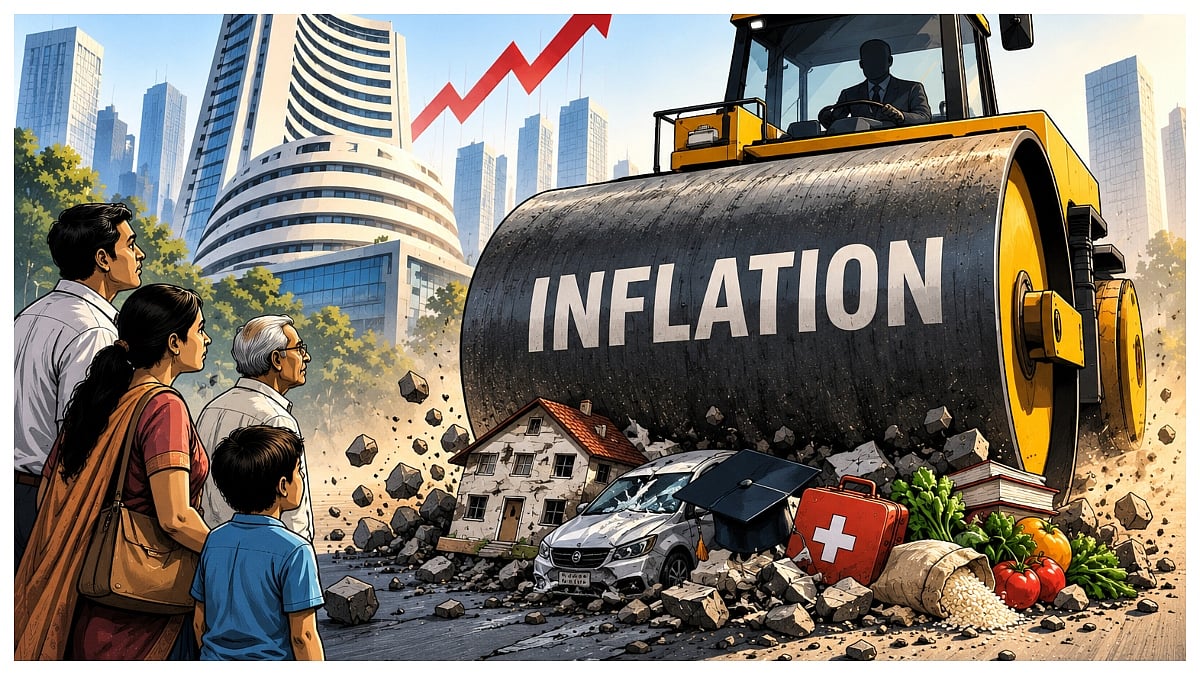
Mumbai: “Inflation is always and everywhere a monetary phenomenon.”
— Milton Friedman (1912–2006), Nobel laureate economist
Money can grow poorer without losing a single rupee.
The ₹100 note in your pocket remains ₹100. Your bank balance may look familiar, yet the shopping bag grows lighter, the household budget tighter and yesterday’s comforts become today’s calculations. Inflation is the silent thief that steals not your money, but what your money can buy.
For Indian readers, India’s August consumer and wholesale inflation readings are scheduled for release today, Monday, September 14. Before celebrating or fearing another decimal, however, let us understand what lies behind it.
Who Invented Inflation?
Nobody. Rising prices existed long before economics acquired textbooks, statistical agencies or central banks. What economists developed were ways of measuring them. British economist Joseph Lowe pioneered a representative-basket approach in 1823; Étienne Laspeyres subsequently developed his celebrated price-index formula in 1871. Inflation was not invented; its measurement evolved.
What Exactly Is Inflation?
Inflation means a sustained increase in the general level of prices across an economy. One vegetable becoming expensive is not, by itself, inflation. As the general price level rises, purchasing power falls.
Suppose a representative basket costing ₹100 a year ago costs ₹105 today:
Inflation = [(105 − 100) ÷ 100] × 100 = 5%.
Statisticians construct a Consumer Price Index (CPI) from a representative basket of goods and services. Items are not treated equally: each receives a weight reflecting its share in household expenditure. Food, housing, transport, education, health and other expenses therefore influence the index according to their economic importance.
India’s current CPI uses 2024=100 as its base, with expenditure weights derived principally from the 2023–24 Household Consumption Expenditure Survey. The revised all-India basket contains 358 weighted items — 308 goods and 50 services.
The inflation percentage normally reported each month is the year-on-year change:
Inflation = [(Current CPI − CPI 12 months earlier) ÷ CPI 12 months earlier] × 100.
If CPI was 120 last August and 126 this August, inflation is 5%. CPI is the index; inflation is its rate of change.
Is The Number Genuine?
Yes — as a statistical estimate of average price movement based on its methodology, basket, weights and collected prices. But everybody does not experience precisely the published rate.
A pensioner spending heavily on medicines, a student paying education expenses, a tenant facing rent and a poorer household devoting much of its income to food have different consumption baskets. One nation can therefore publish one official inflation rate while millions of households experience millions of personal inflation rates.
CPI & WPI: Two Windows
Then comes the Wholesale Price Index (WPI). Think simply: WPI looks further upstream in the price pipeline; CPI looks nearer your wallet.
Wholesale inflation captures price movements in goods at wholesale or producer-facing stages, while CPI measures goods and services encountered by households. A surge in raw-material costs may raise WPI without producing an equivalent CPI increase because manufacturers can absorb costs through thinner margins. Consumer-facing services can also lift CPI without similarly moving WPI. Apparently conflicting readings therefore need not mean either measure is wrong.
From Kitchen To Corporate India
Inflation changes behaviour before it changes forecasts. When food, fuel, housing and necessities consume more income, families have less for restaurants, travel, electronics, clothes or savings. Discretionary consumption weakens.
ALSO READ
Businesses confront another equation. Raw materials, energy, wages, transport and borrowing become dearer. Companies with strong pricing power may pass costs to customers; weaker businesses sacrifice margins. Persistent inflation can therefore reshape profits, capital expenditure, hiring and economic growth.
From Inflation To Dalal Street
For stock-market investors, inflation is far more than a grocery statistic. Unexpectedly high or stubborn inflation can lift expectations of higher interest rates and bond yields. Borrowing becomes costlier, earnings may weaken and higher discount rates can compress equity valuations. An inflation surprise can rapidly ripple through the Sensex, Nifty and sectoral stocks.
Yet inflation does not automatically mean falling equities. Companies with resilient demand, healthy balance sheets and pricing power may withstand it better. Investors therefore trade not merely today’s inflation, but what it may make the RBI do tomorrow.
The Rupee Joins The Loop
India imports crude oil and numerous inputs priced internationally. A weaker rupee makes dollar-priced imports dearer, potentially generating imported inflation. Inflation, rate expectations and global risk appetite can, in turn, influence capital flows and the currency.
The Central Banker’s Dilemma
Perhaps nobody watches an inflation decimal more anxiously than a central-bank chief. Tighten monetary policy too aggressively and credit, consumption, investment, employment and growth can suffer. Move too softly and inflation expectations risk becoming unanchored, encouraging businesses and households to behave as though tomorrow’s prices will inevitably be higher.
ALSO READ
Yet monetary policy has limits. Interest rates cannot grow onions, end droughts, unclog supply chains or produce crude oil. Understanding the cause of inflation therefore matters almost as much as measuring its percentage.
As India’s latest inflation numbers arrive today, remember: governments calculate inflation, central banks fight it, businesses price it and markets trade it — but families ultimately measure the silent thief in what their money can no longer buy.
RECENT STORIES
-
-
-
-
-