Stock Market Crash: Why Are Sensex & Nifty Bleeding, 5 Big Fears Behind The Massive Sell-Off Explained
Sensex crashes 1,045 points as Nifty hits fresh lows. Discover five major fears behind the market sell-off, from foreign selling and RBI rate hikes to crude oil and rupee weakness.

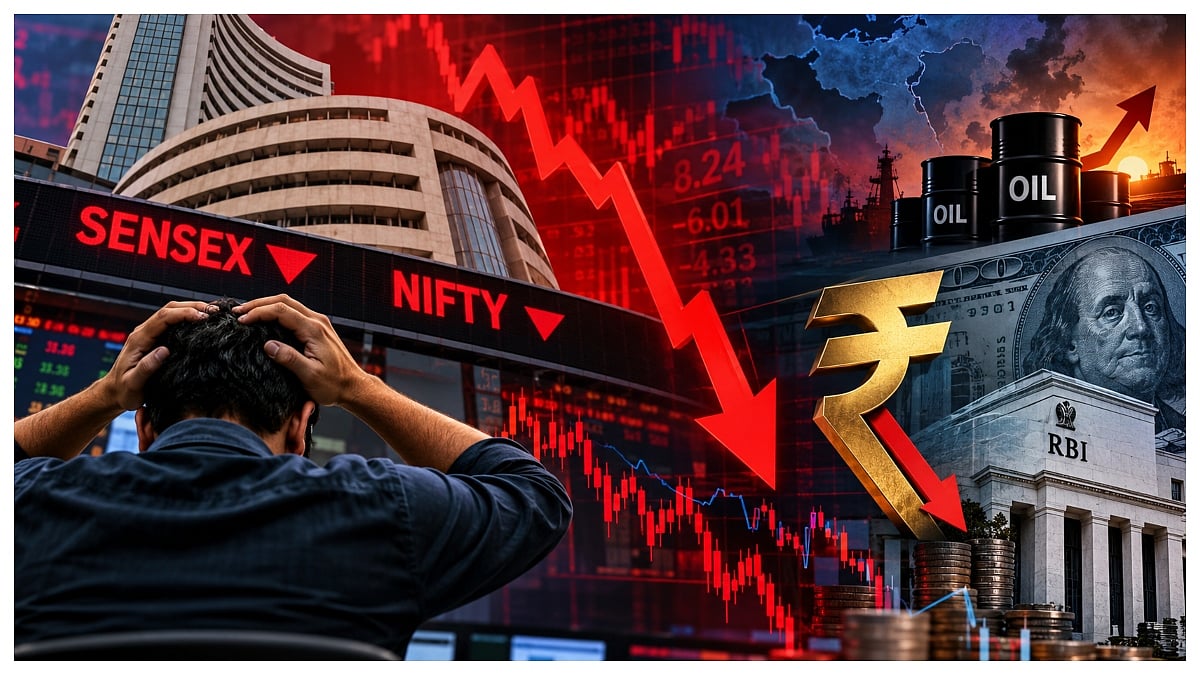
Sensex crashes 1,045 points as Nifty hits fresh lows. |
Mumbai: Indian stock markets are facing intense selling pressure, with benchmark indices Sensex and Nifty falling sharply as investors struggle with rising economic uncertainty.
Heavy foreign fund outflows, higher interest rates, expensive crude oil and global financial concerns have weakened market confidence.
But what is really driving the market crash? Are investors worried about corporate earnings, or are global economic developments making Indian equities less attractive?
The ongoing decline appears to be driven by several concerns rather than a single trigger. Here are five major factors weighing on investor sentiment.
Foreign Investors Continue Heavy Selling
Sustained selling by foreign institutional investors (FIIs) remains one of the biggest concerns for Indian equities.
Foreign investors sold shares worth approximately Rs 44,000 crore in September. Selling pressure has continued into October, adding to the weakness in benchmark indices.
When foreign investors withdraw large amounts of money, stock prices can fall, particularly if domestic institutional investors are unable to absorb the selling.
Persistent outflows also make retail investors cautious about entering the market during a correction.
RBI Rate Hike Raises Borrowing Cost Concerns
Higher interest rates have emerged as another challenge for businesses and consumers.
A 25-basis-point increase in the repo rate, from 5.25 percent to 5.50 percent, has raised concerns about the cost of borrowing.
Higher interest rates can make business loans, housing finance and vehicle loans more expensive, depending on how banks adjust their lending rates.
Companies with substantial borrowings may face higher interest expenses, while consumers could delay major purchases.
This creates uncertainty about future corporate earnings and economic growth.
Crude Oil Above USD 104 Fuels Inflation Fears
Rising crude oil prices are adding to concerns about India's inflation outlook and economic stability.
Brent crude surged above USD 104 per barrel on Thursday amid supply disruptions and tensions in West Asia.
India imports most of its crude oil requirements, making the economy particularly vulnerable to rising global energy prices.
Higher oil prices increase transportation and manufacturing costs, putting pressure on companies in sectors such as aviation, paints, chemicals and logistics.
They can also widen India's import bill and make controlling inflation more difficult.
Rising US Bond Yields Make Indian Equities Less Attractive
Higher US Treasury yields are creating another challenge for emerging markets, including India.
When American government bonds offer attractive returns, global investors may prefer them over riskier equity investments.
This can reduce foreign investment in Indian stocks and increase pressure on domestic share prices.
Rising global borrowing costs also raise concerns about corporate valuations, particularly for companies whose share prices depend heavily on expectations of future earnings.
Weak Rupee And Global Uncertainty Add To Market Pressure
The weakening Indian rupee has become another major concern for investors.
The rupee has been trading near record lows against the US dollar, increasing the cost of imported goods and adding to inflation worries.
A weaker currency can also affect foreign investors' returns when they convert their Indian investments back into dollars.
Meanwhile, prolonged geopolitical tensions in West Asia have increased uncertainty over energy supplies, inflation and global economic growth.
These interconnected pressures are making investors cautious about taking fresh risks.
What Lies Ahead For Investors?
The Sensex plunged 1,045.46 points to close at 71,593.24 on Thursday, while the Nifty dropped 371.25 points to 22,231.80, reflecting widespread selling across sectors.
Market direction will now depend on foreign fund flows, crude oil prices, RBI policy signals and upcoming corporate earnings.
Until these pressures ease, investors may continue to face sharp fluctuations in stock prices.
RECENT STORIES
-
-
-
-
-