Secret Ship Crossings Increase Through Strait Of Hormuz As US-Iran Tensions Rise
Following renewed US-Iran hostilities, several vessels have been transiting the Strait of Hormuz with transponders turned off, while visible traffic has dwindled. Shipowners are avoiding the US-supported Omani corridor due to attacks and potential penalties, opting for covert passages or the Iran-designated northern route, raising concerns over maritime safety and monitoring

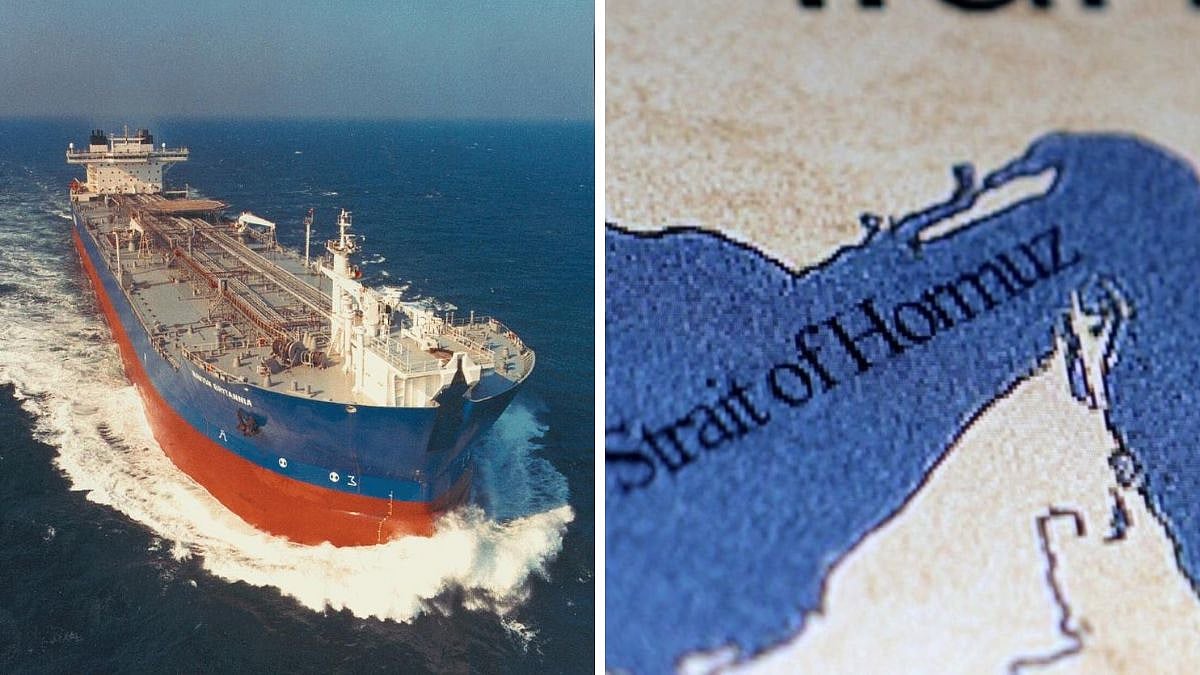
Amid renewed military tensions between the United States and Iran, shipping activity through the Strait of Hormuz has increasingly shifted to secretive operations, with vessels bypassing standard tracking systems.
According to a report by Bloomberg, preliminary data from Kpler revealed that all six commodity carriers transiting the strait on Sunday did so with their Automatic Identification System (AIS) transponders turned off, a practice known as “dark crossings.”
For the previous three days, these clandestine movements outnumbered visible ship passages.
On Monday morning, no ships were observed crossing the strait via standard AIS signals.
However, vessels appeared on either side of Hormuz—the Persian Gulf or Gulf of Oman—after last broadcasting their positions on the opposite side, indicating that they had likely transited the strait without transmitting location data.
This trend reflects shipowners’ growing preference to go dark amid escalating US-Iran hostilities and conflicting claims over control of the strait.
Observable traffic along the US-supported southern corridor, running along Oman’s coast, has effectively halted, with the last reported passage on Wednesday.
In contrast, the Iran-designated northern route has continued to see a limited number of crossings. Iranian attacks on vessels using the Omani corridor, including some with transponders disabled, have discouraged traffic along this pathway.
Ship operators attempting the northern route risk costs imposed by Iran and potential penalties from the United States, creating a complex operational environment.
The practice of secretive Hormuz crossings dates back to mid-April, when the United Arab Emirates began transporting oil on darkened tankers.
This approach mitigated some of the early oil supply disruptions during the initial phase of the Gulf conflict.
Over the weekend, the United States and Iran issued conflicting statements on the strait’s accessibility.
Tehran declared that transits would require approval from an Iranian authority, while US Central Command maintained that certain navigable pathways remain open for free passage.
Meanwhile, Iranian forces have reportedly attacked four vessels in the past week, all in the northeastern area of Oman’s Musandam peninsula, suggesting that some ships attempting the US-supported southern route may have been targeted.
The Islamic Revolutionary Guard Corps also claimed to intercept two vessels it deemed to be operating along an “illegal route,” highlighting ongoing uncertainty and the dangers of navigating one of the world’s most strategic maritime chokepoints.
The situation underscores the heightened risks to global energy transport and emphasizes the need for careful monitoring of maritime activity in the Persian Gulf region.
RECENT STORIES
-
-
-
-
-