SEBI May Consider Stock Exchange Self-Listing With Safeguards, Says Tuhin Kanta Pandey
SEBI Chairman Tuhin Kanta Pandey said the regulator could examine safeguards for allowing stock exchanges to list their own shares, although no active review is underway. Speaking in Mumbai, he highlighted regulatory conflicts, international practices and the challenges of reviving regional exchanges, particularly liquidity, governance requirements and commercial viability concerns

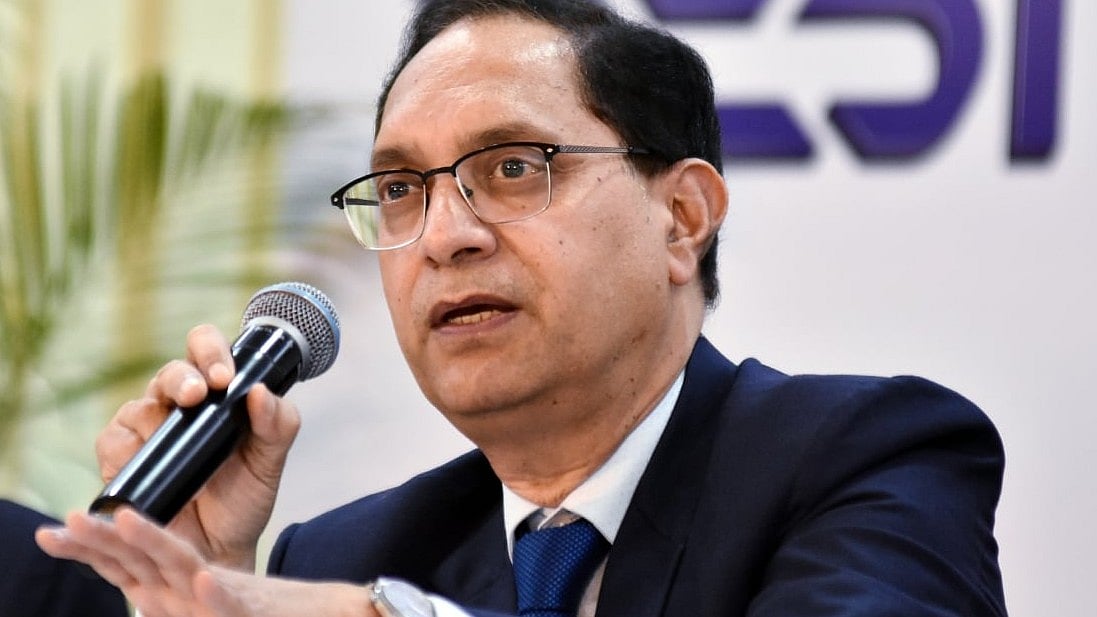
SEBI Chairman Tuhin Kanta Pandey | ANI
The Securities and Exchange Board of India (SEBI) could examine safeguards for allowing stock exchanges to list their own shares, although no formal review of the existing restrictions is underway, Chairman Tuhin Kanta Pandey said on Wednesday.
Speaking at the BFSI Insight Summit in Mumbai, Pandey highlighted potential conflicts of interest arising when an exchange regulates trading in its own shares.
"Exchanges are also regulators, and if your own scrip is trading, you can't be a regulator on your own thing," he said.
May Examine Safeguards For Self-Listing
Pandey said India's existing regulatory framework does not permit stock exchanges to list their shares on their own trading platforms.
He acknowledged that several international exchanges allow self-listing but said the practice requires careful evaluation.
The regulator could examine arrangements followed by European exchanges and the New York Stock Exchange before considering changes.
Pandey said the proposal involved advantages and disadvantages, particularly because India operates multiple stock exchanges.
Questions surrounding self-listing have also emerged in discussions about whether National Stock Exchange (NSE) shares could eventually qualify for inclusion in benchmark indices such as the Nifty 50.
However, Pandey clarified that SEBI had neither ruled out the possibility nor initiated an active review.
Revival Of Regional Stock Exchanges Depends On Financial Viability
Addressing questions about reopening defunct regional exchanges, including the Calcutta Stock Exchange, Pandey said existing regulations permit proposals for establishing exchanges.
However, applicants must satisfy prescribed governance standards, capital requirements and shareholding restrictions.
He noted that India's securities market had changed substantially since regional exchanges operated across the country.
Electronic trading now enables investors in India and overseas to access exchanges without geographical limitations.
Pandey stressed that liquidity would be crucial in determining whether a revived exchange could operate successfully.
He said reopening an exchange would not automatically guarantee sufficient trading activity or investor participation.
Any proposal would therefore require a credible business plan demonstrating its ability to attract clients and sustain operations.
The regulator would assess such proposals against existing requirements and their commercial feasibility.
RECENT STORIES
-
-
-
-
-