India's Task Is To Transform Global South By Shaping Rules: IN Report
When rules are matched by rails -- digital, green, and maritime -- the South is no longer walking someone else’s path. It is drawing its own map. “That is the playbook India must now carry to every platform of the Global South—from BRICS to IORA, from BIMSTEC to the India–Africa Forum Summit. The time to lead is now,” according to the report by India Narrative.

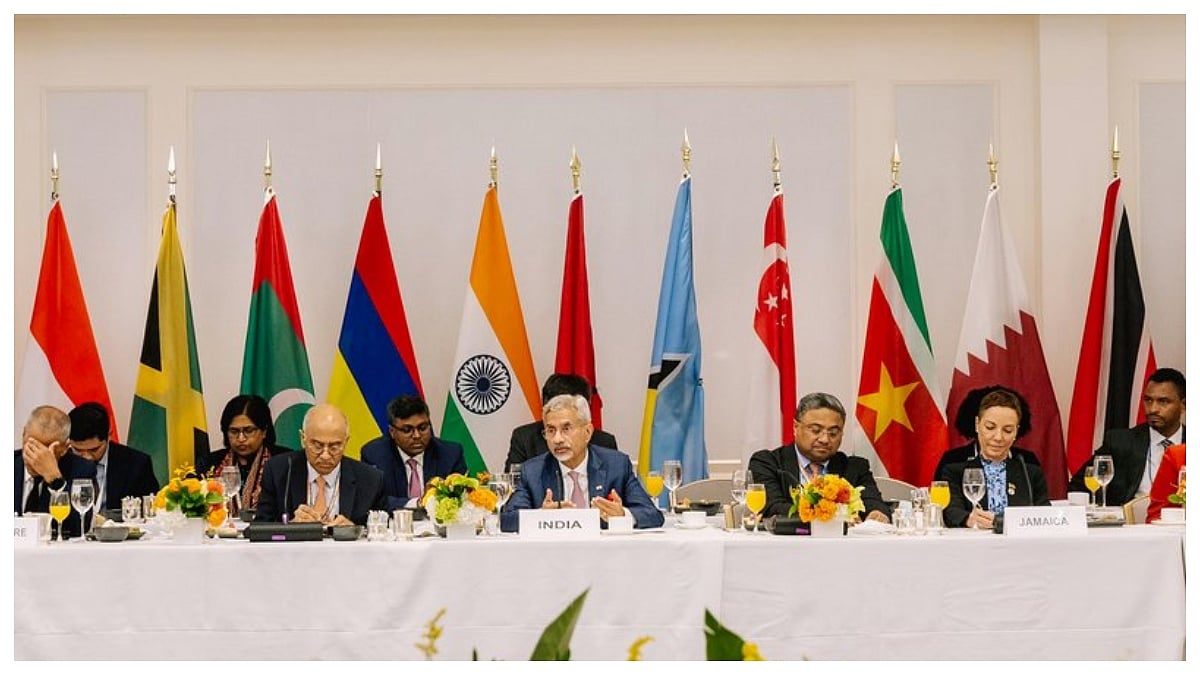
File Image |
New Delhi: When it comes to Global South, India’s task is not to replace one hegemony with another, but to build a cooperative framework where Southern producers, shippers, and regulators gain dignity and competitiveness, a report has said, adding that by blending reaction with initiative — contesting unfair measures while advancing corridors in shipping, warehousing, finance, and capacity — the South can transform from rule-takers to rule-shapers.
When rules are matched by rails -- digital, green, and maritime -- the South is no longer walking someone else’s path. It is drawing its own map. “That is the playbook India must now carry to every platform of the Global South—from BRICS to IORA, from BIMSTEC to the India–Africa Forum Summit. The time to lead is now,” according to the report by India Narrative.
ALSO READ
According to the report, for India, which has emerged as the most credible voice of the Global South, the challenge is clear. “If we merely react to these pressures, we risk being boxed into low-value corners of the supply chain. If we lead with initiative, however, we can turn defensive compliance into strategic competitiveness.
This is the playbook the South needs—and India is positioned to draft it,” the report further stated. A trade corridor is not just a shipping lane or a stretch of road. It is a deliberate programme: upgraded ports and railways, redesigned border posts, simplified digital platforms that replace paperwork, and harmonised product standards.
If designed around Southern comparative advantages, such corridors can unlock value chains that reflect local priorities rather than external diktats, the report mentioned. From a “millets corridor” connecting Eastern Africa and Western India to a “green shipping micro-corridor” between two mid-sized Southern ports, the outcomes are measurable -- faster turnaround, lower freight costs, reduced carbon footprints.
“If production is the visible part of trade, shipping and warehousing are the invisible backbone. They decide whether goods reach markets competitively or languish at bottlenecks,” according to the report. Moreover, infrastructure alone does not move goods — people do. That is why capacity building must be the accelerator of South–South cooperation. “The Global South faces a choice. We can remain passive, adjusting endlessly to rules written elsewhere. Or we can chart our own course — designing corridors, systems, and standards that reflect our realities and ambitions,” the report highlighted.
Disclaimer: This story is from the syndicated feed. Nothing has changed except the headline.
RECENT STORIES
-
-
-
-
-