RBI Raises Repo Rate To 5.50%, Here's What The 25 bps Hike Means For Home Loans, Car Loans & Your EMI
RBI raised the repo rate by 25 bps to 5.50 percent, signalling costlier home and car loans, as inflation and crude oil risks pushed the central bank towards tighter policy.

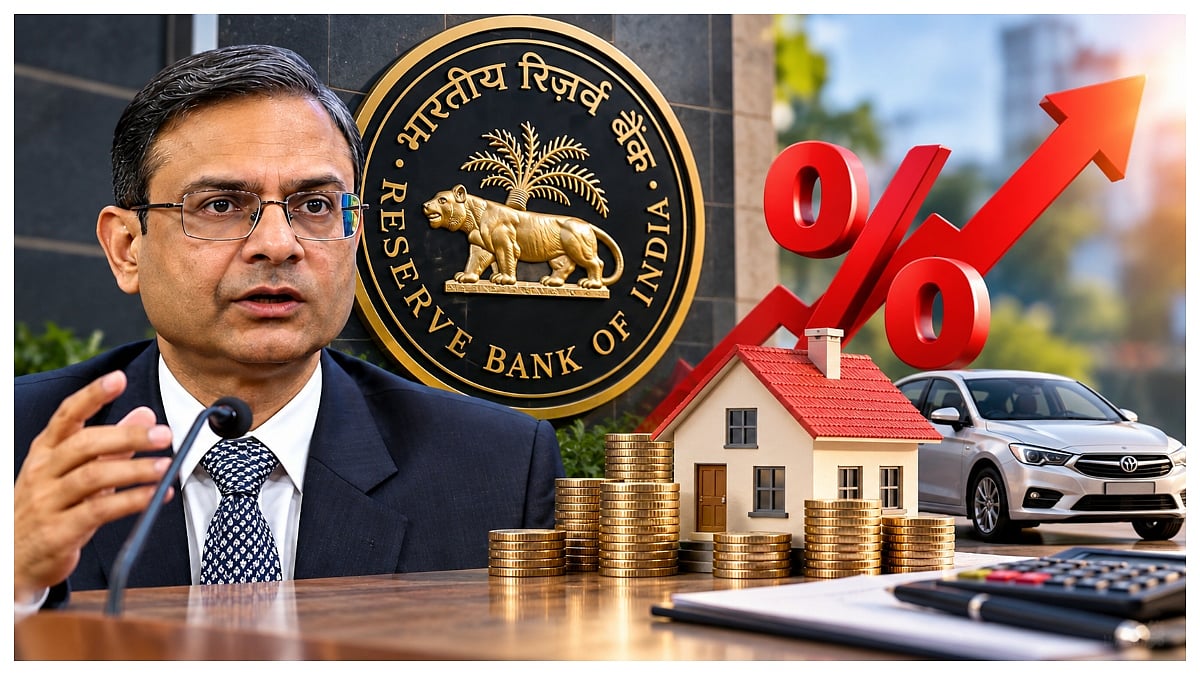
RBI raised the repo rate by 25 bps to 5.50 percent. |
Mumbai: The Reserve Bank of India (RBI) on Wednesday raised the repo rate by 25 basis points to 5.50 percent, potentially making home, car and other floating-rate loans costlier for borrowers.
The decision was announced by RBI Governor Sanjay Malhotra after the three-day Monetary Policy Committee (MPC) meeting. The rate hike comes amid rising inflation risks, higher crude oil prices and uncertainty caused by the West Asia conflict.
RBI Changes Policy Stance
Along with raising the repo rate, the RBI changed its monetary policy stance from ‘neutral’ to ‘calibrated tightening’, signalling a stronger focus on controlling inflation.
The Standing Deposit Facility (SDF) rate was raised by 25 basis points to 5.25 percent, while the Marginal Standing Facility (MSF) rate increased to 5.75 percent.
The RBI had kept the repo rate unchanged at 5.25 percent in its April, June and August policy meetings in 2026.
Why Did RBI Raise Rates?
Malhotra highlighted the sharp rise in crude oil prices and the West Asia conflict as major risks. Higher energy costs can push up transport and production expenses and eventually raise prices of goods and services.
The central bank also remains concerned about global inflation, financial-market uncertainty and domestic food prices.
Maulik Patel, Head of Research at Equirus Securities, said the economy has room to absorb tighter monetary policy.
“The RBI hiked the policy rate by 25 bps while changing its stance to a calibrated tightening, while revising up both growth and inflation estimates,” Patel said.
He added that the move points towards further tightening, but an aggressive rate-hike cycle is unlikely given elevated yields, liquidity conditions and external risks.
What Does It Mean For Your EMI?
The repo rate is the interest rate at which the RBI lends short-term funds to banks. A higher repo rate increases borrowing costs for banks, which can then be passed on to customers.
Borrowers with floating-rate home, car and other loans linked to external benchmarks could therefore see their interest rates and EMI burden increase.
Inflation Forecast Raised
The RBI raised its FY27 CPI inflation forecast to 5.2 percent from 5 percent. The core inflation estimate was also increased to 4.4 percent from 4.3 percent.
Sujan Hajra, Chief Economist and Executive Director at Anand Rathi Group, described the rate hike as a “touch-and-go decision shaped by extraordinary circumstances”.
He said resilient domestic growth gave the RBI room to act, while food prices, crude oil, bond yields and rupee depreciation supported tighter policy.
“This does not necessarily herald a series of further hikes,” Hajra said, adding that the calibrated tightening stance still allows the RBI to pause depending on inflation and external pressures.
RBI Raises GDP Growth Forecast
Despite tighter monetary policy, the RBI raised its FY27 real GDP growth forecast to 7.1 percent from 6.7 percent.
The second-quarter growth estimate was increased to 7.2 percent from 6.4 percent, while the third-quarter forecast was raised to 6.9 percent from 6.5 percent. The fourth-quarter estimate was retained at 6.8 percent.
RECENT STORIES
-
-
-
-
-