Onion Procurement Price Raised By 24%, Government Builds Strong Food Buffer To Protect Farmers & Consumers
The Centre has increased the onion procurement price under its buffer stock scheme to Rs 15.80 per kg, up 24 percent from last year. It has also built record pulse stocks and reduced import dependence, aiming to safeguard farmers, stabilise prices and strengthen food security.

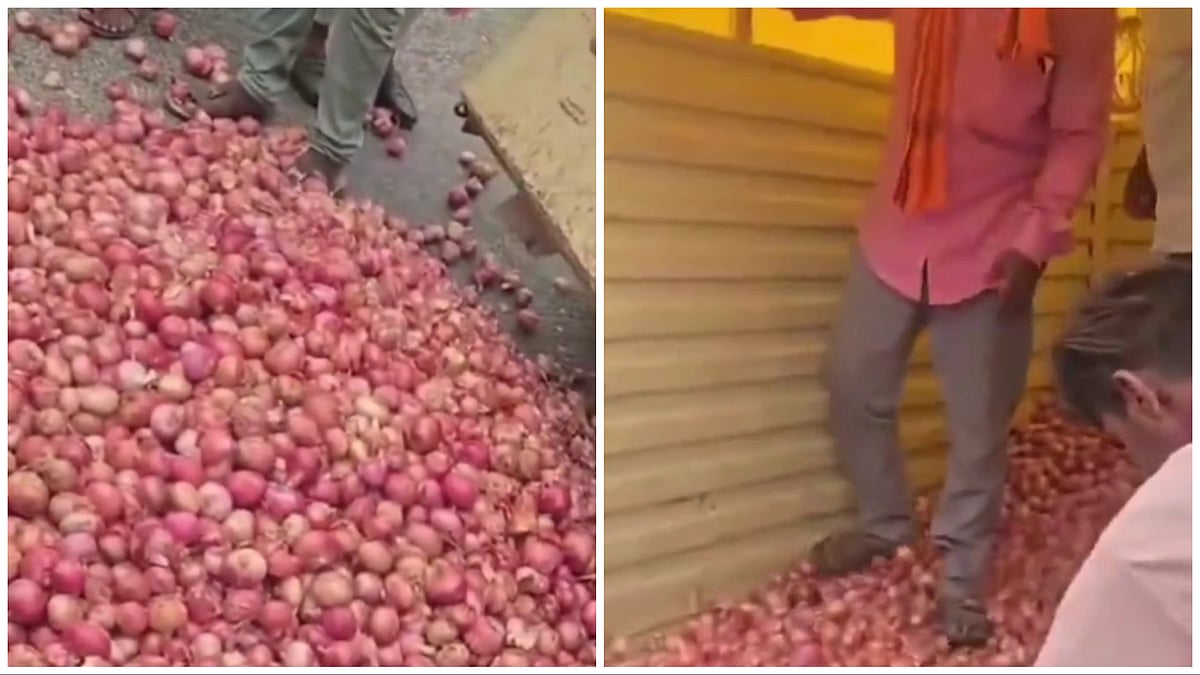
he Centre has increased the onion procurement price under its buffer stock scheme to Rs 15.80 per kg. | Video Screengrab
New Delhi: The Centre has increased the procurement price of onions under its buffer stock programme by 24.4 percent to Rs 15.80 per kg from Rs 12.70 per kg. The move is aimed at ensuring better returns for farmers while maintaining sufficient stocks to control prices when needed.
Higher Price for Onion Procurement
Announcing the decision on Monday, Anupam Mishra, Additional Secretary in the Ministry of Food and Consumer Affairs, said onion procurement for the current season began on May 15. The revised procurement price was officially notified on May 22.
ALSO READ
The government purchases onions every year under the Price Stabilisation Fund (PSF). These stocks are used later to control sudden spikes in retail prices and ensure adequate supply in the market.
For the current year, the government plans to procure 2 lakh tonnes of onions. This is lower than the 3 lakh tonnes procured during 2025-26, but officials said the higher procurement price reflects current market conditions and the need to support farmers.
Record Pulse Buffer Stocks
The government also reported a sharp increase in pulse stocks. Buffer stocks of pulses have reached a record 43 lakh tonnes in May 2026.
This is more than double the 18 lakh tonnes held in May 2025 and significantly higher than the 21 lakh tonnes recorded in May 2024. The increase is expected to help the government manage supply and keep prices stable.
Under the Price Support Scheme (PSS), which is activated when market prices fall below the Minimum Support Price (MSP), the government has so far procured 5.34 lakh tonnes of tur and 20.35 lakh tonnes of chana.
Lower Dependence on Imports
Improved domestic production has helped reduce the country's dependence on imported pulses. Total pulse imports fell nearly 30 percent to 60 lakh tonnes in 2025-26 from 73 lakh tonnes a year earlier.
Chana imports showed an even sharper decline of 51 percent, despite the government's continued policy of allowing free imports of pulses.
ALSO READ
Food Security Remains Strong
The update came during an inter-ministerial briefing held in the context of recent developments in West Asia. Officials said food and fertiliser supplies remain secure.
Mishra noted that major pulse-exporting countries such as Myanmar, Tanzania, Malawi, Mozambique, Canada, Australia and Brazil are not directly affected by the ongoing tensions in West Asia. As a result, the risk of disruption to pulse supplies remains limited, helping India maintain food security and price stability.
RECENT STORIES
-
-
-
-
-