Nearly 45% Indian Homes Need Electrical Upgrades For Safe EV Charging: Study
A study by AEEE and Kazam finds nearly 45% of Indian households require electrical upgrades to safely support EV charging. Weak residential infrastructure, lack of parking, and safety concerns could hinder EV adoption despite aggressive government policies, including Delhi’s plan to phase out petrol and CNG vehicles by 2027–28

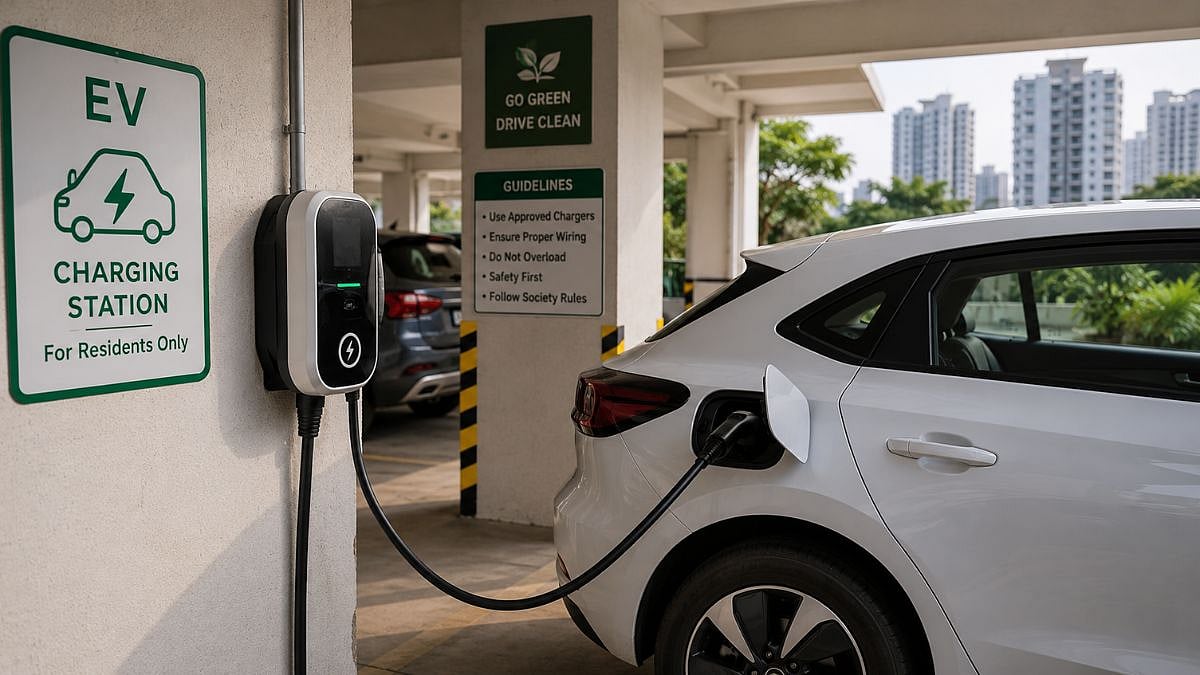
A new study by the Alliance for an Energy Efficient Economy (AEEE) and Kazam has found that nearly 45% of Indian households need electrical upgrades to safely support electric vehicle (EV) charging.
The report highlights a major infrastructure gap that could slow India’s transition to electric mobility even as policymakers push for faster EV adoption.
The study comes at a time when several state governments, including Delhi, are introducing stricter measures to phase out internal combustion engine vehicles.
Delhi has announced plans to stop registering new CNG and petrol-powered three-wheelers from January 2027 and petrol two-wheelers from April 2028, signalling an accelerated shift toward EVs.
Based on an analysis of more than 80,000 residential EV charger installations across tier-I, tier-II, and tier-III cities, the study examined charging patterns in independent homes, apartment complexes, informal settlements, and shared rental housing.
ALSO READ
It found that while EV discussions often focus on vehicle sales and public charging networks, residential charging infrastructure faces deeper structural challenges.
Researchers noted that most existing residential electrical systems in India were not designed for the additional load created by EV charging. The simultaneous use of multiple chargers in housing clusters can overload local electrical circuits, leading to issues such as tripping breakers, voltage fluctuations, overheating wiring, transformer stress, and even power outages.
The study also identified several non-technical barriers. These include a shortage of dedicated parking spaces in urban areas, unclear regulations for upgrading older buildings, fire safety concerns, liability issues in case of electrical failures, and the high upfront cost of upgrading household electrical systems.
A power distribution company official cited in the report pointed out that only a small share of EV owners in Delhi have access to dedicated parking, with most relying on shared residential spaces or street parking. This makes it difficult to install individual charging points.
To address these challenges, the study recommends a unified regulatory framework combining building codes, electrical standards, and EV charging guidelines. Such a system could standardise installation processes across different housing types.
The report also notes that EV adoption challenges extend beyond home charging, citing limited public charging infrastructure and concerns about battery range and replacement costs. With EV batteries typically lasting 7–8 years, consumers may need at least one replacement during a vehicle’s lifecycle.
Overall, the study concludes that successful EV adoption in India will depend not only on policy incentives but also on strengthening residential infrastructure and resolving practical charging constraints.
RECENT STORIES
-
-
-
-
-