India Doubles 5G Tower Radiation Limit, Aligning With International Standards
The government will double the permitted electromagnetic field power density for 5G base stations to 10 watt per square metre from 5 watts, aligning India with international standards. The relaxation could help telecom operators expand coverage using fewer towers, reduce network costs and improve service quality as 5G traffic rises

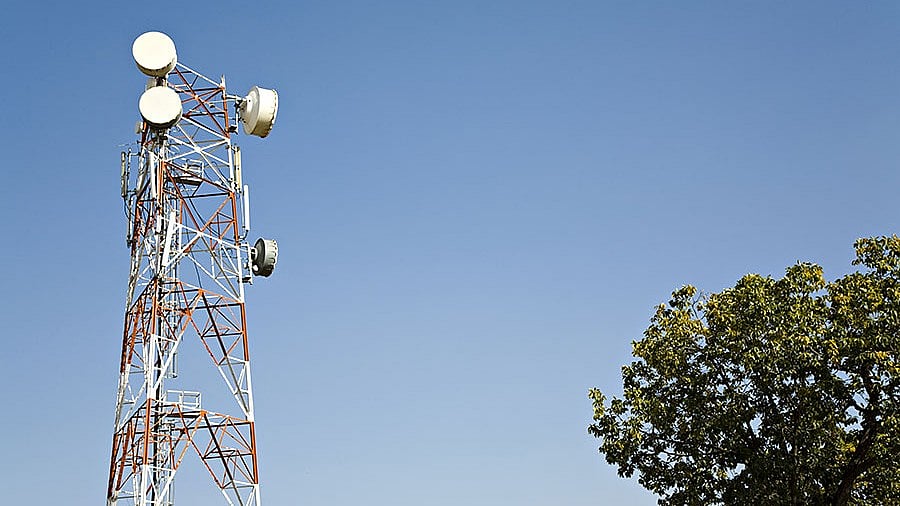
Imagesbazaar
The government is set to relax electromagnetic field (EMF) limits for mobile networks, allowing telecom operators to deploy 5G infrastructure more efficiently while meeting rising demand for high-speed connectivity.
Under the revised rules, which will take effect next month, the permitted power density for a 5G base transceiver station (BTS) will increase to 10 watts per square metre from the existing 5 watts.
Higher permitted emission levels could allow signals to cover greater distances, enabling operators to serve larger areas from individual tower sites.
Why India Is Relaxing 5G Radiation Rules
The telecom industry has been seeking higher EMF limits, arguing that stricter regulations made 5G network expansion more expensive and complicated. India had historically maintained tighter radiation standards than those recommended internationally.
ALSO READ
The country initially followed a limit of 1 watt per square metre before increasing it to 5 watts last year. The latest revision brings the ceiling to 10 watts per square metre, matching the level recommended by the International Commission on Non-Ionizing Radiation Protection (ICNIRP).
The change could reduce the number of new sites operators need to establish, potentially lowering capital expenditure while improving network coverage.
Airtel, Jio and Vodafone Idea Could Benefit
The relaxation is expected to be particularly relevant for Vodafone Idea, which is expanding its 5G network. The operator could use the higher limit while planning new infrastructure.
Reliance Jio and Bharti Airtel, which have already rolled out substantial 5G networks, may also benefit by getting greater coverage from existing sites and reducing incremental network investment.
The revised 10-watt limit is reportedly consistent with standards followed in around 137 countries, including the UK, Australia, Japan, South Korea and Singapore. India had adopted ICNIRP-based norms in 2008 but subsequently made them stricter in 2012.
Telecom companies have argued that standards designed around earlier generations of mobile technology were less suited to the requirements of large-scale 5G deployment, prompting the government to gradually ease the limits.
RECENT STORIES
-
-
-
-
-