Can ₹200 SIPs Create India's Next Investing Revolution? Ravi Kumar Jha's Big Bet On Financial Inclusion
Ravi Kumar Jha says investing must become accessible to every Indian, not just the wealthy. Through LIC Mutual Fund’s Pocket SIPs starting at Rs 200, women-focused initiatives, branch expansion, and simplified onboarding, the fund house aims to boost financial inclusion and bring first-time investors into wealth creation.

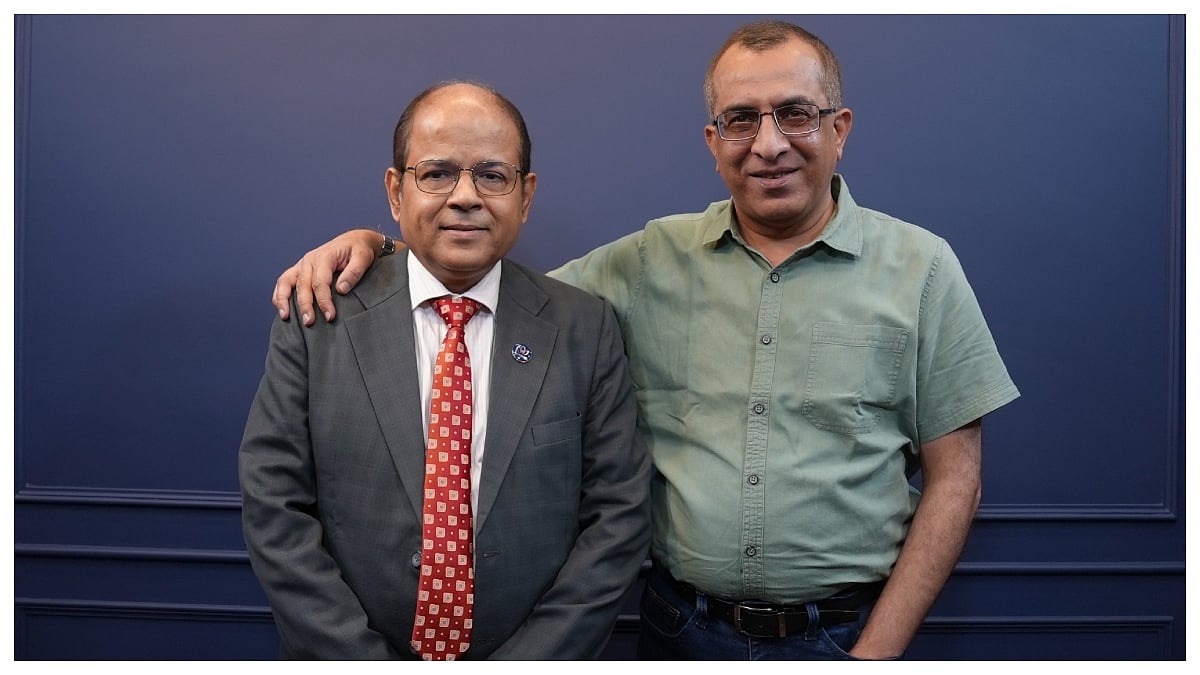
Ravi Kumar Jha says investing must become accessible to every Indian, not just the wealthy. |
When most Indians hear the name LIC, they think of life insurance.
They think of policies bought by parents, agents visiting homes, and the reassurance that comes with one of India's most trusted financial brands.
Mutual funds rarely enter that conversation.
For years, that was the challenge facing LIC Mutual Fund. Despite carrying one of the most recognisable names in Indian finance, the fund house remained a relatively small player in a rapidly growing industry.
But according to Ravi Kumar Jha, Managing Director and CEO of LIC Mutual Fund, that is beginning to change.
In a recent episode of Simple Hai!, Jha spoke about everything from mutual fund performance and distribution to women investors and financial literacy. Yet throughout the conversation, one idea kept resurfacing: investing should not be limited to India's affluent classes.
If India is serious about building financial security for its citizens, investing must become accessible to everyone.
Even if that means starting with just Rs 200 a month.
The Problem With Thinking Mutual Funds Are Only For The Rich
For Jha, the inspiration behind one of LIC Mutual Fund's most talked-about initiatives came not from boardrooms or industry reports but from everyday conversations.
He recalls speaking to drivers, domestic workers and other people who worked hard every day but had never invested in a mutual fund.
Most of them shared similar aspirations.
A driver wanted his children to get a better education than he did.
A domestic worker wanted to ensure her daughters could study and build independent lives.
They understood the importance of saving. What they lacked was access and confidence.
Many believed mutual funds were products designed for wealthy people.
"People think mutual funds are for rich investors. They don't think they belong there," Jha observed.
That perception, he believes, remains one of the biggest barriers to financial inclusion in India.
The Rs 200 SIP Experiment
To address that barrier, LIC Mutual Fund introduced what it calls Pocket SIPs.
The idea was simple: reduce the minimum investment amount to levels that virtually anyone could afford.
Today, investors can start with:
- Rs 100 daily SIPs
- Rs 150 weekly SIPs
- Rs 200 monthly SIPs
The goal is not merely to collect small investments.
It is to help first-time investors experience the habit of investing and understand the power of compounding.
Jha shared an example from his own family. His daughter-in-law began with a small SIP to test the concept. Initially, she was impatient because she could not see meaningful growth.
But after staying invested, she began noticing the impact of compounding and eventually increased her investments significantly.
The lesson, according to Jha, is that investing often becomes easier once people see results for themselves.
More than two lakh Pocket SIP accounts have already been opened.
For a country where millions still keep savings in cash or low-yield accounts, that number could represent the beginning of a larger behavioural shift.
Why Financial Inclusion Is Personal?
One of the most powerful moments in the conversation came when Jha spoke about families that faced sudden financial crises after losing the primary earning member.
He described relatives and acquaintances who passed away unexpectedly due to illness or accidents.
In some cases, there was no life insurance cover.
No meaningful savings.
No investment portfolio.
Just a family left trying to figure out how to pay for education, household expenses and everyday life.
Those experiences reinforced a belief that financial planning is not just about wealth creation.
It is about resilience.
A well-structured financial plan can mean the difference between stability and uncertainty when life takes an unexpected turn.
For Jha, that is why encouraging people to start investing—even in small amounts—is so important.
Why Women Could Drive The Next Wave Of Growth?
Another area where Jha sees enormous potential is women investors.
He points out that women already account for nearly one-third of mutual fund assets and SIP investments in India.
Yet many women still remain underserved by the financial industry.
To address this, LIC Mutual Fund recently launched an all-women branch in Delhi staffed entirely by women employees.
The objective is straightforward: create an environment where women feel comfortable discussing money, financial goals and investment decisions.
Jha believes women often play the most important role in household finances, even if they are not always recognised for it.
They manage budgets.
They plan for children's futures.
They often maintain emergency savings.
And increasingly, they are becoming investors in their own right.
The success of the Delhi initiative has encouraged LIC Mutual Fund to explore similar branches in other cities.
Why Branches Still Matter In A Digital World?
At a time when financial companies are aggressively pushing digital platforms, Jha remains convinced that physical presence continues to matter.
When he took charge in 2023, LIC Mutual Fund operated around 35 branches across India.
Today that number has increased to 56, with plans to cross 100 branches in the coming years.
His reasoning is simple.
Trust remains a critical component of financial decision-making.
Many investors still want a place where they can walk in, ask questions and resolve concerns face-to-face.
This is particularly important in smaller cities and towns where financial literacy remains low and first-time investors often need guidance before taking their first step.
Digital tools may simplify transactions.
But trust, Jha argues, is still built through human interaction.
The Untapped Power Of LIC's Distribution Network
Few financial institutions possess a distribution advantage as powerful as LIC.
The organisation's insurance business is supported by nearly 15 lakh agents spread across the country.
India's mutual fund industry, by comparison, has only a fraction of that distribution footprint.
Jha believes this network represents one of the biggest opportunities for expanding mutual fund penetration.
Consumers today increasingly understand the difference between insurance and investments.
Many LIC agents are also recognising that clients want broader financial solutions rather than a single product.
As a result, mutual funds are becoming an increasingly important part of those conversations.
For LIC Mutual Fund, this shift has already translated into stronger distributor-led growth.
Can Mutual Funds Have Their UPI Moment?
Perhaps Jha's most interesting observation concerned onboarding.
India transformed digital payments through UPI by making transactions simple and accessible.
He believes mutual fund investing needs a similar breakthrough.
Today, many potential investors still struggle with documentation requirements, KYC processes and account-opening formalities.
The challenge is especially visible among women, rural investors and people with limited financial literacy.
"If onboarding becomes simpler, the entire industry can grow much faster," he argued.
The vision is ambitious.
A system where every Indian can begin investing as easily as they send money through a mobile phone.
The Bigger Question
India's mutual fund industry now manages more than Rs 50 lakh crore in assets.
Yet only a small percentage of the country's population actively invests.
That gap represents both a challenge and an opportunity.
For Ravi Kumar Jha, success will not be measured solely by assets under management or industry rankings.
It will be measured by how many first-time investors enter the financial system.
How many families begin planning for their future.
How many children benefit because their parents started investing early.
The real revolution, he suggests, will not come from bigger portfolios.
It will come from making wealth creation accessible to everyone.
RECENT STORIES
-
-
-
-
-