As Crude Prices Crash, Will Aviation Companies Roll Back Fuel Surcharge On Ticket Prices
The two-week ceasefire on which the United States and Iran agreed on Wednesday has lifted hopes of a waning energy crisis and easing of crude oil prices. However, it is very unlikely that airlines will roll back their recently revised fuel surcharges

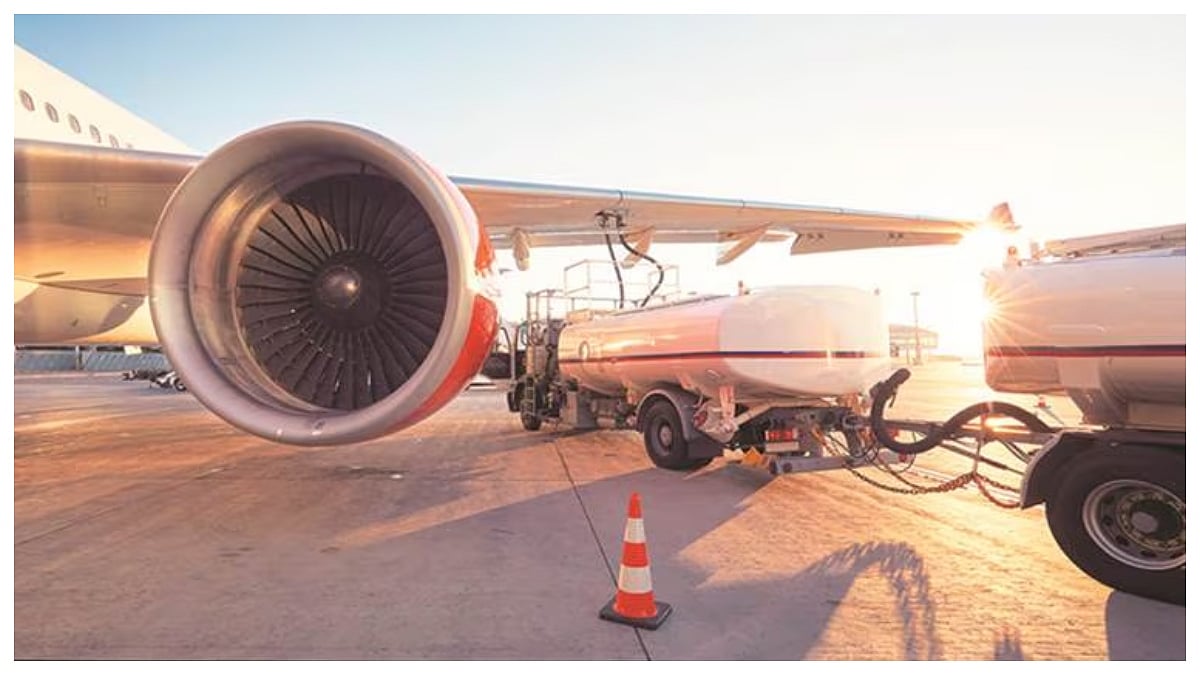
The two-week ceasefire on which the United States and Iran agreed on Wednesday has lifted hopes of a waning energy crisis and easing of crude oil prices.
In fact, oil prices have crashed below the $95 per barrel mark after the announcement of the ceasefire. The commodity was hovering at $112 per barrel hours before the positive development.
With crude oil prices relatively down now, inflation fears may ease to an extent, which will give relief to companies facing a heightened energy costs for over a month.
However, it is unlikely that aviation companies will take a step back on fuel surcharge. Despite slumping over 15 percent in today's trade, the cost of global oil benchmark Brent Crude is still about 40 percent higher than the pre-war levels of the commodity.
To add to this, it is going to take months until supplies of jet fuel revert to their pre-war levels and prices cool down. The International Air Transport Association (IATA) has said that instant relief on jet fuel supplies is still far away as refineries across the Gulf region have been hit by the warring sides.
“It will still take a period of months to get back to where supply needs to be, given the disruption to the refining capacity in the Middle East,” said Willie Walsh, director general of IATA.
“I don’t think it’s going to happen in weeks,” said Walsh, who is going to take over as the chief executive of India’s largest airline operator IndiGo in a few months.
“Even if you have the flow of crude start again, if you've had disruptions in refining capacity, then the problem continues for some time,” Walsh said.
While he may be correct in his assessment, Walsh’s statements diminish the hope of relief for airline passengers.
On April 1, the price of aviation turbine fuel surged to a record high of over Rs 2.07 lakh per kilolitre, with base prices increasing by nearly 25 percent. Fuel account for 30–50 percent of airlines’ operating expenses in India.
However, the government stepped in to shield domestic airlines, limiting the increase to about 8.5 percent, or Rs 1.05 lakh a kilolitre. But international and charter operators bore the brunt of the surge, with prices soaring 115 percent to over Rs 2.07 lakh per kilolitre.
As a result, IndiGo and Air India have revised their fuel surcharge policy. IndiGo on April 1 announced to levy fuel surcharges ranging from Rs 275 to Rs 10,000 on domestic and international flights.
Air India on April 7 said that it will be imposing fuel surcharges ranging from Rs 299 to Rs 899 on domestic flights. The surcharges on international flights were comparatively steep, ranging from $24 to $205.
RECENT STORIES
-
-
-
-
-