Union Budget 2026: New Budget, Old Questions for the Armed Forces, Says Retired Lieutenant Colonel Dr Rajesh Chauhan
Despite India’s growing economic strength and complex security challenges, defence spending remains inadequate for operational needs. The article argues for bold reforms—relocating cantonments, monetising high-value land, strengthening soldier welfare, pensions and insurance, and investing strategically in infrastructure.

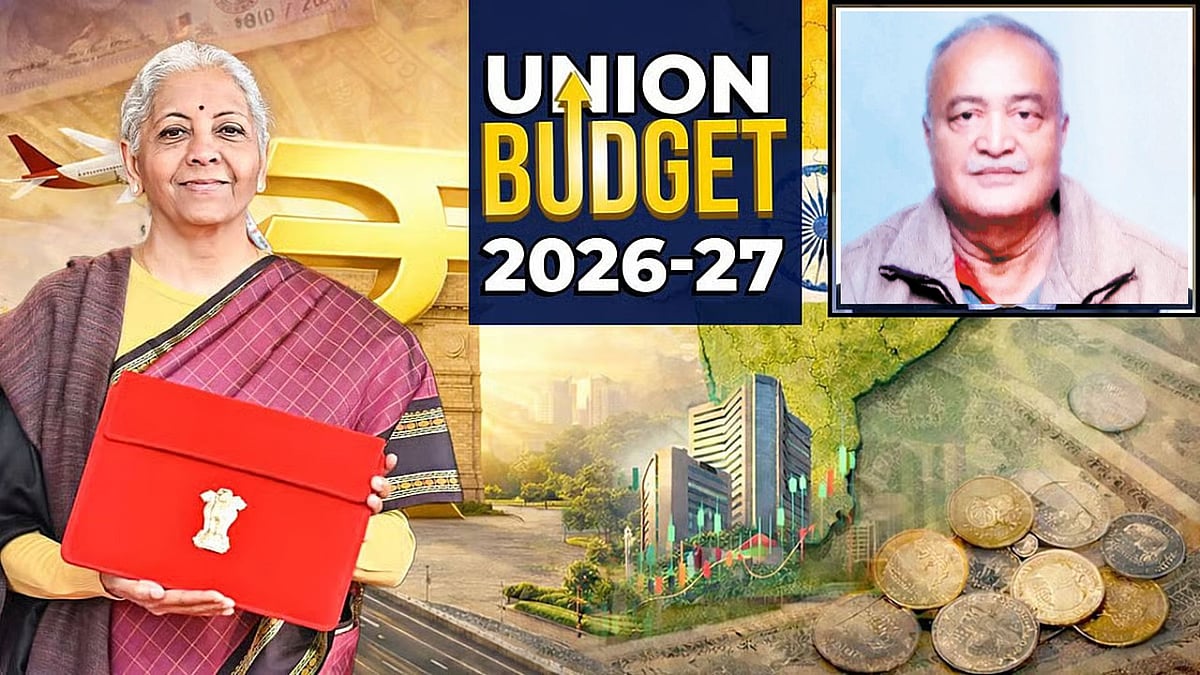
Union Budget 2026: New Budget, Old Questions for the Armed Forces, Says Retired Lieutenant Colonel Dr Rajesh Chauhan |
Indore (Madhya Pradesh): India has presented its latest Union Budget at a time when the country stands at a four-trillion-dollar economy and is steadily moving towards the five-trillion-dollar milestone.
Despite this economic strength, and despite facing security challenges on what is often described as 2.5 fronts and more, India’s defence spending remains at around 1.9 per cent of GDP. After accounting for multiple heads and sub-heads, barely one per cent effectively reaches the Armed Forces, falling well short of genuine operational needs.
The global contrast is striking. US President Donald Trump has openly pressed NATO nations to raise defence expenditure to five per cent of GDP. While India’s government is undoubtedly making efforts within fiscal constraints, the scale of threats demands far greater urgency, imagination, and long-term strategic thinking.
One area requiring serious re-evaluation is the concept of cantonments. During colonial rule, the British developed cantonments far from civilian settlements. Over time, roads were opened, civilian encroachments multiplied, and strategic isolation disappeared. Today, many cantonments sit amid dense populations, creating vulnerabilities. The Pathankot terror attack was a grim reminder of these risks.
Developing new cantonments in tactically important but undeveloped areas, far from civilian habitation, would greatly enhance security. Interestingly, the idea of selling and relocating existing cantonments was floated three to four decades ago. Reviving it now makes both strategic and financial sense. Enormous sums are currently spent repairing dilapidated colonial-era structures. Selling high-value cantonment land and assets could generate substantial resources.
With these funds, modern cantonments meeting all tactical and administrative requirements could be developed at a fraction of the recovered value. The surplus could be invested in government bonds and securities, safe instruments free from equity market risks. Returns from such investments could create a dedicated pension corpus for “Agniveers,” ensuring lifetime support. Additional infrastructure—roads, railways, airstrips, airports, and seaports—can be built using green, eco-friendly technologies, with quality of execution, not lowest bids, determining contracts.
Beyond infrastructure and budgets lies a deeper question: what motivates young Indians to volunteer for the Armed Forces? It is not merely employment, but service to the nation, honour, pride, “izzat,” and “iqbal.” Yet dignity must be matched with financial security. Soldiers should not be trained primarily for future corporate absorption when respectable pay, pensions, and status can help them live with heads held high.
Insurance cover should be raised to at least ₹2 crore, and gratuity to ₹1 crore. When cricketers receive hefty rewards for victories, soldiers who risk their lives for national security deserve no less. Those who scaled Tiger Hill and Tololing during the Kargil War under direct enemy fire earned more than gratitude; they earned lasting material recognition.
Widows and orphans of fallen soldiers deserve sustained care, not token shawls, garlands, or photo opportunities. The Armed Forces remain India’s ultimate and most reliable “AYE-team,” standing firm when crises strike and others fail. Such a life of dedication and sacrifice demands enduring respect, financial security, and unwavering national commitment.
That commitment must be reflected clearly, consistently, and courageously in every national budget.
The author is a Kargil and Wangdung Yoddha. He is also one of the few National Professors of India, and has been nominated and included by top biographers of the world as amongst top 100 scientists of the world, and top 100 Health Professionals of the world for over a decade and more.
RECENT STORIES
-
-
-
-
-