The Girl Who Raided Tombs And Had Crazy Adventures
Thirty years after her 1996 debut, Lara Croft remains one of gaming’s most recognisable female icons. From the original Tomb Raider’s action and puzzles to the 2013 Survivor trilogy’s more vulnerable heroine, the character has evolved amid debate over sexualisation, female empowerment and representation. Angelina Jolie and Alicia Vikander brought her to film audiences.

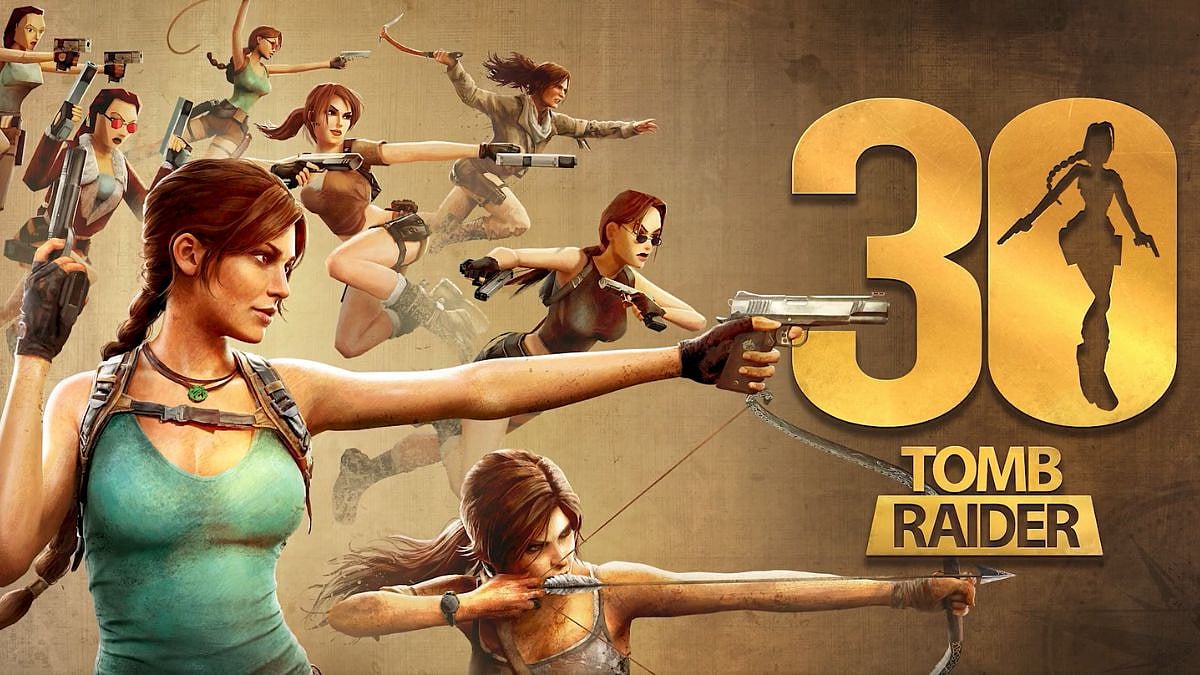
Lara Croft has evolved from a stylised 1990s video game adventurer into a more psychologically complex heroine across successive games and film adaptations | X - @PlayStationUK
Thirty years ago, in October, Lara Croft made her appearance in the predominantly male world of video gaming with Tomb Raider, created by Toby Gard at Core Design. At that time, hardware was moving from 2D sprites to 3D polygons, and developers were exploring the dimensions of virtual space. Lara Croft was a British aristocrat, archaeologist and adventurer, with a long braid, tiny shorts, a tight tank top and two pistols strapped to her thighs. With a figure that was a male fantasy and would render a real woman incapable of functioning in the wilderness, she was an instant success and the most recognisable female action hero of her time.
Five years later, Angelina Jolie played her in the film adaptation, Lara Croft: Tomb Raider, followed by a sequel in 2003. Alicia Vikander played her in the 2018 reboot.
Across nearly three decades, Lara Croft has evolved through multiple generations of video games and become a subject of academic debate about gender, power and representation in interactive media. The term ‘male gaze’ would definitely apply to the busty archaeologist.
A Landmark in Video Game Design
The original 1996 Tomb Raider was a landmark achievement in game design. Built around grid-based movement and complex environmental puzzles, the game asked players to navigate cavernous ancient ruins, avoid treacherous traps and defeat dangerous fauna, as Lara Croft did. Unlike the muscular action heroes or cartoon animals in games of the time, Lara Croft was athletic, smart, brave and capable of dealing with anything that was thrown at her.
The original games—Tomb Raider (1996), Tomb Raider II (1997), Tomb Raider III (1998), The Last Revelation (1999) and Chronicles (2000)—established the popular format. Lara travelled from the tombs of Egypt and Peru to the canals of Venice and the depths of the Pacific, driven by a passion for archaeology and ancient mysteries rather than romantic interests or rescue missions.
Reimagining Lara Croft
With changing times, the games and the character had to be updated too. Crystal Studios took over the franchise and updated Lara Croft in both appearance and content. The resulting trilogy—Tomb Raider: Legend (2006), Tomb Raider: Anniversary (2007) and Tomb Raider: Underworld (2008)—reimagined Lara’s backstory, the mystery of her mother’s disappearance and her father’s doomed archaeological quest.
By the early 2010s, tastes had changed again, and a completely new reboot of the franchise, with cargo pants replacing shorts, was written by Rhianna Pratchett in 2013. The Survivor Trilogy—comprising Tomb Raider (2013), Rise of the Tomb Raider (2015) and Shadow of the Tomb Raider (2018)—altered the myth of the invincible Lara Croft and reintroduced her as a recent college graduate on her first expedition aboard the ship Endurance. Shipwrecked on the mysterious island of Yamatai, Lara had to transform from a vulnerable young researcher into a tough survivor.
According to a comment on the new-look Lara, “The gameplay shifted toward resource gathering, bow-and-arrow combat, and cover-based firefights, complemented by open-ended exploration and subterranean tomb puzzles. By focusing on her physical trauma, fear, and ultimate resilience, the Survivor Trilogy provided Lara with a psychological depth previously absent from the series, re-establishing her as a modern action heroine for a new generation of players.”
From Video Games to Hollywood
Video games have been a source of inspiration for Hollywood, and the Lara Croft character was cinematic enough to attract the big studios. Paramount Pictures acquired the film rights to Tomb Raider and cast Angelina Jolie, an actress who had recently won an Academy Award for Girl, Interrupted (1999).
Directed by Simon West, Lara Croft: Tomb Raider (2001) used the stylised, larger-than-life tone of the video games. The narrative revolved around ancient secrets, magical artefacts, including the Triangle of Light, and globe-trotting set pieces featuring secret societies such as the Illuminati.
The first film was shot amidst the ruins of the Angkor Wat temples in Cambodia. The temple complex where it was filmed is now a tourist attraction, known as the Lara Croft temple. Angelina Jolie is also a local hero because of her humanitarian work in the country and her adoption of a Cambodian child.
The film was a huge box-office hit, proving that a female-led action film based on a video game could work globally. The second film did not fare equally well, but the fascination with the character remained.
A More Vulnerable Action Heroine
Years later, the film series was also rebooted, like the 2013 Survivor video game. Directed by Norwegian filmmaker Roar Uthaug, the 2018 film starred another Academy Award winner, Alicia Vikander, as Lara Croft.
The film dropped the invincibility of the character and recreated her as a bike courier in London, struggling to pay rent while refusing to accept her missing father’s vast inheritance. When she uncovers clues regarding his final expedition to the island of Yamatai, she embarks on a dangerous journey to discover the truth behind the mythical Queen Himiko.
Female Empowerment and the Male Gaze
Lydia McInnes, writing in PIT Journal, comments, “Ever since the beginning of her crypt-hunting career, tomb raider Lara Croft has been both a figure of female empowerment and an objectified sex symbol meant entirely for the male gaze. However problematic she may be, Lara is also an example of ideal female representation and how future gamers, designers, and programmers can start to change the traditionally male-dominated industry. A lot of problematic aspects of videogame culture can and should be addressed in order to facilitate female growth and empowerment. While many feminist scholars and academics believe the stereotypes and language surrounding today’s games are the most pressing issue facing female gamers and designers today, I will argue that it is actually the content of the games themselves that must be addressed first. Using Lara Croft as both a case study and an example in favour of changing gaming content before all else, I will prove that, despite the difficulties facing female gamers, designers, and programmers in today’s industry, change is possible. Not only is it possible, but it is necessary: to improve the reputation of industry giants whose games have disparaged women for years, to show the growing female demographic that their insight is appreciated and their influence is welcome, and to show industry leaders and traditional player demographics that video games don’t need to be misogynistic to be successful in the industry.”
She has been criticised as a cyberbimbo, but Lara Croft has also been described as 3D gaming’s first female superstar and holds a Guinness World Record as the most recognised female video game character. Thirty years later, her place in the pantheon of female pop culture icons cannot be denied.
Deepa Gahlot is a Mumbai-based columnist, critic and author.
To get details on exclusive and budget-friendly property deals in Mumbai & surrounding regions, do visit: https://budgetproperties.in/
RECENT STORIES
-
-
-
-
-