The Correspondent: Glimpses Of A Life Lived Through Letters
Virginia Evans’ The Correspondent, winner of the 2026 Women’s Prize for Fiction, tells the story of retired lawyer Sybil Van Antwerp through letters and emails spanning a decade. Set in Maryland, the novel explores ageing, grief, family, memory and loneliness while celebrating the fading art of letter writing in the digital age.

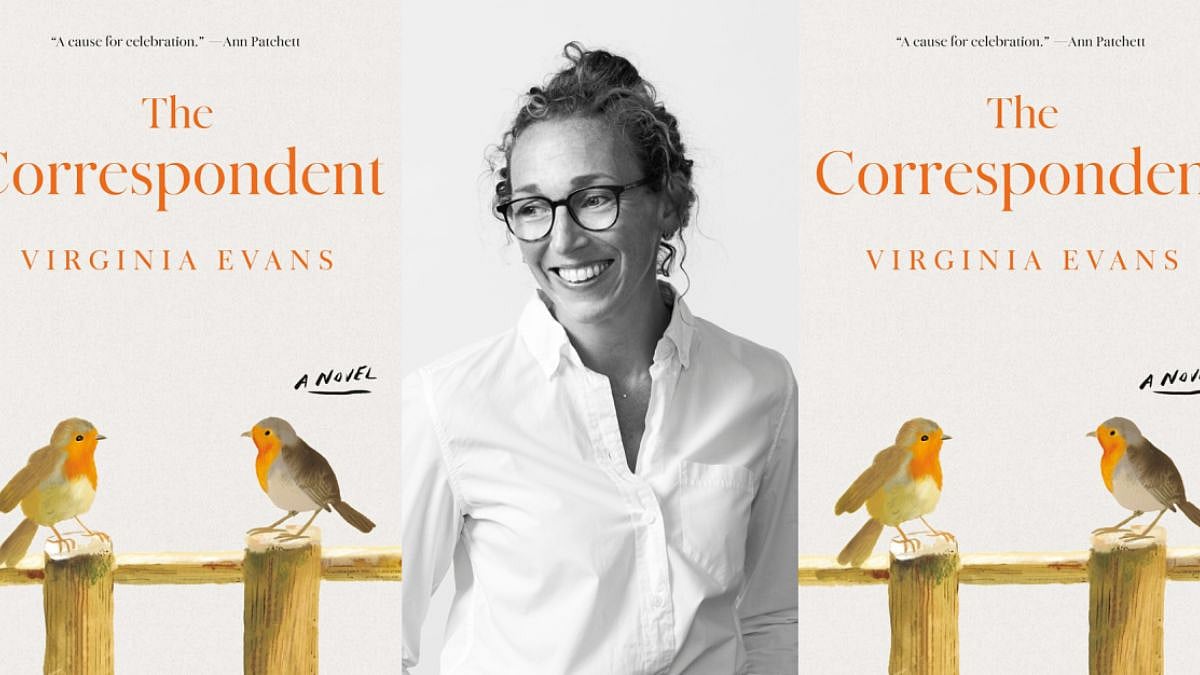
Virginia Evans’ award-winning novel The Correspondent follows a retired lawyer whose life unfolds through letters and emails | File Photo
The Women’s Prize for Fiction this year was awarded to The Correspondent by Virginia Evans, a book that has also been on the bestseller list for several months.
The novel, written in a unique style—though not the first of its kind—may have endeared the book to the judges, who picked it over complex historical epics and serious social narratives. According to Julia Gillard, Chair of Judges for the 2026 Women’s Prize for Fiction, “The Correspondent by Virginia Evans is a remarkable novel, with an exemplary combination of originality, excellence, and accessibility. It is no mean feat to write a life in letters, but Evans makes this feel effortless, asking the reader to consider the choices we make whilst elevating an ordinary life in the most heartfelt of ways. The sheer skill required to render an emotionally resonant and engaging work in this format is spectacular. This is a novel that captured our hearts and should be read and savoured by all.”
The protagonist of The Correspondent is a septuagenarian, Sybil Van Antwerp, a retired attorney living in a pretty waterfront cottage in Annapolis, Maryland. Through a compilation of letters and occasional emails spanning from 2012 to 2022, Evans crafts a layered character study of a woman who lived a life that was “magical and mundane”.
A life told through letters
Having grown up at a time when people communicated through letters, Sybil writes to members of her family, friends, authors she likes, and even strangers to whom she has something to say—like a journalist who made assumptions about her, or a college dean who refused her request to sit in on classes.
In one sense, the book is pure nostalgia for the lost art of letter writing in the age of WhatsApp messages, but Evans encapsulates the life and thoughts of a woman who is able to articulate herself better on paper than through the spoken word in person or on the telephone. She writes at one point, “I do wonder if by conducting the most intimate relationships of my life in correspondence, I have kept, since I was a child, a distance between myself and others.”
Sybil is a remarkably self-aware, pragmatic, lucid and straightforward woman who may have had trouble connecting with her own children after her divorce, but she mourns the death of a son many years ago and, in a burst of kindness, writes to the troubled son of a friend, or offers to help a Syrian refugee who works with a genealogy website.
She is divorced from her husband, who has moved on, and her children, Bruce and Fiona, find her emotionally distant. She lives alone, cooks her meals, tends to her garden and, thrice a week, at half past ten, sits at her desk to conduct what she calls the “mainstay of my life”. The tone of her letters is unfailingly polite and often witty. The letters to her brother, Felix, and her friend, Rosalie, are warm and rambling; to her neighbour, Theodore Ludbeck, who leaves flowers and cakes for her, she is suitably thankful.
Relationships, regrets and rediscovery
In the letters she writes to celebrities like Ann Patchett, Joan Didion and Larry McMurtry. She audaciously comments on their work and offers insights and personal asides. Evans introduces fictionalised replies from these figures—particularly Didion—which show that they value her words and do not treat her as an eccentric oldie.
Sybil is a remarkable woman, who knows that she and her brother were adopted and does not let it bother her. At a time when women did not have high-flying careers in law, she was forced to hide her brilliance and play second fiddle to a male judge. She bears no bitterness about the lost career opportunity. Her stable marriage breaks up after the death of her son, when she is so felled by grief and guilt that she loses track of her family.
In the present, she is losing her sight and has braced herself for the possibility of not being able to read or write in the near future. Much to her own surprise, life gives her a second chance at romance and also the discovery of her birth family.
A poignant meditation on ageing
Even after letter writing almost ceased, recent years saw epistolary bestsellers, like We Need To Talk About Kevin, The Guernsey Literary and Potato Peel Pie Society, and Where’d You Go, Bernadette? It’s a difficult format to pull off, since events are presented indirectly through the written point of view of the letter writer. Evans adds a lot of layers to Sybil’s character and surprising plot twists, so the 300-page novel does not feel static.
An undercurrent of tragedy runs through the book, as seen through the letters written to an unknown recipient but never sent. When that mystery is solved, it comes as a small jolt.
The Correspondent is about ageing in modern times, the struggle to tether family and social networks, the significance of memory and the real fear of loneliness. Sybil does not think she is lonely because she has her letters to keep her in touch with those dear to her, as well as people she may never meet in real life, but she has affected their lives in some way or has been affected by them. It is also about grief, anger, contrition and forgiveness, and Evans deftly juggles all the plot surprises she introduces at regular intervals.
The book is an absolute treasure, not just because of the singular character of Sybil Van Antwerp, but also because it reminds us that to-the-point emails and quick texts are no substitute for letters on paper. Some of us may remember the quaint phenomenon of pen pals in the past, postcards or thin aerogrammes, and then the breathless wait for the mail delivery. The mechanical ding of an email message being delivered will never match that!
Deepa Gahlot is a Mumbai-based columnist, critic and author.
RECENT STORIES
-
-
-
-
-