The Child Mumbai Couldn’t Protect From Its Own Civic Failures
The death of 11-year-old Vihaan Srivastava exposes Mumbai's recurring civic failures, poor infrastructure planning and lack of accountability. It urges authorities and citizens to demand lasting reforms so preventable tragedies do not become routine and innocent lives are no longer lost to negligence.

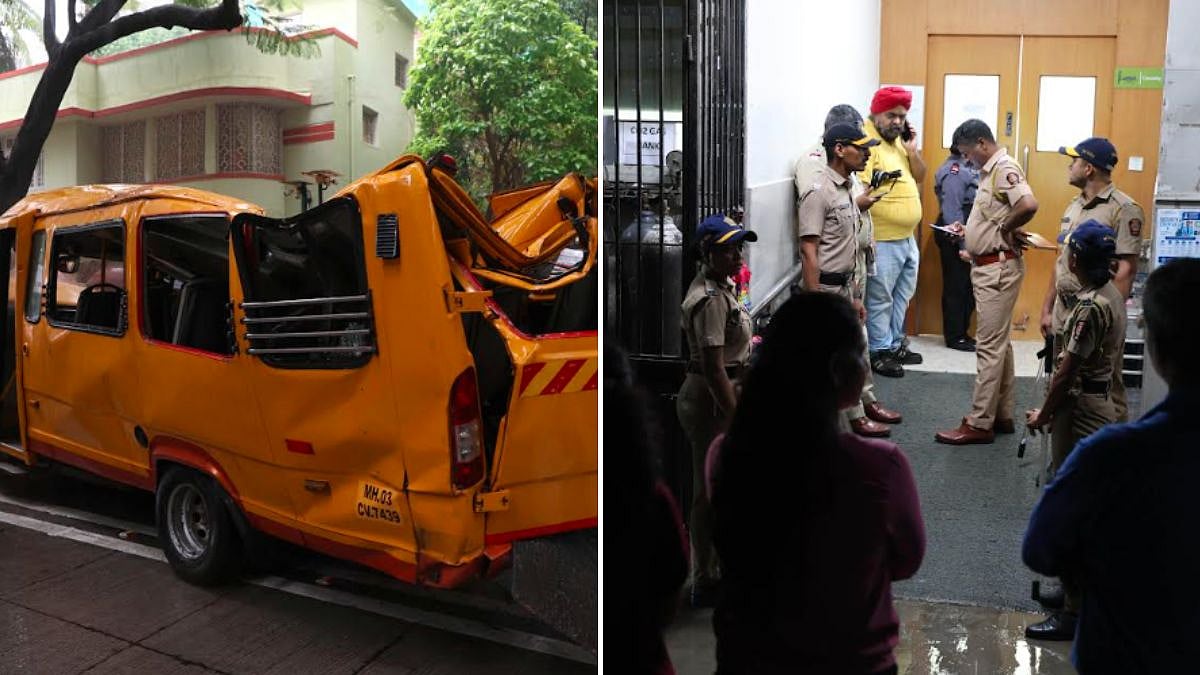
Vihaan Srivastava's death should become a catalyst for civic accountability and safer urban governance in Mumbai | Pics | Vijay Gohil
Every morning I step onto Mumbai’s streets hoping that nobody pays with their life for another preventable civic failure. That is an extraordinary thought to carry in a city that proudly calls itself the financial capital of India. Yet, as I pass ageing buildings, trees trapped in concrete, roads narrowed by encroachments, vehicles occupying every available inch of public space, and trains and buses carrying far more people than they were ever designed to, it no longer feels like an irrational fear.
I hope no ambulance has to battle through impossible lanes to save a life. I hope every citizen who leaves home returns safely by evening. These are the most basic promises any city owes its people. Spend enough years navigating this city and even an atheist may begin to believe that a higher power is working overtime to keep millions safe despite the failures of those entrusted with doing so.
A City Of Contradictions
Mumbai proudly calls itself the Maximum City. It has undoubtedly maximised enterprise, wealth, ambition and opportunity. Yet, beneath that glittering identity, it has become a Chalta-Hai City, where civic decay is tolerated, official indifference is normalised, and accountability arrives only after lives have been lost.
Walk through almost any suburb and the contradiction is impossible to ignore. The roads were laid many decades ago when the city’s movement probably depended largely on bicycles, bullock carts and the occasional motorcar. Today, those same lanes are expected to accommodate high-rise residential towers, school buses, ambulances, fire engines, delivery vehicles and thousands of private cars. We have multiplied the city’s population, vehicles and buildings several times over, yet we have hardly reimagined its roads, zoning regulations or emergency access.
One does not require an urban planning degree to recognise the absurdity. Ask a simple question: If a major fire were to break out in many of Mumbai’s residential neighbourhoods, could a modern fire engine even reach the building?
Ignoring Nature And Infrastructure
Our relationship with nature reflects the same carelessness. We have become experts at concretising roads but appear to have forgotten the elementary science of botany. Equally worrying is the manner in which we continue to construct our cities, often treating natural systems as obstacles to development rather than the very foundations upon which safe and sustainable urban life depends.
Trees are living systems, not ornamental poles embedded in concrete. Their roots require space, healthy soil, water and careful scientific maintenance. Instead, we choke them beneath layers of concrete, weaken the ecosystems that sustain them, and then express surprise when they fail. Nature rarely behaves unpredictably.
The same yearly pattern repeats itself with disturbing regularity. Roads develop potholes that claim innocent lives. Every incident follows an almost identical script. Television cameras arrive. Officials express sorrow. Political leaders promise action. Three days later, the headlines disappear, public attention shifts elsewhere, and the city quietly returns to normal until another entirely preventable tragedy interrupts the routine.
Municipal officials know their jurisdictions intimately. They know which roads have become dangerously narrow, where emergency vehicles struggle to pass, which footpaths have disappeared beneath encroachments, which neighbourhoods are choked by illegal parking, and where civic infrastructure has failed to keep pace with relentless construction. Local political representatives know these realities just as well because they seek votes from these very streets.
Drive through Mumbai’s inner suburbs and another uncomfortable truth emerges. Public roads have steadily become extensions of private property. Residents who can comfortably afford second and third cars often choose not to pay for legitimate parking within their own buildings, preferring instead to occupy public roads indefinitely. Every encroachment steals public space. All of this survives for years with official knowledge.
When violations remain visible for years, laws are enforced selectively, and official assurances repeatedly collapse against everyday reality, people inevitably begin to question whether corruption, influence or institutional indifference have become too deeply woven into the system.
A Child We Failed
The tragic death of 11-year-old Vihaan Srivastava after a peepal tree fell on his school bus in Chembur should force every public servant and every elected representative to ask an uncomfortable question: Is there even an iota of shame or moral accountability left when yet another preventable tragedy claims an innocent life?
What can possibly be said to Vihaan’s parents? How do we reassure the children on that bus who are now recovering from their injuries and the trauma they will carry for years? What words can comfort classmates who will forever remember an ordinary afternoon that changed forever? Somewhere tonight there is a school bag that will remain unopened, a uniform that will never again be worn, and a family whose future has been permanently altered. No inquiry, compensation or condolence can ever restore what they have lost.
It is also a mirror held up to us—the citizens. We have normalised civic dysfunction and learnt to live with what should outrage us. Silence has become the most dangerous accomplice of civic failure.
We do not truly care until tragedy bears our own surname. Until then, another family’s grief becomes another headline, another inquiry and another statistic. Somewhere between official indifference and our collective silence, human lives have become meaningless statistics.
A Call For Accountability
Until public office rediscovers moral accountability, negligence carries personal consequences, and we stop accepting civic failure as normal, we will continue building richer cities while becoming a poorer society.
We are sorry, Vihaan. We could not give you what every child deserves—the certainty of returning home safely. We were all in too much of a hurry, too willing to believe that someone else would fix what everyone already knew was broken. May we at least find the conscience that failed you so that no other child becomes another statistic we mourn briefly before forgetting.
Dr Srinath Sridharan is a policy researcher and corporate adviser. X: @ssmumbai.
RECENT STORIES
-
-
-
-
-