Suvendu Adhikari’s 3D Policy To Deal With Illegal Migrants
Suvendu Adhikari’s proposed “Detect, Delete, Deport” policy has intensified debate over illegal migration in West Bengal. While electoral roll verification has received judicial backing, experts note that citizenship determination, detention and deportation involve complex legal procedures and require cooperation from Bangladesh, making large-scale implementation a significant challenge.

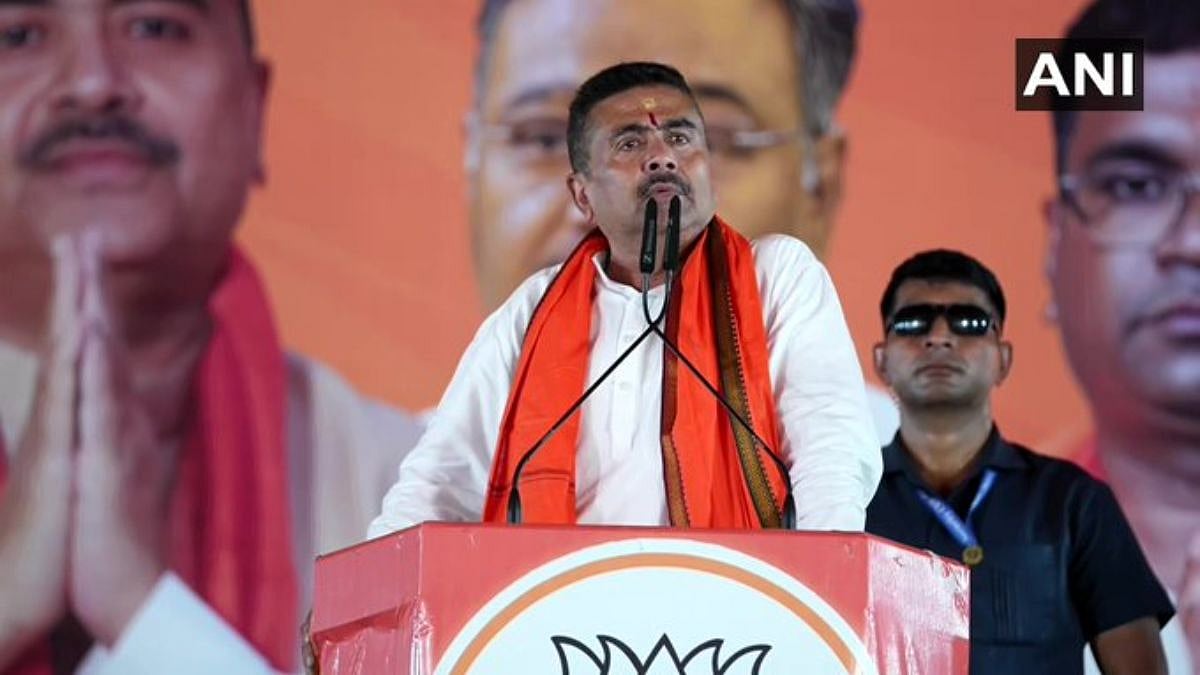
Chief Minister Suvendu Adhikari | ANI
West Bengal Chief Minister Suvendu Adhikari’s 3D policy of ‘detect, delete, deport’ has led to hundreds of undocumented workers queuing up at the Indo-Bangladesh border, seeking to return home rather than face detention.
The ‘detect’ and ‘delete’ aspects of the policy have been firmly vindicated by the Supreme Court’s thumbs-up to the Special Intensive Revision (SIR) of electoral rolls on Wednesday. But the ‘deport’ aspect is far more difficult to implement.
The Bangladesh government has posited its own 3D policy of ‘deny, dissemble, delay’ regarding the undocumented migrants. Even before Adhikari took the oath as CM of West Bengal, Bangladeshi Foreign Minister Khalilur Rahman warned that Dhaka would take action if “push-in incidents occur amid the change of power” in West Bengal.
The famously porous 4,096-km-long border has reportedly witnessed numerous incidents of the BSF attempting to push ‘back’ people, while the Border Guard Bangladesh (BGB) resists the push ‘in’.
Challenges of detection and border management
West Bengal has historically been a weak spot in terms of curbing illegal migration. Bangla nationalism, based on a shared linguistic identity, informed the lenient policy towards illegal migrants adopted by successive governments after the 1971 refugee crisis (when 10 million people fled from East Pakistan into West Bengal and the Northeast).
Since then, migration from Bangladesh has been for economic rather than political reasons. Standard Bengali is spoken in both countries, allowing migrants to mingle with locals.
Some regional dialects differ substantially from Bengali, making it easy to spot, for example, Sylheti. But for the most part, the shared ethno-linguistic identity makes detection difficult.
Adhikari’s first act as CM was to hand over land along the border to the BSF for fencing. The need for border fencing was recognised way back in the 1980s, but work began only in the 1990s, initially proceeding at a snail’s pace.
Progress on border infrastructure accelerated in the 2010s, and by 2025, around 80 per cent of the border had been fenced, despite delays owing to land acquisition and interference by the BGB.
West Bengal has the longest stretch of border with Bangladesh at 2,216 km, of which 1,648 km is fenced. The remaining 570 km is too long to be effectively policed without fencing. In April this year, the Calcutta High Court reprimanded the state government for failing to make land for fencing available to the BSF.
While Adhikari has acted expeditiously in procuring land and Union Home Minister Amit Shah has promised fencing on a war footing, an impenetrable DMZ-like border is not possible.
Stretches comprising marshlands dissected by streams total 112 km. Immigrants take advantage of this swampy terrain, simply swimming across the border or coming in small boats. So, apart from technical fixes like floodlights, hand-held thermal imaging (HHTI) devices and surveillance drones, the Home Ministry reportedly considered introducing crocodiles and snakes into rivulets and swamps.
Deportation remains a major hurdle
Fresh waves of illegal migrants may be stopped at the border once deterrent measures are in place, but deporting lakhs of undocumented migrants is a huge challenge.
Take the case of Assam. Almost 2 million people failed to make it to the National Register of Citizens (NRC), but the exercise was deemed error-ridden, and no action was taken. Thereafter, Foreigners’ Tribunals have been established to determine the citizenship status of suspected illegal migrants.
Last year, the Assam government admitted that while 32,200 foreigners had been detected since the Himanta Biswa Sarma dispensation assumed charge in 2021, only 1,416 of them had been deported. Long delays in the verification of individuals before formal repatriation have made progress painfully slow. In the meantime, foreign nationals have to be housed and fed in deportation centres.
Dhaka alleges that the BSF is bypassing diplomatic channels by pushing people, who might not be Bangladeshi nationals, across the border. It claimed that the BGB had ramped up patrolling of the border and informed frontier villages that people were being illegally forced into the country. Dhaka is clearly signalling an imminent diplomatic crisis if more illegal migrants are informally repatriated.
Adhikari, by threatening detention, has managed to get a few hundred people to voluntarily attempt the journey home. But going by the number of people deleted from the electoral rolls during the SIR, the economic cost of verifying their status, then detaining and repatriating them will be enormous.
Citizenship verification and diplomatic leverage
The apex court’s judgment in the SIR case clearly says that the question of citizenship cannot be decided on the basis of deletion from the electoral rolls and is subject to adjudication by the appropriate authority under the Citizenship Act.
For those who do not make the cut, India needs leverage in order to coax Bangladesh into taking them back. Deportation procedures vary from country to country. A deportee with a passport may be sent back directly, without detention. In cases where the individual has no documentation but claims a particular nationality, the concerned consulate may be required to step in.
For example, 164,000 Pakistani nationals and 24,600 Indians have been evicted from the Gulf in the past five years. In recent months, tens of thousands of Pakistani nationals have been deported from Saudi Arabia and the UAE. Neither Pakistan nor India has refused to accept the deportees, preferring to maintain goodwill.
Earlier this month, the External Affairs Ministry acknowledged that Dhaka’s cooperation was necessary for repatriating illegal migrants. To this end, the Centre has the option of leveraging economic aid, infrastructure projects, investment and trade agreements, as well as offering technological assistance to expedite the verification of nationality.
While Adhikari’s 3D policy may not be effective in terms of the numbers repatriated, it has unequivocally signalled a tough stance on illegal migrants.
Bhavdeep Kang is a senior journalist with 35 years of experience working with major newspapers and magazines. She is now an independent writer and author.
RECENT STORIES
-
-
-
-
-