Spiritual Tourism Is Converting Our Sacred Landscapes Into Tourist Dumps
Unregulated spiritual tourism is overwhelming India's sacred destinations, with rising visitor numbers causing traffic congestion, pollution, waste accumulation and pressure on local communities. Kainchi Dham, Vrindavan and Varanasi highlight the growing environmental crisis and the urgent need for sustainable pilgrimage management.

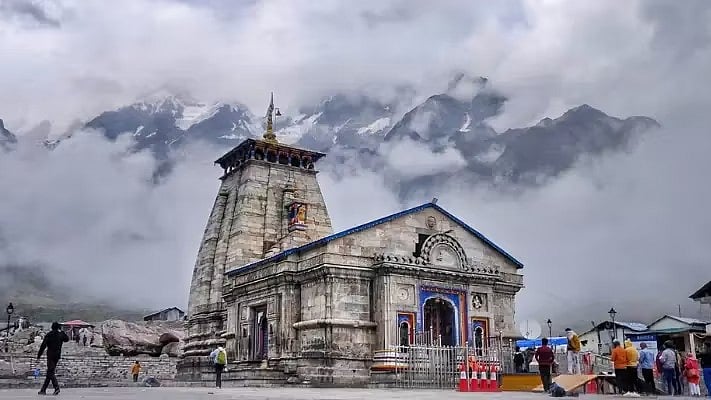
From Kainchi Dham to Varanasi, growing pilgrim numbers are putting unprecedented pressure on India's religious heritage and fragile landscapes | BizareXpedition
I first met Neem Karoli Baba in Lucknow at the age of fourteen. For a young student studying in Loreto Convent, a holy man wrapped in a chequered blanket was something of an enigma. I bowed to him as instructed by my mother and did not say a word, thinking nothing of it. My second meeting with him, the following year, was at his ashram in Kainchi in the hills, where we chatted together for over an hour. I had no idea who he was, and I exchanged a great deal of teenage gossip with him. He smiled occasionally and listened to my rambling thoughts with a smile.
The Kainchi ashram had a large statue of Hanuman. The Shipra River flowed past us peacefully, and during the course of this rambling conversation, I did not notice a single visitor entering the ashram. It was quiet. Peaceful and secluded.
During the past five years, this small and narrow ashram has had to cope with a deluge of tourists. The numbers are so forbidding that people have to quickly walk in single file past the Hanuman murti and then are led out. They are given no time to sit and meditate, if only for a few minutes, on the shakti that is said to permeate this place. What on earth are they going there for if all they can do is be part of a march past?
Film Triggers Surge In Visitors
The recent film on Neem Karoli Baba, released in theatres on August 7, has just added an extra dimension to this rush. This low-budget film had a low-key opening, earning just Rs ten lakh on its first day. Its director, Vishal Chaturvedi, sought high-profile political endorsements and state tax exemptions by meeting the chief ministers of the cow belt, who were only too willing to oblige. Once his 'bhajan clubbing' events were attended by none other than Prime Minister Modi and Home Minister Amit Shah, the film went national and became a major hit, earning over Rs 450 crore in revenue.
This surge in popularity has seen the footfall increase exponentially at Kainchi Dham, where massive traffic jams and vehicle backlogs stretch all the way to Kathgodam and Haldwani. The Uttar Pradesh government has announced that it would launch a new spiritual tourism circuit associated with Saint Neem Karoli Baba, connecting key places related to his life and legacy. It also launched five special tour packages on the occasion of his Mahasamadhi day. This announcement was made one day after UP Chief Minister Yogi Adityanath met the cast and crew of the movie. Not to be left behind, the Uttarakhand Chief Minister, Pushkar Singh Dhami, has given the green light to the construction of three expressways that will lead up to Kainchi!
Religious Centres Turn Tourist Destinations
Ever since the BJP took over the reins of government, all our religious centres are being promoted as tourist destinations. The result is a deluge of people, many of whom have no aastha whatsoever, who visit these places to make reels to increase their social media presence.
Kainchi Dham is just one example of what is happening in the mountains of Kumaon and Garhwal. Villagers living in this region realise that with few employment avenues, opening temples is a good way to earn a quick buck. Practically every village here has now set up a temple committee, which is either building new temples or laying claim to old temples. There are instances of three villages squabbling over ownership rights to the same temple.
Locals Bear The Burden Of Tourism
Old residents are upset at this large-scale and unregulated invasion, which has caused havoc in their daily lives. There is a local-versus-outsider attitude playing out across the cities. In Mussoorie, earlier this year, a routine argument over a parked car quickly spiralled into a shouting match. Tourists surrounded a local shopkeeper, residents gathered in support of their neighbour, mobile phones came out, and within minutes the confrontation was circulating across social media. Similar scenes are now playing out across all our popular destinations.
Environmentalists have been screaming their lungs out regarding the havoc these expressways are causing in our sacred landscapes. Worse, these mountains simply do not possess the carrying capacity for such unregulated mass tourism, which leaves our hills choked with plastic debris and other waste. But this fatal kiss of political expediency and religiosity has become the hallmark of the present dispensation.
Sacred Shrines Exceed Carrying Capacity
All our sacred landscapes, be it Vrindavan, Ayodhya or Varanasi, are being systematically destroyed by this deliberate lack of foresight. But before mentioning these three religious hotspots, I would like to quote some statistics published in the journal 'Scientific Reports', which state that the Badrinath, Kedarnath, Gangotri and Yamunotri shrines can only take a maximum of 15,778, 13,111, 8,178 and 6,160 visitors per day, respectively. But the recorded numbers visiting these four shrines crossed 50 lakh in 2025.
Or, take the case of Vrindavan and the overall Braj region, which had a footfall of 6.5 crore devotees. The traditional Braj Chaurasi Kos Parikrama was performed by over three crore pilgrims. The Uttar Pradesh Braj Teerath Vikas Parishad takes great pride in informing the world that, on average, one lakh tourists visit Vrindavan over the weekend, with 30,000 visitors driving down from Delhi alone. But have they ever stopped to ask whether a city with an original population of 20,000 residents can cope with such numbers? Does it possess the necessary infrastructure? What will the ecological impact of these hordes be on this entire water-starved region being fed largely by the sewage-ridden Yamuna River?
Varanasi Records Unprecedented Footfall
The situation is the same with Varanasi. The government likes to boast that Varanasi, the ancient spiritual heart of India, also known as Kashi or Banaras, has achieved a historic milestone in 2025 by welcoming an unprecedented 146.97 million visitors. The UP Tourism Department has released a flyer stating that this figure represents the highest single-year footfall ever recorded for the city, solidifying its position as one of the world's top spiritual destinations. The department further claims that this remarkable achievement reflects a dramatic 25-fold increase compared to 2014, when Varanasi saw approximately 5.49 million tourists.
The Modi government believes that all this will increase its vote bank. The locals believe otherwise. A social media post from Manas village, the last Indian village before the border and home to the legendary Saraswati River, contrasts the crystal-clear glacial waters with the surrounding hills covered in layers of garbage. The ecological consequences of an unsustainable tourism policy are destroying the very cities that they are meant to sustain.
Rashme Sehgal is an author and an independent journalist.
To get details on exclusive and budget-friendly property deals in Mumbai & surrounding regions, do visit: https://budgetproperties.in/
RECENT STORIES
-
-
-
-
-