Solitary Fast: How The CJP Is Weakening Sonam Wangchuk’s Cause
Sonam Wangchuk's hunger strike has highlighted important issues, including the NEET-UG 2026 controversy and Ladakh's constitutional demands, but the CJP's organisational strategy, limited mobilisation and lack of structured negotiations have reduced the protest's political effectiveness, according to the opinion piece.

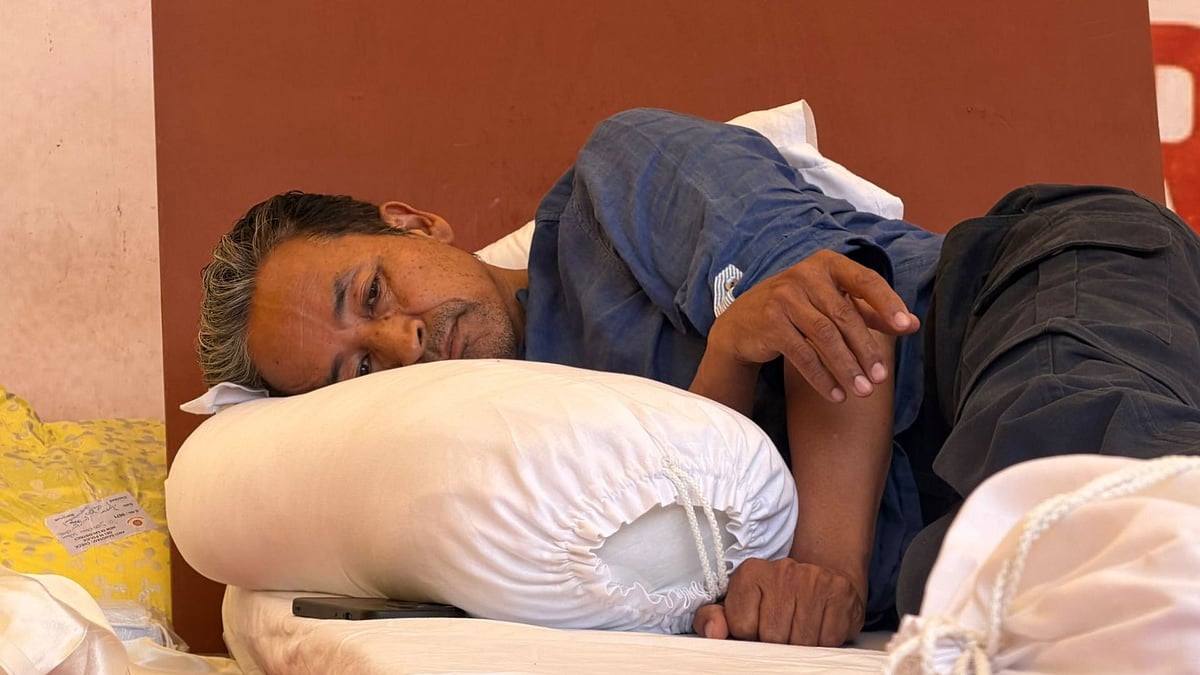
Sonam Wangchuk | X/@abhijeet_dipke
Sonam Wangchuk, the renowned climate activist and education reformer from Ladakh, entered his indefinite hunger strike on June 28, 2026, at Jantar Mantar in Delhi. By mid-July, the fast had stretched into its 18th day, with reports indicating significant weight loss of over 8 kg, dropping blood pressure, low blood sugar levels, muscle wasting, and increasing pain. Wangchuk has vowed to continue for up to six weeks or until death, if necessary.
His demands centre on two critical issues: accountability in India's education system, specifically the resignation of Union Education Minister Dharmendra Pradhan over the NEET-UG 2026 paper leak scandal, and long-pending constitutional safeguards for Ladakh, including inclusion under the Sixth Schedule, greater autonomy, and environmental protections. The cause is undeniably important. The NEET paper leak led to the exam's cancellation, widespread student distress, reported suicides, and eroded trust in the National Testing Agency.
Ladakh's demands stem from unfulfilled promises since its reorganisation as a Union Territory in 2019 concerning tribal rights, cultural preservation, and ecological fragility in a region bordering sensitive areas. Wangchuk's track record lends credibility: he has successfully used hunger strikes in Ladakh for local issues, often securing government engagement through sustained local mobilisation and back-channel talks.
Questions Over Strategy
Yet, this Delhi protest appears headed toward diminishing returns, largely due to the vague, leaderless, and shortsighted approach of the Cockroach Janta Party (CJP), the primary platform he joined. The CJP, founded by Abhijit Dipke, emerged amid the NEET outrage and organised sit-ins, demanding Pradhan's resignation. Wangchuk aligned with them, amplifying their voice with his stature. However, the party's strategy lacks depth.
While student organisations like the All India Students' Association (AISA) have conducted more aggressive, on-ground protests—including direct confrontations and broader mobilisation—the CJP's efforts remain confined to Jantar Mantar, reliant on social media appeals, letter-writing to MPs, and occasional celebrity or influencer visits. Dipke and other CJP leaders have not joined Wangchuk in the fast, positioning him as the solitary symbolic figure while they manage the logistics.
This creates an optics problem: a respected activist fasting alone while organisers stay on the sidelines. Contrast this with proven hunger strike successes. Wangchuk's past Ladakh fasts benefited from massive local participation, clear timelines, and eventual negotiations.
Nationally, Anna Hazare's 2011 anti-corruption movement offers a stark benchmark. Hazare's fast at Jantar Mantar drew crowds in the lakhs, backed by diverse civil society groups, middle-class urban support, and even tacit or overt backing from organisations like the RSS ecosystem. It featured structured planning: regular delegations met government officials, back-channel communications remained open, and the protest escalated into a broader national agitation that forced the UPA government to form a joint drafting committee for the Jan Lokpal Bill. Politicians from across parties engaged, media amplified it organically, and public outrage translated into street power beyond hashtags.
Need For Wider Support
The CJP's protest, by comparison, feels improvised. It piggybacked on NEET anger but failed to build a broad coalition. Major opposition parties like the Congress, led by figures such as Rahul Gandhi, have criticised the government on NEET but offered only rhetorical support without embedding themselves in the CJP's campaign. Individual leaders from the AAP and others have visited sporadically, but there is no unified opposition front. Social media buzz has not translated into mass mobilisation.
The protest remains Delhi-centric, disconnected from affected students nationwide, and lacks the institutional depth that made Anna's movement formidable. Writing letters to MPs or staging symbolic sit-ins substitutes poorly for sustained negotiation frameworks. Effective hunger strikes, as historical precedents show, combine moral conviction with pragmatic engagement.
History shows that hunger strikes succeed not merely because of moral pressure but also because they are backed by political strategy. During Mamata Banerjee's Singur agitation, dialogue continued through the Governor and leaders across party lines despite the public fast. The Anna Hazare movement followed a similar script, with several rounds of negotiations between the UPA government and India Against Corruption leaders, including Arvind Kejriwal.
That crucial element is missing today. A government as politically entrenched as the BJP-led NDA can simply wait out a protest if no credible back-channel negotiations exist. While the Centre has shown some movement on Ladakh issues—something Sonam Wangchuk himself has acknowledged—the demand for accountability in education remains unaddressed. If the CJP believes that a few letters to senior leaders will persuade this government to negotiate, it is a politically naïve reading of how power operates. Hunger strikes require negotiation as much as sacrifice.
A Call For Course Correction
The CJP's insistence on Pradhan's resignation as a non-negotiable precondition, without phased demands or alternative pressure points, leaves little room for compromise. This strategic shortfall risks turning a vital cause into a footnote. Wangchuk's health deterioration evokes sympathy, but without escalating public pressure or negotiation breakthroughs, the government faces minimal incentive to act. Students affected by NEET deserve systemic reforms—greater transparency in NTA operations, possible decentralisation of exams, and robust leak-prevention mechanisms—not just one resignation.
Ladakh's tribal communities need constitutional protections to safeguard their land, culture, and ecology from unchecked development. These issues transcend one activist's fast. The platform choice compounds the problem. Aligning exclusively with the CJP, which projects an anti-establishment but loosely organised image, has isolated Wangchuk from broader networks. Unlike Anna Hazare, who commanded respect across ideological lines and built a movement with established civil society anchors, Wangchuk here appears as the face of a nascent party's agitation.
This limits scalability. Stronger alliances with trade unions, farmer groups, regional parties from the Northeast and Himalayas, and even apolitical education reformers could have amplified the impact. Hunger strikes remain potent Gandhian tools when wielded with foresight. They demand not just personal sacrifice but also collective strategy: clear goals, mass participation, negotiation readiness, and adaptive tactics. Wangchuk's sincerity is beyond doubt—he has risked his life repeatedly for Ladakh. Yet, conviction alone cannot compensate for organisational vagueness.
The CJP's clueless execution—over-relying on one man's fast, under-mobilising the masses, and neglecting structured dialogue—has rendered the protest increasingly symbolic and ineffective. India's youth and border regions deserve better. The NEET fiasco exposes deep flaws in competitive examination governance that affect millions annually. Ladakh's aspirations reflect unresolved federal tensions post-Article 370.
These merit serious policy engagement, not dismissal. For Wangchuk's effort to succeed or even meaningfully pressure the authorities, the supporting ecosystem must evolve from social media spectacles to sustained, multifaceted resistance. Without it, even the most resolute fast risks fading into irrelevance, underscoring a bitter lesson: in democratic protests, strategy is as crucial as sacrifice. The Cockroach Janta Party's shortcomings have, unfortunately, placed Sonam Wangchuk's valiant stand on a path toward futility.
However, as Congress MP Shashi Tharoor aptly observed, Sonam Wangchuk has already achieved the most important objective of his fast: he has thrust a critical issue into the national consciousness. That, in itself, is no small victory. It is now time for him to end the hunger strike. In any democracy, the moral force of a fast is too valuable to be allowed to fade into diminishing returns. Activists of Wangchuk's credibility are rare, and hunger strikes remain one of democracy's most powerful instruments of peaceful dissent. They should be preserved for moments when they can exert the greatest moral and political impact, not be exhausted through prolonged stalemate.
Sayantan Ghosh is the author of two books, Battleground Bengal and The Aam Aadmi Party, and teaches at St. Xavier's College (Autonomous), Kolkata.
RECENT STORIES
-
-
-
-
-