Peace After The Iran War: Winners, Losers & The New Strategic Order
The end of the Iran war has averted a wider regional catastrophe and stabilized energy markets, but its geopolitical consequences are only beginning to unfold. India gains from stability, Iran claims survival as victory, while the United States and Israel confront uncomfortable questions about power, deterrence and influence.

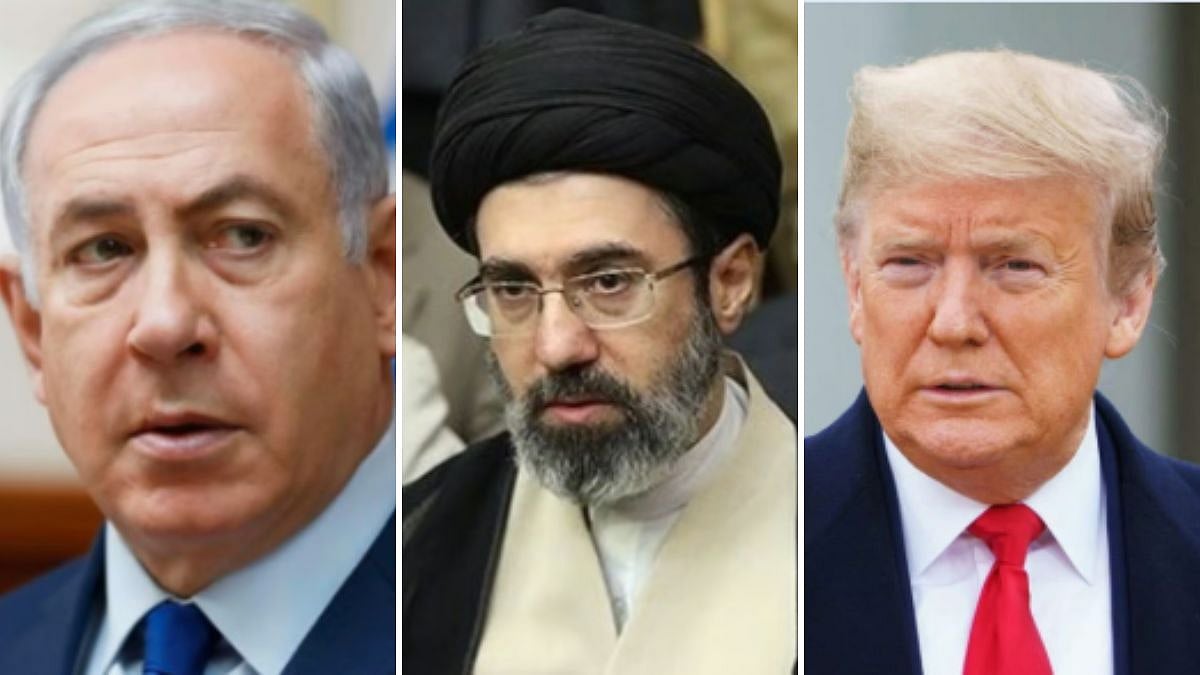
Peace After The Iran War: Winners, Losers & The New Strategic Order | File Pics
The American setback in the Iran conflict may eventually be remembered as another crack in the edifice of U.S. global supremacy. The fall of Saigon in 1975, the troubled Iraq intervention and the chaotic withdrawal from Afghanistan in 2021 had already weakened Washington's aura of invincibility. The Iran episode may now join that list.
For more than seven decades, the United States acted as the principal architect of the
international order, projecting military power and shaping geopolitical outcomes across continents. Yet despite overwhelming military superiority and sustained pressure, Tehran survived the conflict with its political system intact. The outcome has revived a question that many believed settled long ago: whether America remains the undisputed global leader or is gradually confronting the limits of its power in a changing world.
Two major political takeaways emerge from the Iran peace agreement. The first concerns President Donald Trump's credibility. Throughout the crisis, Trump repeatedly claimed that negotiations were progressing and that a breakthrough was imminent, even when no formal agreement appeared to exist. Critics argue that these statements damaged public trust and reinforced the perception among opponents that the President often makes claims not supported by facts on the ground. With opinion surveys already reflecting growing voter unease over foreign policy management, the controversy could become a significant issue in the November elections, particularly if opponents succeed in portraying the Iran outcome as a diplomatic failure rather than a strategic success.
The second takeaway relates to the myth of unquestioned American military supremacy. For decades, the United States has possessed the world's most technologically advanced armed forces and the largest defence budget. However, the Iran conflict has demonstrated that overwhelming military capability does not automatically translate into decisive political outcomes. The inability to secure clear strategic objectives despite enormous military resources has punctured the aura surrounding American power. Allies and adversaries alike are reassessing long-held assumptions about Washington's ability to dictate regional security arrangements.
The implications extend far beyond West Asia. Strategic observers believe that every major geopolitical rival of the United States, particularly China, will closely study the lessons of the conflict. Beijing may view the outcome as evidence that American deterrence is no longer as effective as it once was and that Washington's ability to impose its will on determined adversaries has diminished. At a time when the global balance of power is already shifting, any perception of American weakness could encourage China to accelerate its efforts to challenge U.S. influence in Asia, Africa and beyond.
Why India Benefits Most:
For India, the Iran-US peace agreement comes as a major economic and strategic relief after months of uncertainty triggered by the conflict in West Asia. The reopening of the Strait of Hormuz, a vital artery for India's energy imports, is expected to ease pressure on oil and gas supplies, stabilize prices and reduce inflationary risks. The agreement also restores confidence in maritime trade routes that are crucial for Indian exporters and importers. New Delhi, which carefully maintained relations with all sides during the conflict, has welcomed the deal as an important step towards restoring stability in a region that remains central to India's energy security and economic interests.
The conflict nevertheless exposed India's vulnerability to disruptions in West Asia. A significant share of India's crude oil, LPG and LNG requirements originates from the region, forcing refiners to explore costly alternative supplies when hostilities escalated. The ceasefire may ease immediate concerns, but policymakers are likely to view the crisis as a reminder of the need to diversify energy sources and strengthen strategic reserves. Equally important, the agreement could revive prospects for deeper engagement with Iran, including renewed energy cooperation and the long-delayed development of Chabahar port, a key component of India's connectivity ambitions in Central Asia and beyond.
The broader lesson for New Delhi is geopolitical rather than economic. Throughout the conflict, India successfully balanced its ties with the United States, Israel, Iran and the Arab world without becoming directly involved in the confrontation. The eventual return of Washington and Tehran to negotiations demonstrates that even major powers are often compelled to choose diplomacy when the costs of conflict become unsustainable. For India, the message is clear: pursue strategic autonomy, engage all major players from a position of confidence and protect national interests through pragmatic diplomacy rather than alignment with any single power bloc.
The peace in West Asia is unquestionably the most favourable outcome for new delhi. Any conflict in the Gulf directly affects India's energy security, inflation levels, trade balances and economic growth. The ceasefire reduces uncertainty in global oil markets and lowers the risk of a prolonged energy shock.
The restoration of stability also benefits millions of Indians working across Gulf nations. During the conflict, concerns persisted about attacks spreading across the region and disrupting employment and remittance flows. Peace reduces these risks and safeguards a vital economic lifeline for many Indian families.
The reopening of shipping routes and normalization of commercial activity will further boost Indian trade. Equally important, New Delhi's balanced approach towards both Iran and Israel has been vindicated. By maintaining communication with all sides, India preserved strategic flexibility and avoided becoming entangled in a costly regional conflict.
Iran's Victory Through Survival:
Iran emerges from the war with a strong claim to political victory. In modern conflicts, survival itself can constitute success when facing adversaries with vastly superior military capabilities.
One of the unstated objectives of hardliners in Washington and Tel Aviv was believed to be the weakening of the Iranian regime. That objective was clearly not achieved. The Iranian state remains intact, its institutions continue to function and its leadership remains firmly in control.
The conflict has also strengthened Iranian nationalism. Historically, external military pressure has tended to unite rather than divide Iranian society. Tehran can therefore portray itself as a defender of national sovereignty that resisted foreign pressure and entered negotiations without surrendering unconditionally.
America's Uncomfortable Questions:
The United States will argue that it prevented a wider regional war and protected its strategic interests. Yet the gap between objectives and outcomes remains difficult to ignore.
If regime change was an objective, it failed. If the goal was the complete elimination of Iran's strategic capabilities, significant questions remain unresolved. Most importantly, Washington eventually returned to negotiations despite possessing the world's most powerful military.
The conflict reinforces a lesson increasingly visible in modern warfare: military superiority does not automatically translate into political success. While America remains the world's leading military and economic power, another layer of its deterrence-based prestige has been eroded.
Israel's Strategic Dilemma:
Israel faces perhaps the most complex consequences of the conflict. Iranian missile capabilities, regional alliances and nuclear-related concerns have not disappeared; they have merely shifted from the battlefield to the negotiating table.
Many Israelis are likely to ask whether the costs and risks associated with the conflict produced results commensurate with expectations. While Israel retains overwhelming military strength and strong American backing, the Iranian challenge remains unresolved.
Pakistan's Diplomatic Opportunity:
The crisis unexpectedly provided Pakistan with a diplomatic opening. By acting as an intermediary during a sensitive regional confrontation, Islamabad gained an opportunity to present itself as a constructive diplomatic player rather than a security concern.
However, this opportunity comes with a credibility test. Pakistan's international image will improve only if it permanently abandons any policy of tolerating or differentiating between militant groups which operate at the instance of ISI in Kashmir. Diplomatic visibility alone cannot erase decades of suspicion.
Washington may welcome Islamabad's role today, but history suggests that entrenched strategic habits are difficult to abandon. Unless Pakistan demonstrates sustained action against all forms of terrorism, its current diplomatic gains may prove temporary rather than transformational.
India's limited role in the diplomatic process has also raised questions. Many observers believe President Donald Trump's transactional approach created space that Pakistan successfully occupied, allowing Islamabad to score a rare diplomatic success.
The Erosion of America's Security Umbrella:
Perhaps the most far-reaching consequence of the war could be the reassessment of American security guarantees across the Arab world. For decades, Gulf states relied on U.S. military protection, American bases and Washington's promise of regional stability.
The Iran conflict has exposed the limitations of that arrangement. Arab capitals may increasingly question whether the United States remains willing or able to bear the costs of regional security. If such doubts deepen, dependence on American military infrastructure could gradually decline.
This would create a strategic opening for China, which has steadily expanded its economic and diplomatic footprint across West Asia. Beijing is unlikely to replace Washington overnight, but it could increasingly emerge as a preferred partner for governments seeking stability without military entanglements. Such a shift would mark a significant geopolitical transformation and weaken one of the foundations of American influence in the region.
The Real Challenges Begin Now:
The most difficult phase may lie ahead. Peace agreements are often easier to sign than to implement. President Donald Trump must convince sceptics that diplomacy can deliver what military action could not while reassuring regional allies that American commitments remain credible.
Iran faces equally demanding challenges. Its leadership must balance public expectations of victory with the practical realities of compromise. Issues such as sanctions relief, uranium enrichment, missile development and regional security arrangements remain unresolved and could easily trigger future tensions.
The 60-day ceasefire extension should therefore be viewed not as the conclusion of a conflict but as the beginning of a difficult political process. For India, a durable settlement would bring stability and economic opportunity. For Iran, it would validate claims of resilience. For the United States and Israel, it will determine whether military power can still be converted into lasting political success. The war may have ended, but the battle to shape the post-war order has only just begun.
(Writer is strategic affairs columnist and senior political analyst based in Shimla)
RECENT STORIES
-
-
-
-
-