Mark Tully: The British Journalist Who Left An Indelible Mark On Indian Media
A personal tribute to Mark Tully, the legendary BBC correspondent who reported India from the ground up—from the Emergency and the Janata experiment to Punjab militancy and national tragedies—earning trust through authenticity, courage and deep human connection.

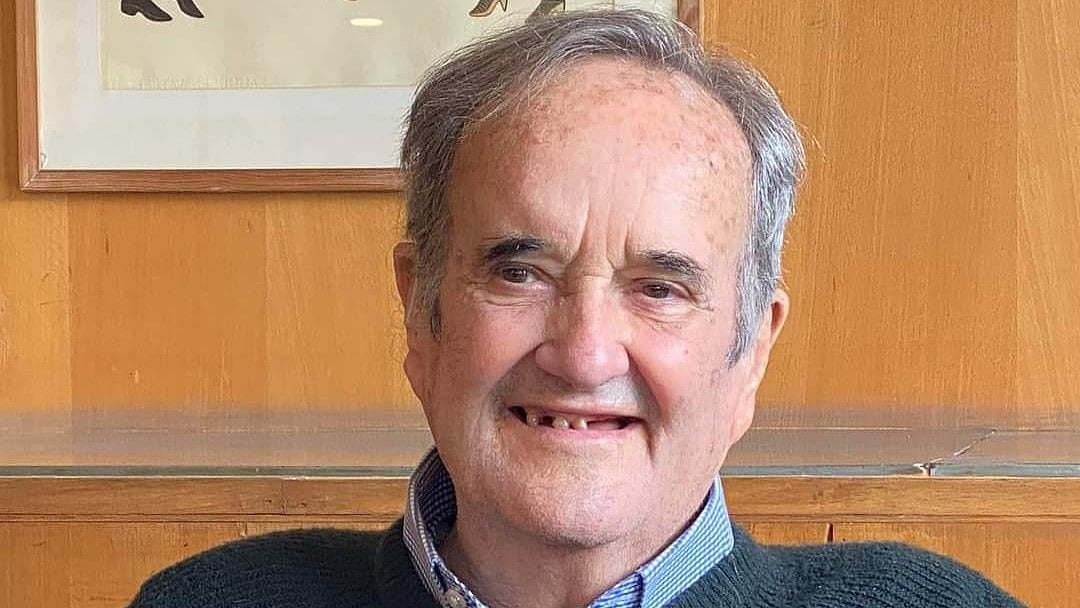
Veteran journalist Mark Tully |
I got to know Mark Tully, the BBC radio legend who passed away last Saturday, nearly half a century ago, in the spring of 1977, just when the 19-month cloud of dictatorship over India had suddenly vanished after the Emergency regime was ousted in a landmark election. Mark, a victim of the Emergency, having been arbitrarily banished from his BBC post in Delhi and the country for defying self-censorship rules, had come back triumphantly to report and rejoice in the return of democracy.
I had my own way of celebrating the downfall of the Indira Gandhi-led Congress government, penning my first book (For Reasons of State: Delhi under Emergency) at the age of 24 with my fellow reporter, John Dayal, using valuable material that had piled up in our notebooks on the many excesses, including brutal sterilisations and home demolitions, mostly of the slum poor, by state authorities that could not be published because we had been muzzled.
Reporting a historic political shift
Not surprisingly, we drew close, meeting frequently at news events, recording both the dismantling of the once-invincible but now devastated Congress as well as the coming together of a motley group of victorious opposition parties under the umbrella of the newly formed Janata Party. Interestingly, Mark was one of the few foreign correspondents who shared my enthusiasm for this risky coalition experiment in a country ruled since Independence by one party and a larger-than-life prime minister. We both felt that it was better to deal with political fractures in a democratic government than the so-called stability of India under a dictator’s boot, having seen the disastrous consequences of this so recently.
A reporter rooted on the ground
Our connection deepened when I was offered the job of India Correspondent for The Guardian in London and spent considerable time with the large Western media corps posted to Delhi after the Emergency. Mark Tully stood head and shoulders above his peers as a quintessential reporter who reported from the ground rather than spinning stories from his office, as many foreign scribes did.
The other big difference between him and journalists who came from abroad was his easy familiarity not just with the Westernised elite but also with ordinary folk on the streets of cities or in chai shops in villages. His immense personal charm and ability to pick up the local lingo helped him connect with locals during elections, riots and natural calamities, expertly wielding his microphone like an extension of his hand.
“Thank God I am not with television, with crews carrying cumbersome cameras making it impossible to have normal conversation with people to find out what was really going on,” he once told me.
From the Indo-Pak border to Punjab turmoil
A straightforward reporter, not particularly gifted with political analysis or flowery language, the legend of Mark Tully grew across the subcontinent because he was considered reliable and authentic, without rhetorical flourish. It was a pleasure to tour with Mark, and I particularly recall a joint trip to the Indo-Pak border in the early 1980s, long before it was properly fenced, when we delighted in hopping into Pakistan and back to India through open fields without hindrance.
We were frequently in Amritsar together as the Khalistani movement turned increasingly turbulent. After Khalistani supremo Sant Jarnail Singh Bhindranwale, defying traditional Akali leadership, moved into the holy Akal Takht inside the Golden Temple complex, Mark and I became regular visitors to his court. He was flanked by two young lieutenants, Amrik Singh and Harminder Singh Sandhu, and guarded by automatic gun-toting teenage zealots who would occasionally load and unload their weapons loudly. Soon, the Indian Army surrounded the shrine for an imminent showdown.
Last interviews before Operation Blue Star
One afternoon, while making rounds at the Amritsar police department, the local intelligence chief warned me to rush to the Golden Temple as the army was planning to move that evening. As I entered the Akal Takht, I met Mark leaving with a knowing smile. Inside, I found Sant, his lieutenants and General Shubeg Singh, the army general who had become his chief military adviser. They boasted that the Indian Army would be beaten back if it dared enter.
Thrilled at what I believed was the last interview of the Khalistani leadership before the assault, I rushed to file my report, only to discover that electricity and telephone lines had been cut. Mark, the cunning old fox, had already filed his story, timing it perfectly.
Professional rivalry and shared crises
A month later, I got my revenge by accident. Returning from Srinagar after covering the ouster of Jammu and Kashmir Chief Minister Farooq Abdullah, my flight was hijacked to Lahore. After a 24-hour drama, all passengers were rescued by Pakistani commandos. I landed an eight-column story in The Guardian. Weeks later, Mark congratulated me and quipped, wagging his finger, “You got lucky.”
We shared many other professional moments that year, including the Bhopal gas tragedy, Indira Gandhi’s assassination and the anti-Sikh riots. We were also invited by television legend Vinod Dua for a 24-hour election show during the 1998 national polls. Mark, who disliked television and the commercialisation of news, was furious at repeated advertising breaks.
“I don’t need a suit or a washing machine, and I certainly won’t buy that bugger’s atta!” he shrieked.
The writer is a senior journalist.
RECENT STORIES
-
-
-
-
-