Irresponsibility, Inaction And An Indifferent Establishment
Mumbai’s civic agencies face criticism for pursuing projects that would destroy thousands of mangroves and trees while promoting climate action at Mumbai Climate Week. The proposed Bhandup interchange, Versova-Bhayander Coastal Road and Thane Coastal Road-2 threaten ecologically sensitive areas, raising concerns that climate spectacles are replacing meaningful, ecology-led planning.

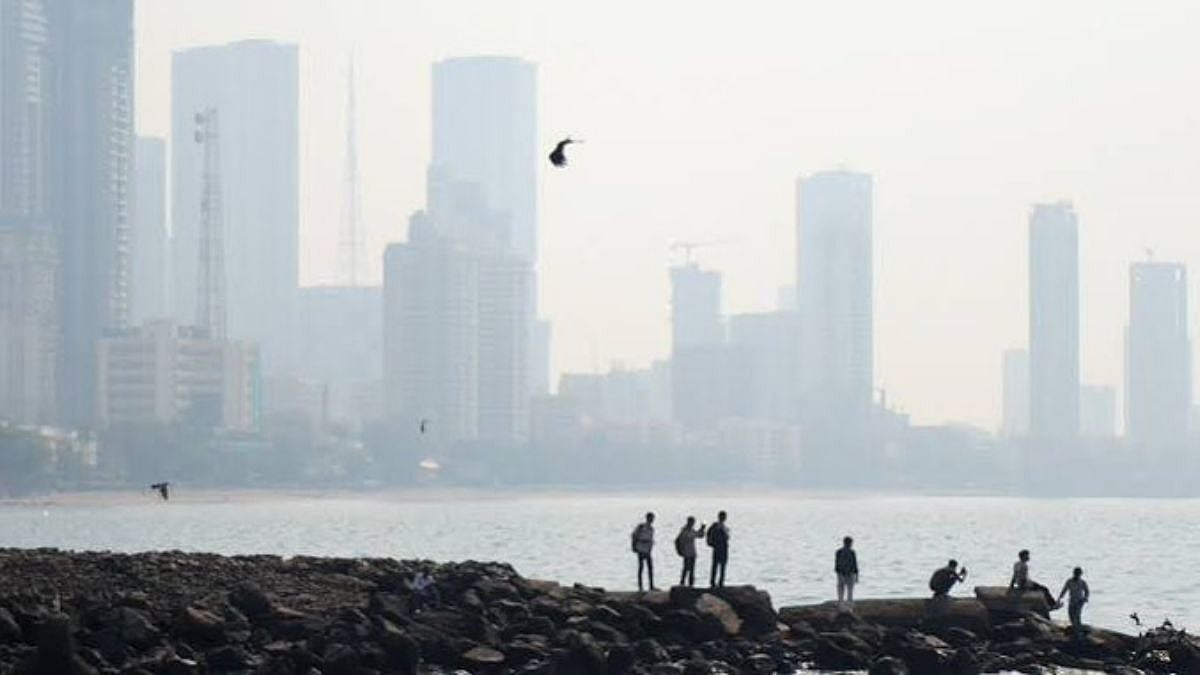
Mangrove destruction and development plans across Mumbai have raised questions about whether government agencies' climate commitments align with their infrastructure decisions | Representational Image
Make it make sense. The Brihanmumbai Municipal Corporation (BMC) recently proposed cutting mangroves in the CRZ-1 protected area across 8.2 acres in Bhandup. It says this has to be done to make way for a cloverleaf interchange for the Rs 14,000-crore Goregaon-Mulund Link Road. The proposal comes on the heels of the BMC’s insistence on proceeding with the cutting of at least 45,675 mangroves on the western side of the city for the Versova-Bhayander stretch of the coastal road.
Not far from the site of the proposed cutting in Bhandup, the Mumbai Metropolitan Region Development Authority (MMRDA) will cut down 3,754 mangroves across nearly 30 acres in the buffer zone of the Thane Creek Flamingo Sanctuary for the Thane Coastal Road-2 project. This is a Ramsar site, which means it is a protected wetland of international importance. The MMRDA has even listed how the construction will impact the ecologically sensitive area. In all three cases, flooding is likely to increase.
Yet come February, and these very agencies are likely to help stage the second edition of the Mumbai Climate Week, for which invitations to register have already begun landing in inboxes. The first edition, held this February, had the Government of Maharashtra, the BMC and the MMRDA among its lead partners in a long and impressive list of 129 partners and sponsors. On stage at the glittering private convention centre in Bandra Kurla Complex, the institutions tasked with protecting the city in every way affirmed their commitment to the task and detailed their role in making Mumbai climate-resilient, including keeping it flood-free.
How they see Mumbai becoming climate-resilient in any way after cutting thousands of mangroves that act as a natural flood barrier is a mystery. So, make it make sense.
When Spectacle Replaces Meaningful Action
The only way to understand this dichotomy is to distinguish between a spectacle and meaningful action. The venerated Oxford Dictionary defines ‘spectacle’ as a specially prepared or arranged public display that forms an impressive or interesting show, or an unusual and surprising sight that attracts a lot of attention. Merriam-Webster, in fewer words, describes the noun as something exhibited to view as unusual, notable or entertaining, especially an eye-catching or dramatic display. When spectacle replaces meaningful and fundamental action, it can obviously have real and disastrous consequences.
The chasm between spectacle and meaningful action is evident in a slew of international events related to climate change. The United Nations-backed formal Conference of Parties, set up in 1992, and the less formal Climate Week, launched in New York City in 2009 as a parallel event alongside the annual United Nations General Assembly (UNGA), are two examples. Meant to make the Earth a more environmentally sustainable and just place, they have morphed into grand annual spectacles. The past few COPs have even been hosted by nations deeply invested in and reliant on fossil fuels.
This year’s edition of Climate Week NYC, held in late September, saw 1,500 events with 182 speakers and an estimated audience, including digital participants, of more than 120,000. Its media reach was an unprecedented 20.8 billion. It was apparently the inspiration behind the Mumbai Climate Week, helmed by Project Mumbai. The first edition focused on the themes of energy transition and finance, food systems, and urban resilience, and brought together more than 2,000 delegates and 500 speakers from 30 countries for three days.
Promises Must Translate Into Action
The Government of Maharashtra had signed 23 memorandums of understanding (MoUs), 30 cities in Maharashtra were slated to get their own heat action plans, and more than 1,000 urban climate projects across 44 cities in India were announced. These are not unimportant in themselves; there is some gain to be counted from bringing decision-makers, policy experts and community groups together in one place to deliberate on an issue. Conversations happen both on and off panels, ideas are shared, networks are expanded and strengthened, and avenues are explored for future collaborations.
But a few attendees remarked that, let alone action or promises, even conversations were absent around some themes, such as just transition and urban waste. The next edition may well fill the gaps and make the event more robust and representative. However, the key question remains: how can the state government, the MMRDA and the BMC be lead partners of the Mumbai Climate Week while continuing to disregard fundamental ecology when planning and executing projects? It does not make sense.
Last year, while the BMC and the state government were preparing to pour themselves into the Mumbai Climate Week, they were also finalising the Draft Master Plan for the Sanjay Gandhi National Park, which would permit commercial development and construction across nearly 59 square kilometres of the protected forest. The open expanse of the Mahalaxmi Race Course has ‘development’ plans that should worry every Mumbaikar. Thousands of trees have been cut down in Aarey over the years in the name of ‘development’, and more may be axed as the BMC gives the go-ahead to various projects.
Mumbai’s Ecology Must Guide Development
Meaningful climate-related action calls for recognising Mumbai’s ecology and making it the basis of all development plans. Instead, the agencies merrily ignore the need to protect the coastal city from flooding amid dire projections of rising sea levels and, without so much as a blink, support the Mumbai Climate Week as lead partners while making assurances about climate action.
Jamborees and galas such as Climate Week are spectacles, perhaps necessary for some to demonstrate their climate awareness, networking and influence. The truth is that meaningful action happens after, or in spite of, such gatherings. The people and organisations in the trenches carrying out the action are often not part of them.
As Australian Prime Minister Anthony Albanese remarked at Climate Week NYC: “There’s no avoiding the scale of our responsibility or the cost of inaction.” Spectacles cannot replace action—ecologically grounded action.
Smruti Koppikar, an award-winning senior journalist and urban chronicler, writes extensively on cities, development, gender and the media. She is the Founder Editor of the award-winning online journal ‘Question of Cities’ and can be reached at smruti@questionofcities.org.
To get details on exclusive and budget-friendly property deals in Mumbai & surrounding regions, do visit: https://budgetproperties.in/
RECENT STORIES
-
-
-
-
-