Energy Security & Power Grid Management Are Key To Solving India’s Power Crisis
Renewed Gulf tensions and the threat to the Hormuz Strait highlight India's need for long-term energy security. Beyond managing short-term disruptions, the country should back alternative oil routes, accelerate EV adoption, expand charging and solar-powered infrastructure, strengthen energy storage, and reduce dependence on imported fossil fuels to safeguard supplies and cut the trade deficit.

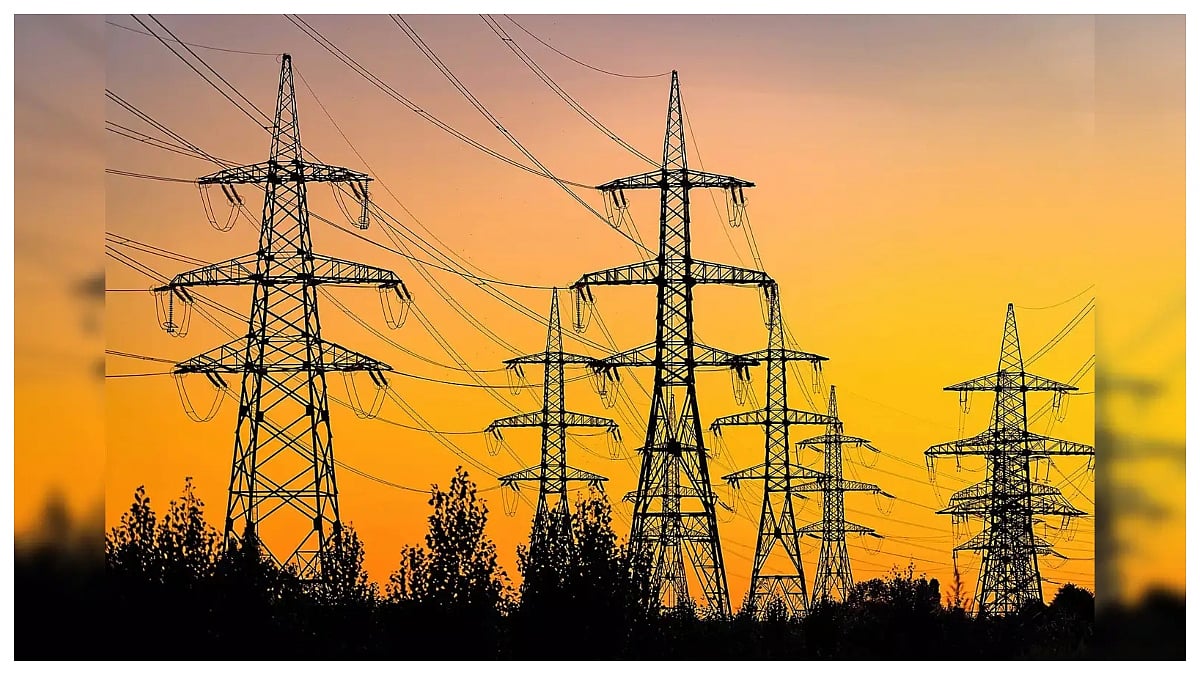
Energy Security & Power Grid Management Are Key To Solving India’s Power Crisis | Representative Image
Not unexpectedly, hostilities erupted again in the Gulf region. Iran is determined to assert control over the Hormuz Strait and impose tolls on shipping through the vital energy route. The global community and India should be prepared for a prolonged, if intermittent, disruption of supplies from the Gulf region.
All the steps taken by the Union government so far are vital and effective in ensuring uninterrupted supplies. The government deserves credit for competent and timely management of the crisis. Now that this disruption should turn out to be a long-term, festering problem, we need to go beyond contingency planning. Two critical strategies are vital to protect the future—finding alternative supply routes to bypass the Hormuz Strait on a permanent basis and substantially reducing import dependence in the energy sector.
First, let us look at alternative supply routes. Already, the existing alternative routes helped mitigate the global energy crisis to some extent. Saudi Arabia built the East-West pipeline to the western Red Sea port of Yanbu. This pipeline was built during the Iran-Iraq war in the 1980s as an alternative route in the event of disruption of energy supplies through the Persian Gulf. It has the capacity to transport seven million barrels of crude oil per day (mbd) from the Abqaiq oil fields in the Eastern Province to the Red Sea. During the current crisis, this 1200 km pipeline operated at full capacity and helped mitigate the global energy shortages substantially. The Saudi government is now negotiating with Kuwait, Bahrain, and Qatar to expand the pipeline capacity by 2 mbd to accommodate their crude exports.
The UAE, which built a crude pipeline to the Fujairah Port in the Gulf of Oman by-passing the Strait of Hormuz transporting about 1.5 mbd, is now constructing a second pipeline expected to be ready in 2027 with an additional capacity of 4 mbd. Oman and the UAE are also building a railway line to Oman's ports, by-passing the Strait, and creating alternative storage and export hubs. Saudi Arabia has recently awarded contracts for a 1500 km railway corridor, connecting the Persian Gulf to the Red Sea. Iraq is in the early stages of building a pipeline from Basra to the Red Sea port of Aqaba with a capacity of 2.5 mbd.
India should leverage its diplomatic strength and market power in supporting all these and other alternative routes. Redundancy is the best guarantor of energy security.
The second major strategy for permanent energy security is complete electrification of road transport in the next decade. Our current consumption of petrol and diesel is over 180 billion litres per year. The union government has wisely enforced 20% ethanol blending with petrol. Efforts are now underway to blend isobutanol with diesel to reduce dependence on oil imports. More can be done, as Brazil has demonstrated.
I have argued in these columns (June 1 and June 15, 2026) that shifting to 100% EV road transport and agricultural diversification into energy crops, with conversion of biomass into energy, are both vital and feasible for our energy security, economic growth and environmental protection. They have the added benefit of eliminating our trade deficit and putting more money into the farm sector. Let me focus on certain gaps in electrification of transport. Incentives for the expansion of EV manufacturing capability and appropriate regulations to enforce increasing EV share and reduce fossil fuel vehicles are necessary. Some capital equipment and components may have to be imported, but the cost of one-time imports is small relative to imports of crude oil. Our automobile manufacturing sector has the ability and agility to switchover to EV production.
Electric vehicles are becoming better and cheaper. The cost of electric transport is much lower than diesel and petrol. Inadequate charging facilities are dampening demand. We have over 100,000 retail outlets of diesel and petrol, but only 29,000 EV charging outlets. Plans are afoot to add 72,000 more charging stations in 2026; we should aim at 300,000 in the next few years. But the real challenge is going to be electricity grid management. It is estimated that EVs will need 1.60 billion units of power per day. That translates into 300 GW of solar power, assuming 5.5 hours of average generation per day. But if EV charging does not happen during sunlight time while power is generated, it will increase shortages of power during night-time.
Sanjeev Sanyal and Satvik Dev from the Economic Advisory Council to the PM have released a working paper on the net load on the Indian power grid. They pointed out that the grid had a surplus, unutilised solar power (‘curtailment’) of 24 GWh per day in May 2026 during sunlight hours and a shortage of power during evening hours. Clearly, the answers lie in vastly stepping up storage of power during sunlight hours and evacuation during peak demand-supply gaps. We also need demand management by differential tariffs during various periods of the day, mandatory storage of power by prosumers who produce solar power and consume it through net metering, and incentivising rooftop solar prosumers to store power and supply it to the grid during peak demand hours.
The paper estimates that the storage discharge of 130 GWh is required merely to meet half of the evening increase in demand. Our current discharge is a mere 24 GWh per day! We need to substantially ramp up energy storage systems. With full electrification of transport, if the EVs are charged during night-time, we will need 1600 GWh of additional power when there is no solar power generation. The power grid will simply collapse with that load.
The only viable answer is mandatory day-time ultra-fast DC charging during sunlight hours. This will address three problems at once: the unutilised surplus solar power will be fully utilised during sunlight hours; the electricity demand during the rest of the day and night can be managed more efficiently; and the need for costly storage of power and discharge later will be minimised.
Policymakers have exhibited great agility and flexibility in managing the energy crisis over the past four months. We need even greater agility, flexibility, resolve, and perseverance to permanently address our energy security needs and wipe out the trade deficit.
The author is the founder of Lok Satta movement and Foundation for Democratic Reforms. Email: drjploksatta@gmail.com / Twitter@jp_loksatta
RECENT STORIES
-
-
-
-
-